ACTED
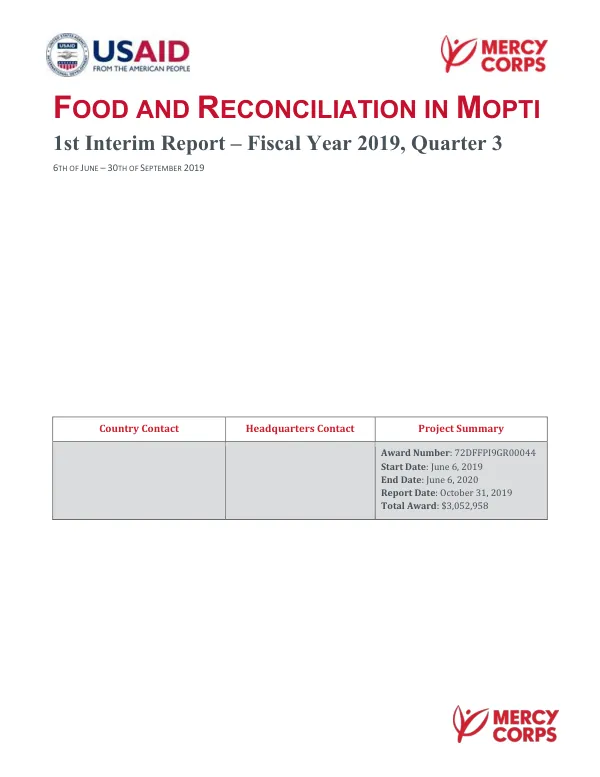
Food and Reconciliation in Mopti 1st Interim Report – Fiscal Year 2019, Quarter 3
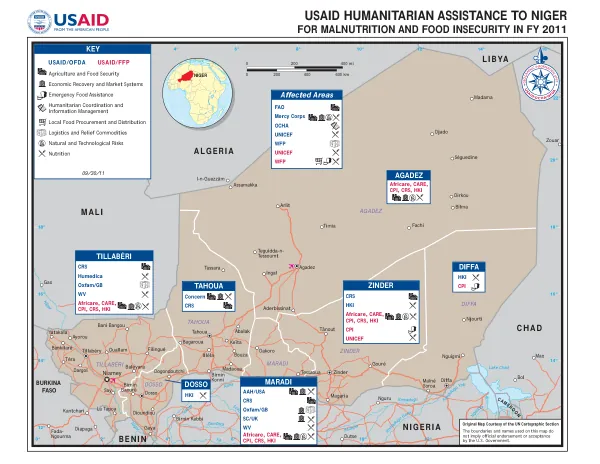
The Food and Reconciliation in Mopti project, implemented by Mercy Corps with funding from USAID's Food Security Program, aims to address the urgent food security needs of conflict-affected populations in the Koro, Bankass, and Djenne circles of Mali.
2019 · 15 pages
Sign in to readA free account is required to download.
Abstract
The project provides 4-month voucher-based food assistance to 5,000 internally displaced, returnee, and vulnerable host community households. Each target household receives four months of unconditional food aid in the form of food vouchers to cover 100% of food needs resulting from their displacement. Implementation of the project began on June 6, 2019, with the establishment of Mercy Corps' field teams and the initiation of first-phase program activities. These activities included the recruitment of project staff, the opening of the Mercy Corps Sevare Office, and the induction of the project with local authorities and NGOs. The project team also conducted exchange visits to NGOs and UN agencies working in the 3 circles, including CRS, NRC, Word Vision, WFP, DCA, YAG-TU, and ACTED. The project's purpose is to increase immediate access to nutritionally diverse food for 5,000 vulnerable displaced and host community households. During the reporting period, the project team made progress in the design, setup, and implementation of activities planned under this purpose. Coordination meetings were held with NGOs and UN agencies, and exchange visits were conducted to collect information on the approaches and strategies put in place by NGOs in the Mopti region to reach participants in their programs. The project team also initiated a series of meetings with WFP in Bamako and Mopti to better reconcile actions and avoid duplication on the ground. Based on these consultations, it emerged that WFP had already started four months of food assistance in the Koro, Bankass, and Djenne districts in June. As a result, WFP asked Mercy Corps to wait until the end of their intervention before starting food assistance in the three circles. Mercy Corps requested access to the database of people served on the WFP food assistance project in the pertinent areas to facilitate their registration and continue the assistance process from October. The project's geographic focus is on the Koro, Bankass, and Djenne circles of Mali, where conflict-affected populations are in need of food assistance. The project's timeframes are from June 6, 2019, to June 6, 2020, with the reporting period covering the 3rd quarter of Fiscal Year 2019, from June 6 to September 30, 2019. The project's total award is $3,052,958, and the report date is October 31, 2019. Implementation details for the project include the recruitment of project staff, the opening of the Mercy Corps Sevare Office, and the induction of the project with local authorities and NGOs. The project team also conducted exchange visits to NGOs and UN agencies working in the 3 circles and initiated a series of meetings with WFP to better reconcile actions and avoid duplication on the ground. The project's methodology includes the provision of 4-month voucher-based food assistance to 5,000 internally displaced, returnee, and vulnerable host community households. The project's key findings and conclusions include the need for coordination and reconciliation of actions between Mercy Corps and WFP to avoid duplication on the ground. The project team also identified the importance of mixed ethnic staff composition to avoid access problems on certain sites. The project's recommendations include the need for continued coordination and reconciliation of actions between Mercy Corps and WFP and the importance of mixed ethnic staff composition.