ACTION AGAINST HUNGER
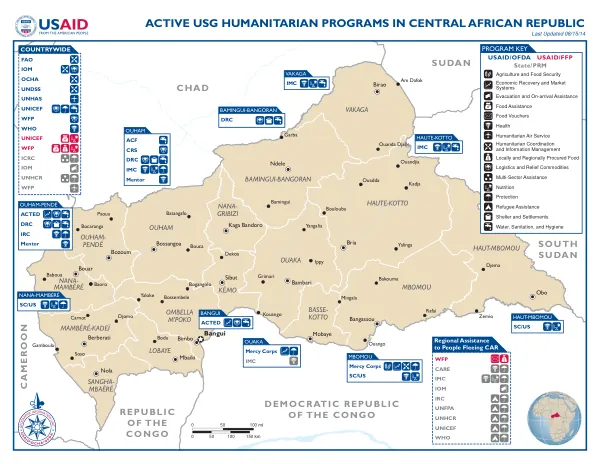
Active USG Humanitarian Programs in Central African Republic
The Central African Republic (CAR) is a landlocked country located in the heart of Africa.
2014 · 1 pages
Sign in to readA free account is required to download.
Abstract
The country's geography is characterized by a mix of savannas, forests, and tropical rainforests. The population of CAR is approximately 5 million people, with the majority residing in rural areas. The country's economy is primarily driven by agriculture, with agriculture and food security being the main focus of humanitarian efforts. The humanitarian situation in CAR is complex and has been exacerbated by ongoing conflict. The country has been plagued by violence since 2012, resulting in significant displacement of people and damage to infrastructure. The humanitarian response has been led by the United Nations (UN) and its partners, with support from the United States Agency for International Development (USAID). The response has focused on providing emergency assistance, including food, shelter, and shelter materials, as well as protection services, such as psychosocial support and child protection. The humanitarian response has been implemented in several regions, including the provinces of Haute-Kotto, Vakaga, and Mambere-Kadei. The response has been led by various organizations, including the International Committee of the Red Cross (ICRC), the International Organization for Migration (IOM), the United Nations High Commissioner for Refugees (UNHCR), and the World Food Programme (WFP). The response has also involved the distribution of food vouchers, cash, and other forms of assistance. The humanitarian response has been supported by various donors, including the United States, the European Union, and other countries. The response has also involved the provision of emergency shelter materials, such as tents and tarpaulins, as well as the construction of new shelters. The response has also focused on providing protection services, including the protection of civilians and the prevention of violence against women and children. The humanitarian situation in CAR is expected to continue to be complex and challenging in the coming months. The response will need to continue to focus on providing emergency assistance, including food, shelter, and shelter materials, as well as protection services, such as psychosocial support and child protection. The response will also need to be supported by continued support from donors and the international community.
Related documents