CARE
Food for Peace Fact Sheet: TAJIKISTAN
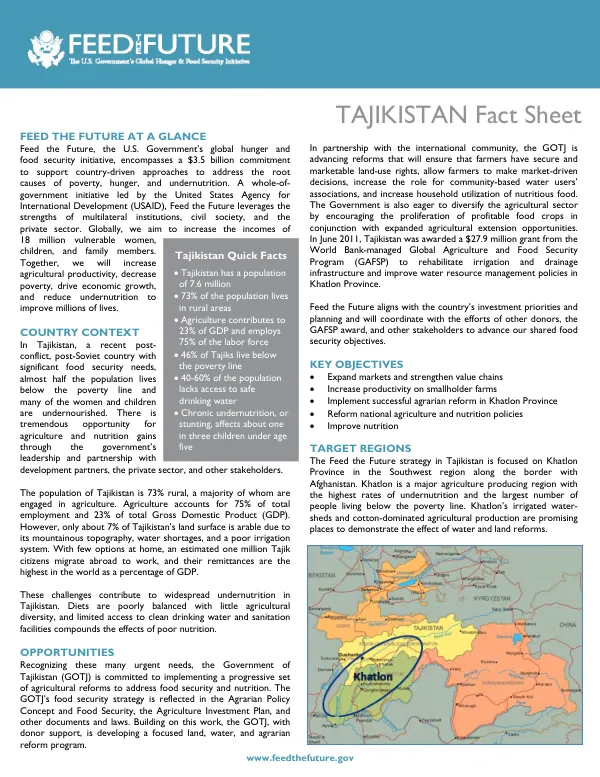
The Food for Peace program in Tajikistan is a humanitarian initiative aimed at addressing the country's food security challenges.
2009 · 1 pages
Sign in to readA free account is required to download.
Abstract
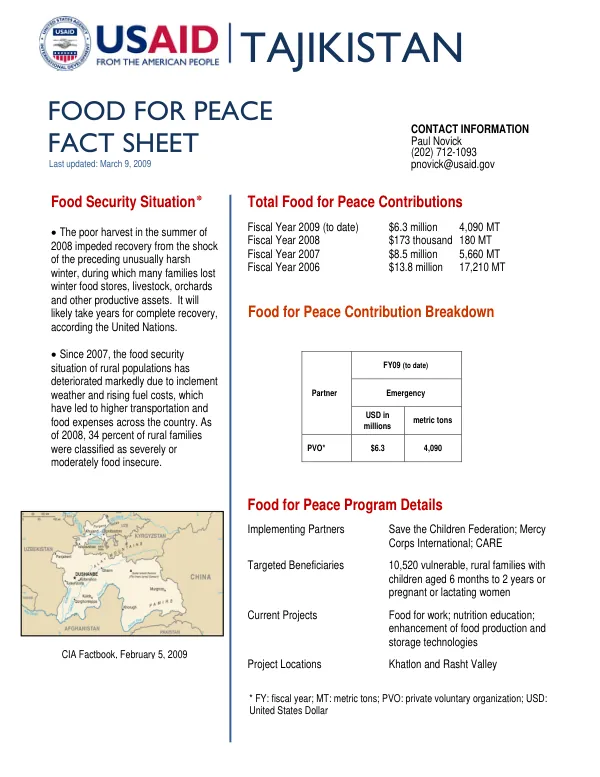
The poor harvest in the summer of 2008 exacerbated the situation, which was already dire due to the harsh winter of 2007. Many families lost winter food stores, livestock, orchards, and other productive assets, and it is estimated that it will take years for complete recovery, according to the United Nations. The food security situation in rural Tajikistan has deteriorated significantly since 2007, primarily due to inclement weather and rising fuel costs. These factors have led to higher transportation and food expenses across the country, affecting 34 percent of rural families, who were classified as severely or moderately food insecure as of 2008. The Food for Peace program aims to alleviate this situation by providing assistance to vulnerable populations. The program targets 10,520 rural families with children aged 6 months to 2 years or pregnant or lactating women. Implementing partners include Save the Children Federation, Mercy Corps International, and CARE. The program focuses on several key areas, including food for work, nutrition education, and enhancement of food production and storage technologies. Current projects are being implemented in Khatlon and Rasht Valley, two regions that are particularly affected by the food security crisis. The program's objectives are to improve food access and availability, enhance household income, and promote sustainable livelihoods. By addressing the root causes of food insecurity, the Food for Peace program aims to contribute to the long-term development of Tajikistan's rural communities. The program's budget for Fiscal Year 2009 is $6.3 million, which will provide approximately 4,090 metric tons of food assistance. This contribution is part of the overall Food for Peace program, which has been providing support to Tajikistan since 2006. The program's impact will be closely monitored, and adjustments will be made as necessary to ensure that the assistance reaches those who need it most.
Related documents