USAID DEC
Food Sovereignty Training for Women of Bajo Cauca and Bulk Feed Silos for Dairy Production
Sign inUSAID
Food Sovereignty Training for Women of Bajo Cauca and Bulk Feed Silos for Dairy Production
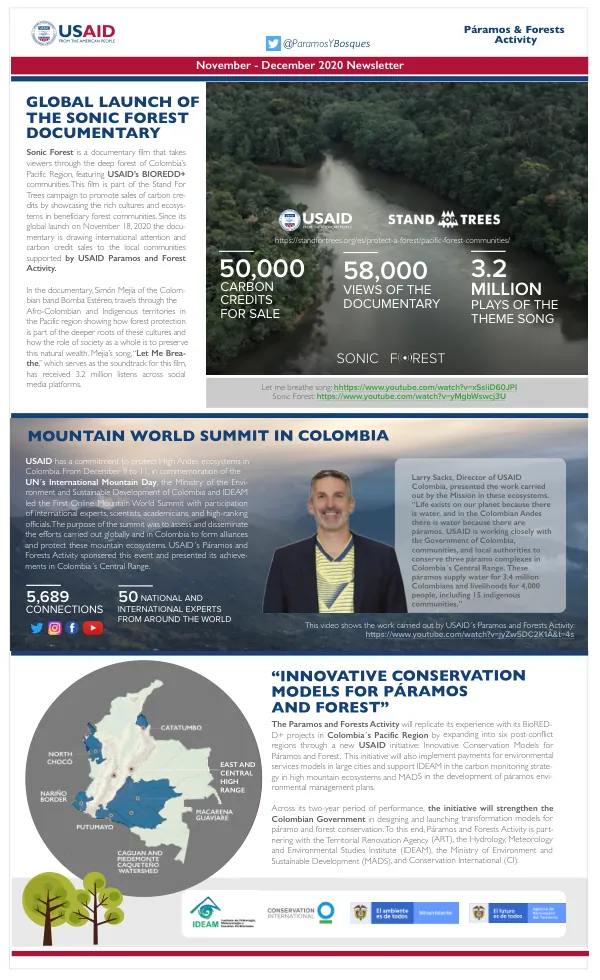
The cassava production chain in Colombia has faced significant challenges, particularly in the chopping and drying stages.
2020 · 1 pages
Sign in to readA free account is required to download.
Abstract
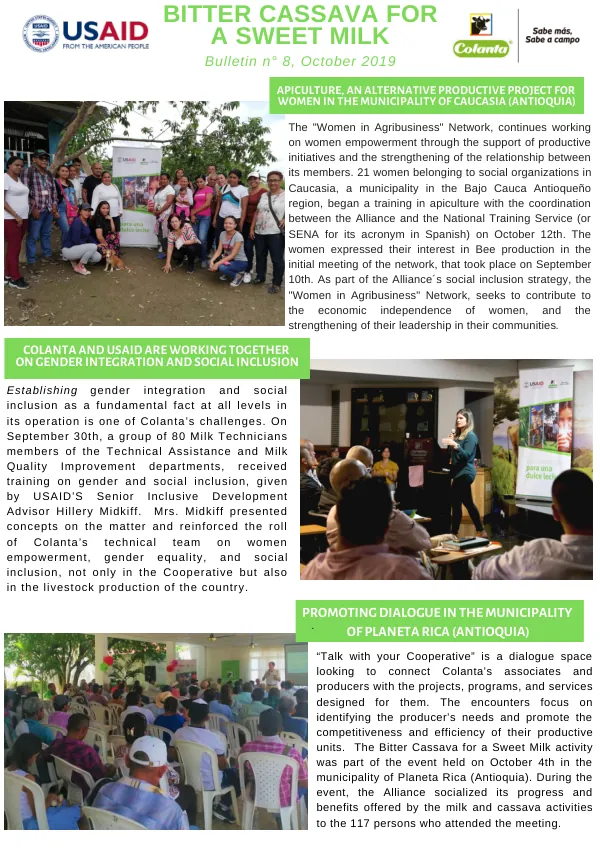
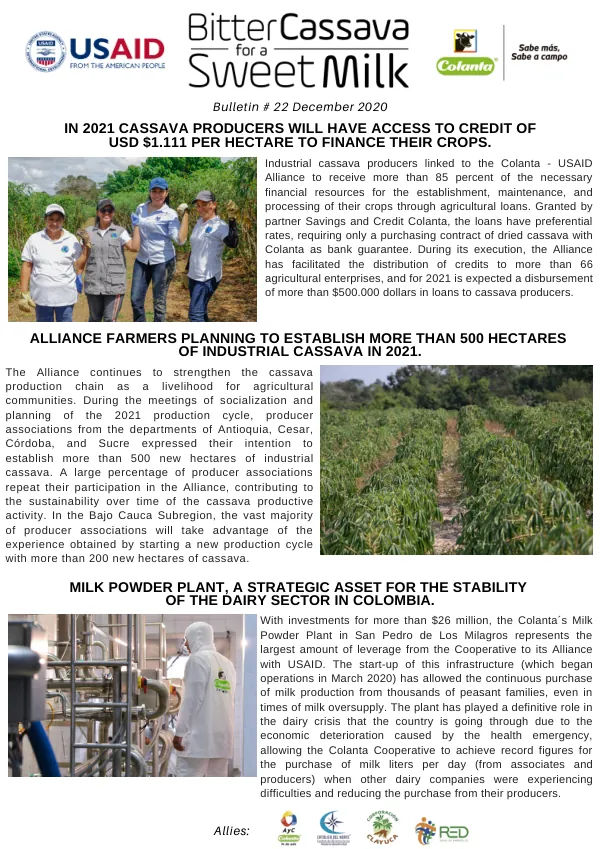
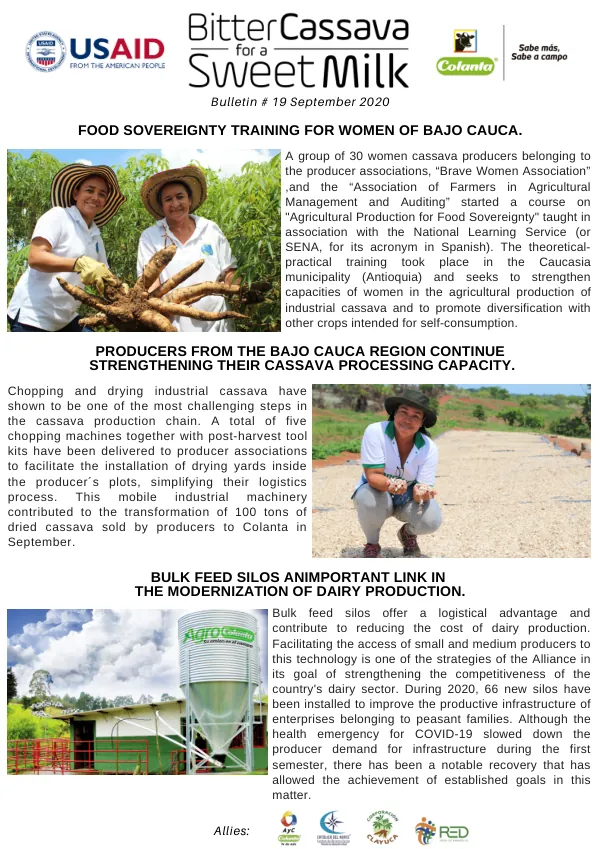
To address these issues, five chopping machines and post-harvest tool kits were delivered to producer associations to facilitate the installation of drying yards within producer plots. This mobile industrial machinery contributed to the transformation of 100 tons of dried cassava sold by producers to Colanta in September. A training program for women cassava producers was initiated in the Bajo Cauca region. Thirty women from the "Brave Women Association" and the "Association of Farmers in Agricultural Management and Auditing" participated in a course on "Agricultural Production for Food Sovereignty" taught by the National Learning Service (SENA). The training took place in the Caucasia municipality (Antioquia) and aimed to strengthen the capacities of women in industrial cassava production and promote diversification with other crops for self-consumption. The dairy sector in Colombia has also seen significant developments. The Alliance has implemented a strategy to strengthen the competitiveness of the country's dairy sector by facilitating access to bulk feed silos for small and medium producers. During 2020, 66 new silos were installed to improve the productive infrastructure of enterprises belonging to peasant families. Although the COVID-19 health emergency slowed down producer demand for infrastructure in the first semester, there was a notable recovery that allowed the achievement of established goals. The installation of bulk feed silos has contributed to reducing the cost of dairy production and offering a logistical advantage to producers. This technology is crucial for the modernization of dairy production in Colombia. The Alliance's efforts to strengthen the dairy sector have had a positive impact on the country's agricultural production, particularly in the Bajo Cauca region. The cassava processing capacity of producers in the Bajo Cauca region continues to strengthen. The training program for women cassava producers has been successful in promoting food sovereignty and diversification of crops. The Alliance's initiatives have had a positive impact on the agricultural sector in Colombia, contributing to the country's economic development and food security.
Related documents