USAID DEC
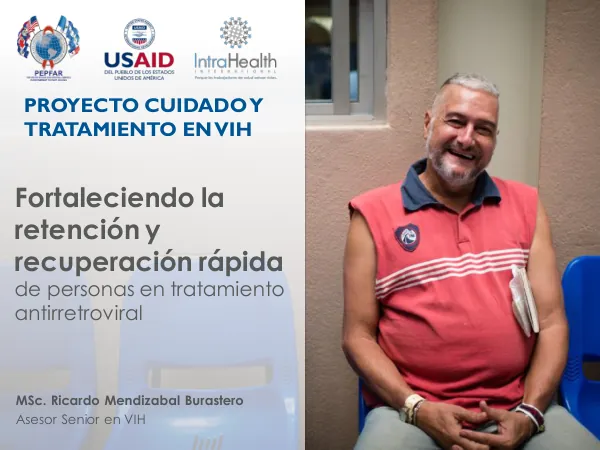
Fortaleciendo la retención y recuperación rápida de personas en tratamiento antirretroviral
Sign inUSAID DEC
Fortaleciendo la retención y recuperación rápida de personas en tratamiento antirretroviral
The Fortaleciendo la retención y recuperación rápida de personas en tratamiento antirretroviral initiative began in 2017 with the goal of improving adherence to antiretroviral therapy (ART) among patients in Guatemala.
2019 · 25 pages
Sign in to readA free account is required to download.
Abstract
The project was led by MSc. Ricardo Mendizabal Burastero, Senior Advisor on HIV, and focused on developing interventions to enhance retention and adherence to ART. One of the key interventions implemented was a model of delivery of medication directly to patients' homes, known as entrega domiciliaria. This model was designed to reach patients who were stable and had a history of good adherence to ART. Patients were eligible for this model if they had a viral load of less than 6 months, were on ART for more than 12 months, had an undetectable viral load, and were stable in their domicile. The entrega domiciliaria model involved the delivery of medication to patients' homes every 3 months, as well as regular clinical consultations every 6 months to monitor viral load and CD4+ cell count. Patients who were eligible for this model were identified through a screening process, and those who accepted the offer were enrolled in the program. An analysis of data from a cohort of patients who received entrega domiciliaria was compared to a cohort of patients who received standard care in a clinic. The results showed that there were no significant differences in viral suppression between the two groups, with 50% of patients in the entrega domiciliaria group and 55% of patients in the standard care group achieving viral suppression at 30 months. A qualitative evaluation of the entrega domiciliaria model was also conducted through focus groups with patients who had participated in the program. The evaluation highlighted several benefits of the model, including the convenience of receiving medication at home, reduced stigma and discrimination, and improved adherence to ART. However, some patients reported difficulties accessing the program due to work commitments, highlighting the need for flexible scheduling and accommodation of patients' needs. The entrega domiciliaria model was found to be a viable option for improving retention and adherence to ART among patients in Guatemala. The results of this study suggest that this model can be an effective way to reach patients who are stable and have a history of good adherence to ART, and can help to reduce the burden on clinics and healthcare systems.
Related documents