UNITED NATIONS
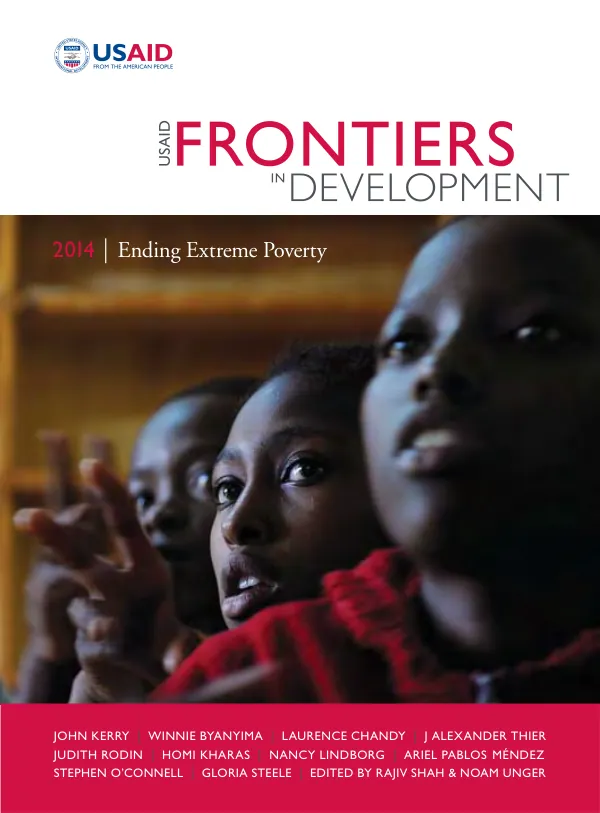
Frontiers in Development
The 2014 Frontiers in Development Forum, convened by the U.S.
2014 · 154 pages
Sign in to readA free account is required to download.
Abstract
Agency for International Development (USAID), brought together experts and leaders to discuss ways to eradicate extreme poverty. The forum focused on the post-2015 Development Agenda, a new set of time-bound targets to succeed the Millennium Development Goals, with the elimination of extreme poverty by 2030 as a central aim. This goal is significant, as progress over the past couple of decades has given reason for hope, with gains against extreme poverty having reduced the number of people suffering from it around the world. The essays in this book are intended to encourage discussion and provoke debate on critical issues associated with ending extreme poverty. The contributors examine the multidimensionality of extreme poverty and its connections to key issues like fragility, the importance of focusing on women and girls, and inequality. They also discuss specific programs, projects, and country settings, including interviews with USAID personnel in the Democratic Republic of the Congo and the Philippines. The book is divided into four sections. The first section, "Understanding Extreme Poverty," explores the complexities of extreme poverty and its connections to key issues. Laurence Chandy and Homi Kharas explain the dueling narratives of whether the pace of progress in reducing extreme poverty will decelerate or accelerate. Winnie Byanyima emphasizes the need to tackle extreme inequality to address extreme poverty. The second section, "Politics, Global and Local," deals with the politics of societies and priorities, where hard choices are necessary, so is leadership. Larry Garber emphasizes the importance of thinking and working politically to address extreme poverty. The essays in this section provide insights from global perspectives as well as local examples, including agricultural subsidies in Malawi, social capital in Liberia, and cartels in South Africa and Mexico. The third section, "Catalyzing Growth and Investment," discusses supporting competitive markets and catalyzing growth and investment. Stephen O'Connell uses a historical lens to examine opportunities for pro-poor economic growth and smart redistribution policies. Other essays present ideas and examples on how to best employ aid to catalyze sound investments and higher-functioning markets that reduce poverty. The final section, "Going Forward (Without Going Backward)," emphasizes the importance of protecting development gains and adapting to a changed landscape of development finance. Judith Rodin and Nancy Lindborg advance the concept of resilience and its practical application in the face of undermining challenges such as climate change, disasters, fragility, and conflict. Ariel Pablos-Méndez highlights the importance of sustaining momentum through equitable health financing that reduces high out-of-pocket spending.
Related documents