USAID DEC
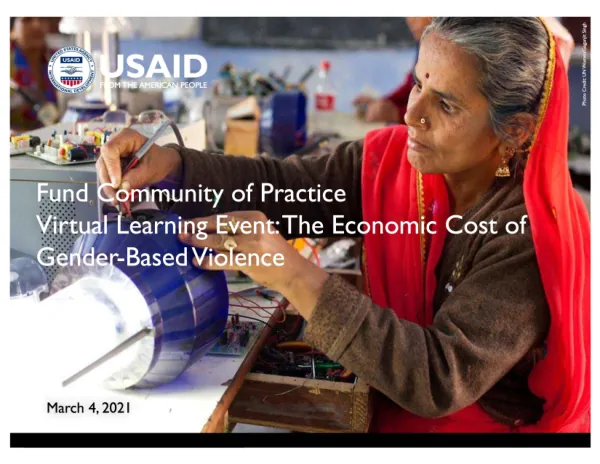
Fund Community of Practice Virtual Learning Event: The Economic Cost of Gender-Based Violence
Sign inBANYAN GLOBAL
Fund Community of Practice Virtual Learning Event: The Economic Cost of Gender-Based Violence
The Economic Cost of Gender-Based Violence is a critical issue affecting individuals, communities, and economies worldwide.
2021 · 6 pages
Sign in to readA free account is required to download.
Abstract
According to the World Bank, gender-based violence (GBV) results in significant economic losses, with estimates suggesting that GBV costs the global economy approximately $1.5 trillion annually. This staggering figure underscores the need for effective prevention and response strategies to mitigate the impact of GBV. The concept of GBV encompasses a range of unacceptable behaviors and practices, including physical, psychological, sexual, and economic harm. The International Labour Organization's (ILO) Convention 190, adopted in 2019, defines GBV as violence and harassment directed at individuals because of their sex or gender, or affecting persons of a particular sex or gender disproportionately. This definition highlights the importance of addressing GBV in the workplace and promoting a culture of respect and inclusivity. The economic costs of GBV are multifaceted and far-reaching. Victims of GBV often experience reduced productivity, increased healthcare costs, and decreased economic participation. In addition, GBV can lead to lost economic opportunities, reduced economic growth, and decreased competitiveness. The World Bank estimates that GBV costs the global economy approximately 2% of GDP annually, with significant variations across regions and countries. Prevention and response strategies are critical to mitigating the economic costs of GBV. Effective interventions can include education and awareness-raising programs, workplace policies and procedures, and community-based initiatives. The USAID Toolkit for Integrating GBV Prevention and Response into Economic Growth Projects provides a comprehensive framework for implementing GBV prevention and response strategies in economic growth projects. The toolkit emphasizes the importance of integrating GBV prevention and response into project design and implementation. The Prevention Collaborative is another key resource for preventing GBV, with a focus on livelihoods and economic empowerment. The collaborative provides a platform for sharing knowledge, best practices, and resources to prevent GBV and promote economic empowerment. What Works to Prevent Violence is another important resource, providing a comprehensive review of evidence-based programs and policies to prevent violence, including GBV. In conclusion, the economic cost of GBV is a significant concern affecting individuals, communities, and economies worldwide. Effective prevention and response strategies are critical to mitigating the economic costs of GBV, and key resources such as the USAID Toolkit, The Prevention Collaborative, and What Works to Prevent Violence provide valuable guidance and support for implementing these strategies.