MERCY CORPS INTERNATIONAL
FY14 Q4 Report: July - September 2014
The Southeast Economic Recovery and Protection Project (SERAP) was initiated in June 2013 to address the protection and relief needs of conflict-affected communities in southeastern Central African Republic (CAR).
2014 · 12 pages
Sign in to readA free account is required to download.
Abstract
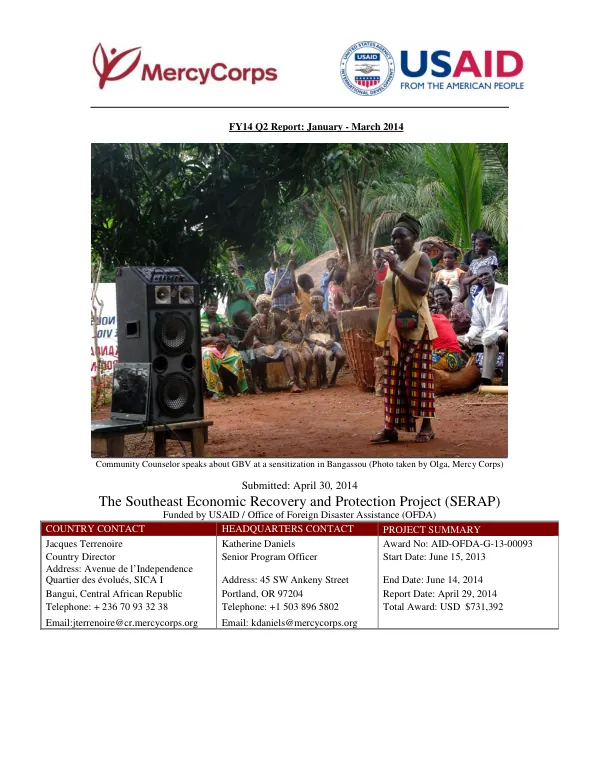
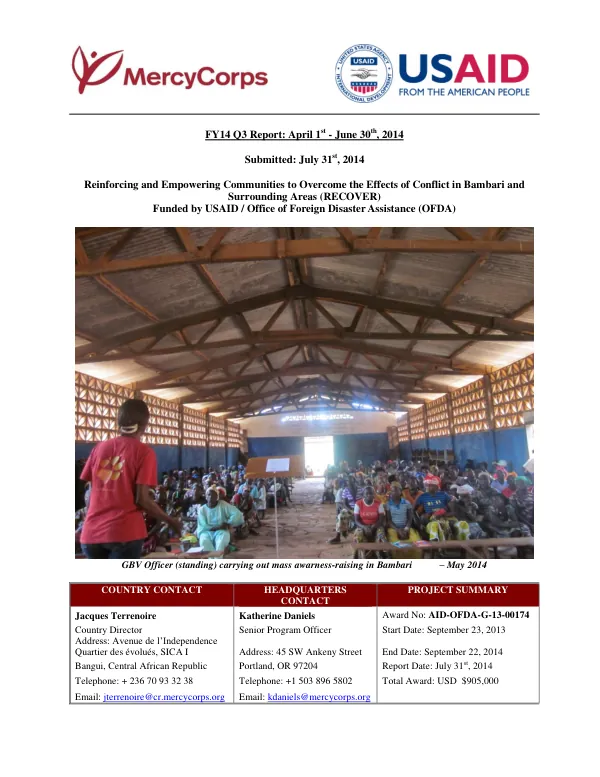
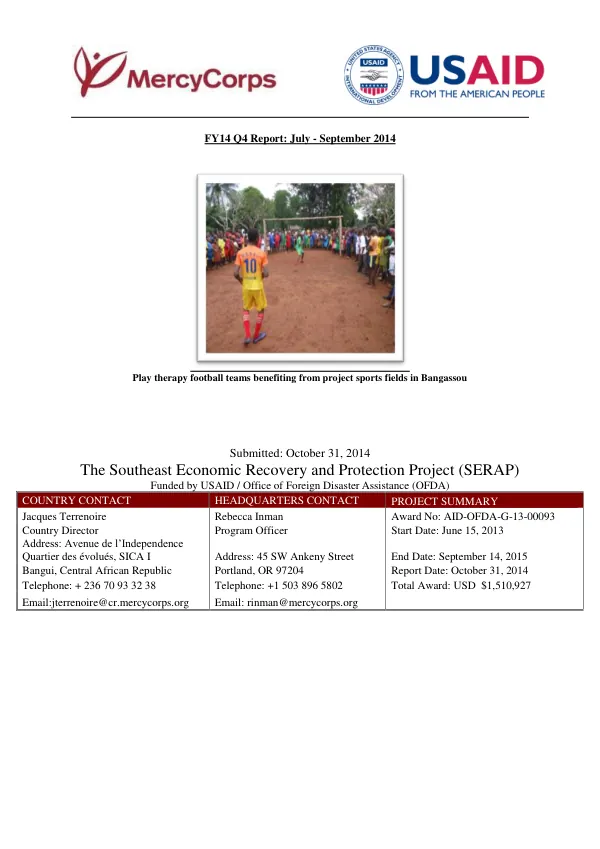
The program aims to increase food security, enhance community resilience, and strengthen the protective environment for children, women, and men affected by conflict in the Mbomou prefecture. The goal is to provide urgently needed support to LRA conflict-affected survivors and other vulnerable communities through interventions in child protection, agriculture, food security, and socio-economic support. During the reporting period, the project achieved several milestones. Twice weekly play therapy groups/clubs continued until August in Bangassou and Rafai, with a total of 36 groups and 30 children per group. The play therapy clubs in Rafai received sports kits, including soccer balls, pumps, and jerseys. A play therapy tournament was organized in both Bangassou and Rafai in July, with all 720 play therapy members participating. Sensitization to human rights standards continued, particularly in areas where the risk of human rights abuses is high. The two Listening Centers in Rafai and Bangassou responded to 130 GBV cases during the reporting period, with 37 of these cases involving children. The cases were given psychosocial support and medical referrals as needed. The majority of GBV cases recorded were psychological/emotional abuse, with many of these cases taking place between family members or intimate partners. The Mercy Corps child protection committee work and community sensitizations remain crucial in addressing these issues. The security situation in Mbomou prefecture remains relatively stable compared to other parts of the country. However, the security situation in Bangui remains tense and uncertain, affecting flight schedules and Mercy Corps' ability to move staff and resources into the field. Comprehensive security assessments were undertaken in August, and an updated security plan for the southeast was created and circulated amongst Mercy Corps staff. The project continues to prioritize convoy travel with other NGO trucks due to logistical and security concerns. The project has made significant progress in achieving its objectives. As of September 2014, a total of 25,251 beneficiaries had been reached, with 1,768 of these being internally displaced persons (IDPs). The project has also trained 5,662 males and 8,493 females in child protection, with 3,500 males and 3,500 females benefiting from GBV services. The project has also provided psychosocial support services to 21 females. The project's expected results include providing protection services to 33,381 vulnerable people, including 3,000 IDPs in LRA-affected communities. The project also aims to restore assets for 3,500 vulnerable people, including 2,000 IDPs, and improve agriculture livelihoods and income generation opportunities for 2,000 vulnerable people, including 1,250 IDPs. The project will also collect surveillance information to provide timely and rigorous early warning and vulnerability information on emerging and evolving crises situations for 93,457 people living in the Mbomou prefecture, including 10,000 IDPs.
Related documents