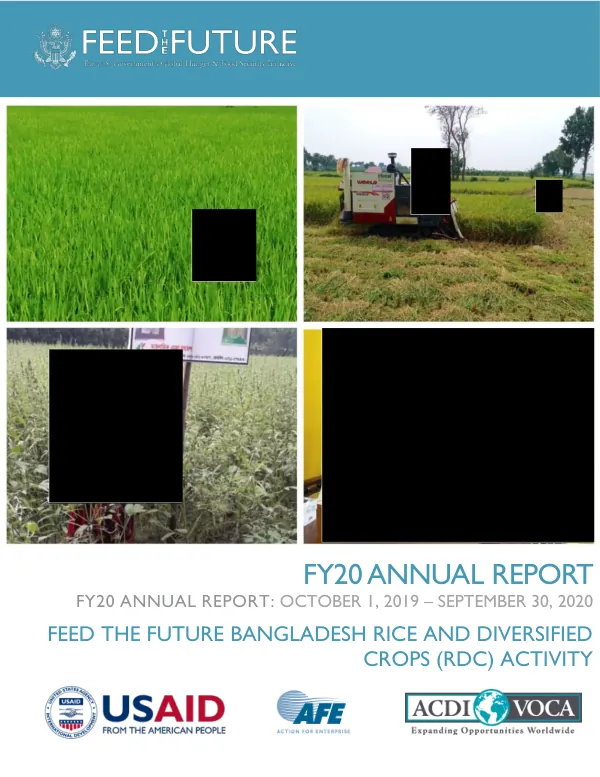
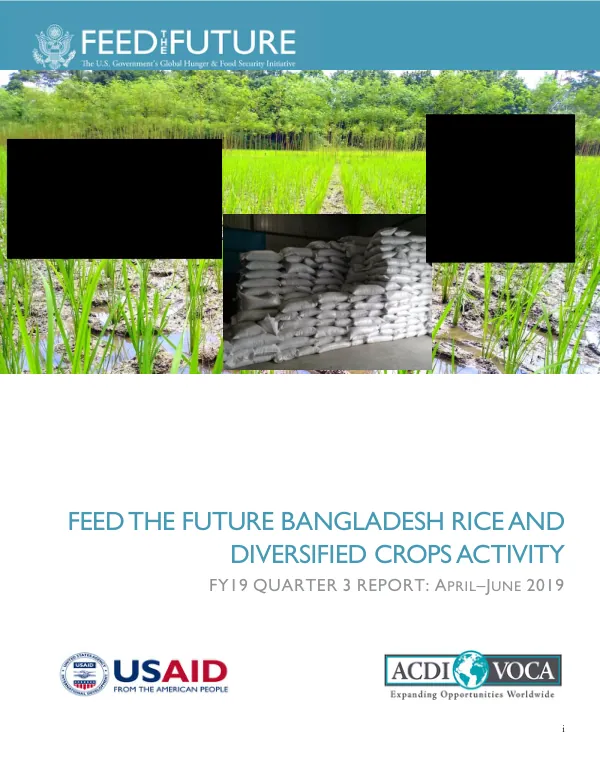
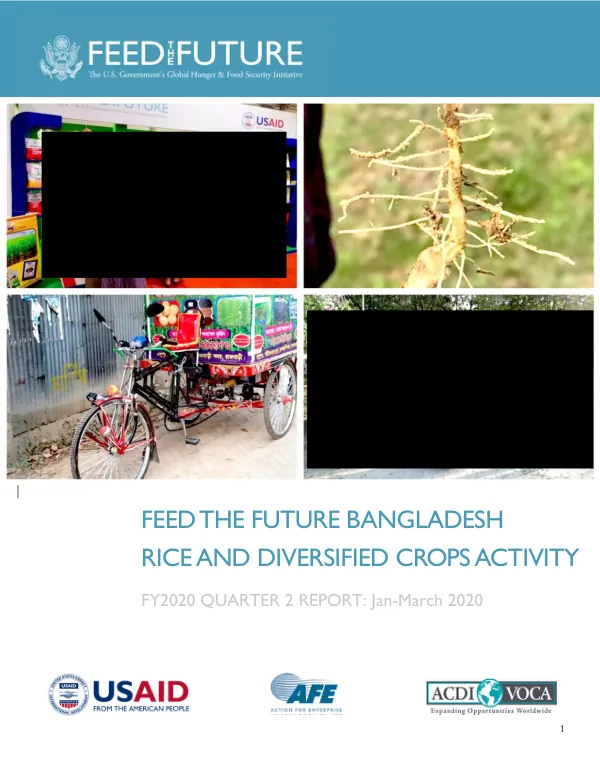
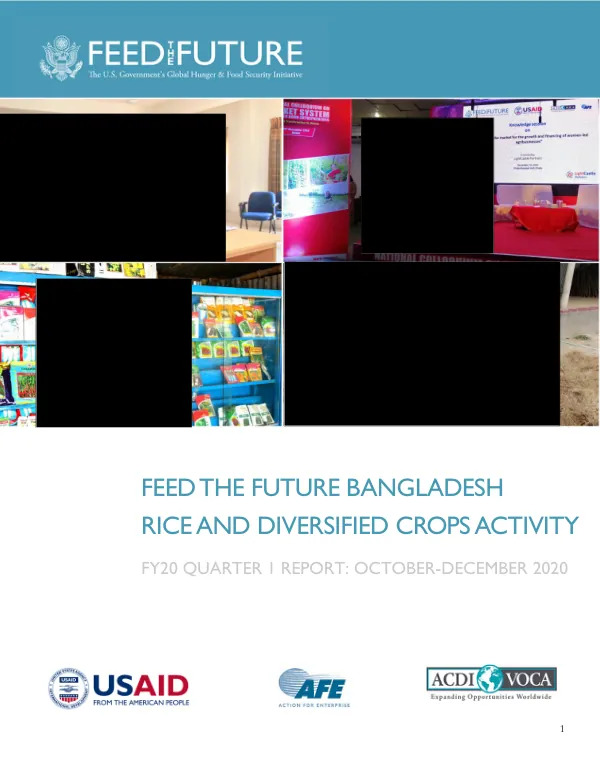
USAID DEC
FY18 Annual Report: Feed the Future Bangladesh Rice and Diversified Crops (RDC) Activity
Sign inACDI/VOCA
FY18 Annual Report: Feed the Future Bangladesh Rice and Diversified Crops (RDC) Activity
The Feed the Future Bangladesh Rice and Diversified Crops (RDC) Activity began in October 2017 and concluded in September 2018.
2018 · 51 pages
Sign in to readA free account is required to download.
Abstract
The activity was implemented in Bangladesh with funding from the United States Agency for International Development (USAID). The overall goal of the RDC Activity was to improve the productivity and income of smallholder farmers in Bangladesh by increasing their access to markets and improving their agricultural practices. The RDC Activity focused on four key sectors: rice, maize, oilseed crops, and grain legume crops. In the rice sector, the activity identified systemic constraints such as limited access to high-quality seeds and fertilizers, as well as inadequate irrigation systems. To address these constraints, the activity implemented market system changes and interventions, including the development of a rice market system and the provision of training to farmers on improved agricultural practices. In the maize sector, the activity identified systemic constraints such as limited access to high-quality seeds and inadequate storage facilities. To address these constraints, the activity implemented market system changes and interventions, including the development of a maize market system and the provision of training to farmers on improved agricultural practices. The RDC Activity also focused on cross-cutting market systems, including mechanization, financial services, and business development services. In the mechanization sector, the activity identified systemic constraints such as limited access to tractors and other machinery. To address these constraints, the activity implemented market system changes and interventions, including the provision of training to farmers on the use of mechanization and the development of a mechanization market system. The RDC Activity used a variety of monitoring and evaluation tools to track its progress and identify areas for improvement. These tools included a monitoring and evaluation plan, social network analysis, and data quality assessment. The activity also conducted an annual performance and baseline survey to track its progress and identify areas for improvement. The RDC Activity collaborated with a variety of stakeholders, including government agencies, non-governmental organizations, and private sector companies. The activity also participated in case competitions and seminars to share its experiences and learn from others. The activity's environmental compliance and human resources management were also key components of its operations. Overall, the RDC Activity made significant progress in improving the productivity and income of smallholder farmers in Bangladesh. The activity's focus on market system changes and interventions helped to address systemic constraints and improve the competitiveness of smallholder farmers. The activity's use of monitoring and evaluation tools also helped to track its progress and identify areas for improvement.