USAID DEC
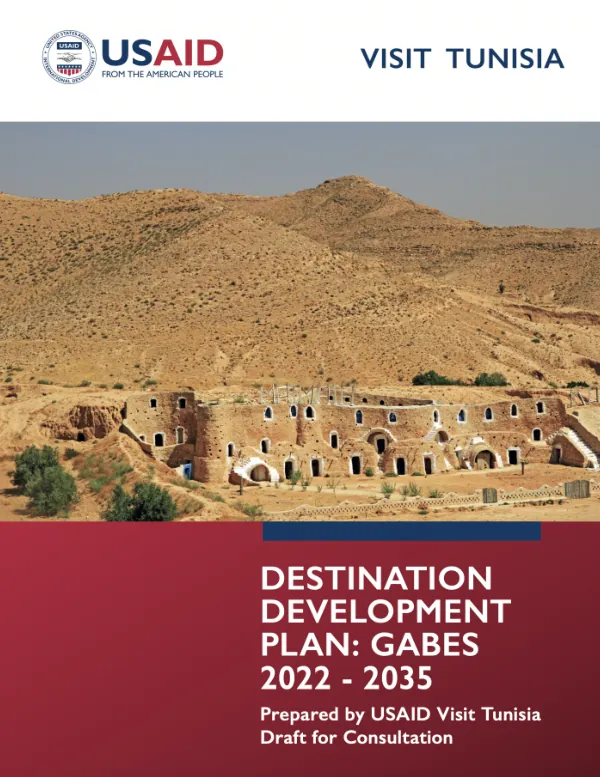
Gabes Destination Development Plan
The Gabes region in Tunisia is a significant tourist destination, boasting a rich history, natural beauty, and cultural heritage.
2023 · 53 pages
Sign in to readA free account is required to download.
Abstract
The region's tourism economy is driven by its unique attractions, including Matmata, Toujane, El Hamma, and Chenini, which offer a range of experiences for visitors. Matmata, for instance, is famous for its troglodyte dwellings, while Toujane is a popular spot for adventure tourism and traditional cuisine. El Hamma is known for its natural thermal water sources, and Chenini is a treasured oasis that has been nominated for UNESCO World Heritage Site status. The Gabes region's tourism sector is characterized by a mix of tangible and intangible attractions, which are critical factors in demand. The region's infrastructure, including accommodations, restaurants, and retail services, is well-developed, catering to the needs of tourists. However, the sector faces challenges, such as limited market access and inadequate infrastructure, which hinder its growth. The Destination Development Plan (DDP) for Gabes aims to elevate tourism in the region by identifying key investment priorities, including infrastructure needs. The plan is designed to be utilized by the regional destination to advocate for themselves and future tourism and infrastructure investments in their region. The DDP development process involved a dialogue with a wide range of stakeholders, including local government, tour and transport operators, accommodation providers, small business owners, and residents across the Gabes region. The DDP is built on four strategic objectives: compete, diversify, invest, and market, with the addition of a fifth objective, destination management. These strategies are designed to support the sustainable growth of the tourism industry in Gabes while enhancing the quality of life for people living in the region. The plan takes a Sustainable Destination Management approach, addressing negative impacts on the industry while creating positive impacts for local residents, the environment, and cultural heritage. The DDP outlines the 2035 vision for Gabes' tourism sector, strategic objectives, targets, and key performance indicators, strategic initiatives, and a detailed action matrix. The action matrix is meant to be used by stakeholders in implementation, prioritizing the most urgent actions in the near term and identifying what steps can be accomplished in the mid-to-long term. The plan's success will depend on several factors, including collaboration and communication among partners, implementation, effective tourism institutions and capacity, adequate funding, productive public-private partnerships, and monitoring and reporting of this plan. The Gabes region's tourism sector has shown significant growth in recent years, with a 27% increase in household income among program participants compared to the control group. The region's tourism industry is expected to continue growing, driven by its unique attractions, well-developed infrastructure, and strategic investment priorities outlined in the DDP.