USAID
Tabarka-Ain-Draham Destination Development Plan
The Tabarka-Aïn Draham region in Tunisia is a hot spot for tourist activity, located on the northern coast of the Béja Governorate.
2023 · 67 pages
Sign in to readA free account is required to download.
Abstract
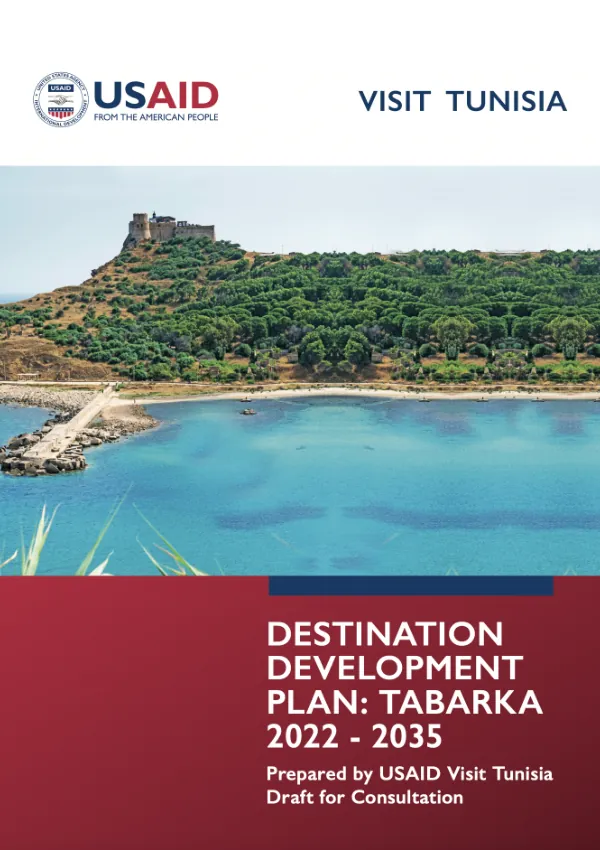
The destination is home to a marina on the Mediterranean Sea and the Tabarka-Aïn Draham International Airport. Tabarka-Aïn Draham is renowned for its natural wealth, making it an ideal ecotourism location. The mountainous and coastal areas offer a diverse range of activities, including hiking, biking, yachting, and scuba diving. The region's touristic offerings include the famous international sports center of Aïn Draham and wellness tourism in the form of thalassotherapy and thermal therapy. Despite these touristic assets, the wealth of this region remains poorly managed. The tourism potential of the region requires stronger political will and a more structured tourism industry. Tourism can promote development and provide sustainable livelihoods, although it alone cannot absorb the staggering rate of unemployment in the region. The Tabarka-Aïn Draham region has a diverse range of attractions, including historic sites, museums, and natural attractions. The region is home to a number of historic attractions, including the Tabarka-Aïn Draham International Airport, which is a significant landmark in the region. The region also has a number of museums, including the Tabarka Museum, which showcases the region's rich cultural heritage. The region's natural attractions include its beautiful beaches, mountains, and forests. The Tabarka-Aïn Draham region is also home to a number of natural attractions, including the Tabarka-Aïn Draham National Park, which is a protected area that is home to a diverse range of flora and fauna. The region's natural attractions offer a range of activities, including hiking, biking, and wildlife watching. The region's tourism sector is characterized by a number of strengths, including its natural beauty, rich cultural heritage, and diverse range of attractions. However, the sector also faces a number of challenges, including a lack of infrastructure, limited marketing and promotion, and a lack of investment in the tourism industry. The region's tourism sector has a number of opportunities for growth and development, including the development of new tourism products and experiences, the improvement of infrastructure, and the promotion of the region's tourism industry. The Tabarka-Aïn Draham region's tourism sector has a number of weaknesses, including a lack of coordination and collaboration among stakeholders, limited capacity and resources, and a lack of effective marketing and promotion. The region's tourism sector also faces a number of threats, including competition from other destinations, a lack of investment in the tourism industry, and a lack of effective management and governance. The Destination Development Plan (DDP) for the Tabarka-Aïn Draham region aims to bring together public and private sector stakeholders to have a public-private dialogue on tourism investment priorities, including infrastructure requirements for elevating tourism within the destination. The plan is designed to be used by the regional destination to advocate for its interests and the future of tourism and infrastructure investment in its region. The DDP development process involved a dialogue with a wide range of stakeholders, including local government, tour and transportation operators, accommodation providers, small business owners, and residents of the northwest region of Tunisia. The process also involved desk research to collect data on key tourism indicators and interviews with key stakeholders to build a common vision of sustainable and integrated tourism development in the Tabarka-Aïn Draham region. The DDP outlines the 2035 vision for the Tabarka-Aïn Draham region's tourism sector and the plan's strategic objectives, strategic initiatives, key performance indicators, and a detailed action matrix. The action matrix is meant to be used by stakeholders in implementation, prioritizing the most urgent actions in the near term and identifying what steps can be accomplished in the mid-to-long term. The success of the DDP and its implementation will depend on several factors, including collaboration and communication among partners, implementation, effective tourism institutions and capacity, adequate funding, productive public-private partnerships, and monitoring and reporting of the plan.
Related documents