ENCOMPASS, LLC
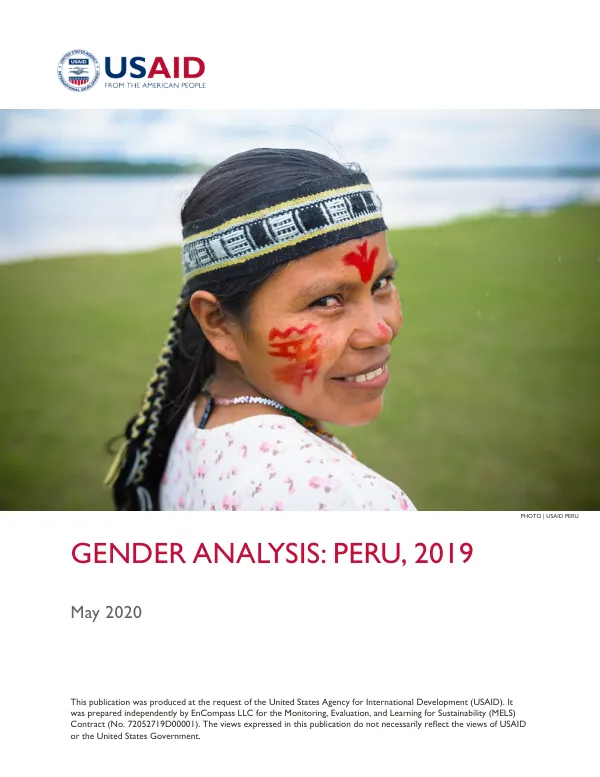
Gender Analysis: Peru, 2019
The 2019 Gender Analysis for Peru was conducted to inform the development of the 2020-2025 Country Development Cooperation Strategy (CDCS) for the country.
2020 · 124 pages
Sign in to readA free account is required to download.
Abstract
The study aimed to identify gender gaps and needs that hinder equitable participation and access to economic, political, and social opportunities. The analysis used secondary information and in-depth interviews with key stakeholders to assess the current situation in Peru. The study found that Peru has made progress in various areas, including education and health, but persistent gender gaps remain in the political and economic participation of women. Additionally, the indigenous population, people with disabilities, and the LGBTI population face greater disadvantages in accessing opportunities, particularly in rural areas. The analysis also highlighted the sexual division of labor and gender stereotypes as barriers to access to economic, political, and social sectors. The study identified several key findings relevant to the development of the CDCS objectives. These include the need to address the underrepresentation of women in decision-making positions, the lack of access to education and economic opportunities for women, and the need to address the intersectional barriers faced by marginalized groups. The analysis also highlighted the importance of addressing gender-based violence and promoting policies that support gender equality. The study's methodology involved the use of secondary information and in-depth interviews with key stakeholders. The sampling strategy included interviews with government officials, civil society organizations, and private sector representatives. The study's strengths and limitations are discussed in the report, including the reliance on secondary information and the potential biases of the interviewees. The analysis found that the Peruvian government has implemented policies aimed at promoting gender equality, including the creation of the Ministry of Women and Vulnerable Populations (MIMP) and the adoption of the Equal Opportunity Act (EOA). However, the study also identified areas where the government can improve, including increasing the representation of women in decision-making positions and addressing the intersectional barriers faced by marginalized groups. The study's conclusions emphasize the need for a comprehensive approach to addressing gender inequality in Peru. This includes addressing the root causes of gender-based violence, promoting policies that support gender equality, and increasing access to education and economic opportunities for women. The study's recommendations include the development of a national strategy to address gender-based violence, the creation of a gender equality fund, and the implementation of policies to increase the representation of women in decision-making positions. The study's findings and recommendations have implications for the development of the CDCS for Peru. The analysis highlights the need for a comprehensive approach to addressing gender inequality and the importance of addressing the intersectional barriers faced by marginalized groups. The study's recommendations provide a framework for the development of policies and programs that support gender equality and promote the empowerment of women and marginalized groups in Peru.
Related documents