USAID
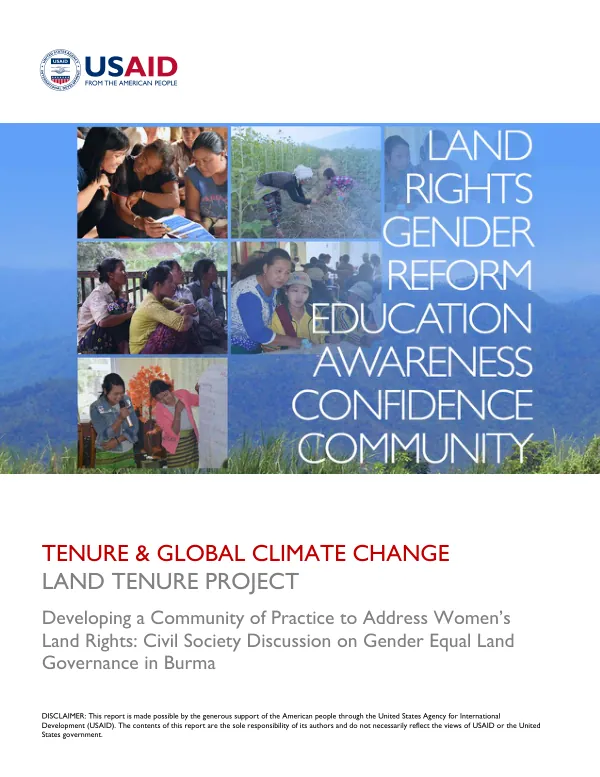
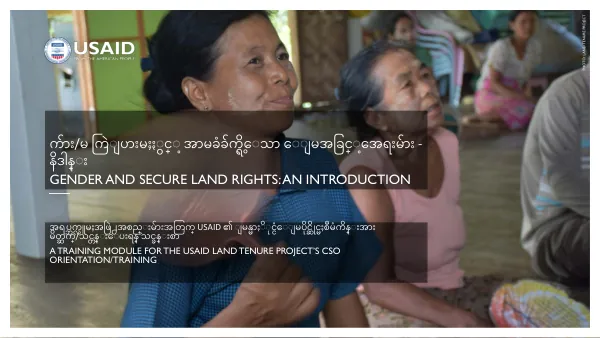
GENDER AND SECURE LAND RIGHTS: AN INTRODUCTION
Land tenure and land rights are critical components of rural development, particularly for women.
2018 · 53 pages
Sign in to readA free account is required to download.
Abstract
In many countries, women's land rights are often insecure, leading to limited access to resources, economic opportunities, and social empowerment. The USAID Land Tenure Project aims to improve land tenure security for women and other vulnerable groups. The project focuses on promoting secure land rights for women, which is essential for their economic empowerment and social well-being. Women's land rights are often linked to their ability to access credit, markets, and other economic opportunities. Secure land rights also enable women to make decisions about their land use, which can improve their livelihoods and reduce poverty. In many communities, women's land rights are often insecure due to various factors, including cultural and social norms, lack of documentation, and limited access to justice. Women may face challenges in accessing and controlling land, which can limit their economic opportunities and social empowerment. The project recognizes that women's land rights are not uniform and that different groups of women face unique challenges and experiences. For example, women from different ethnic groups, age groups, and socioeconomic backgrounds may have different levels of access to land and different experiences of land rights insecurity. The project aims to promote secure land rights for women by addressing the root causes of land rights insecurity, including cultural and social norms, lack of documentation, and limited access to justice. The project also seeks to empower women to make decisions about their land use and to access economic opportunities. To achieve its goals, the project uses a range of approaches, including training and capacity building, community mobilization, and policy advocacy. The project works with local communities, governments, and other stakeholders to promote secure land rights for women and to address the root causes of land rights insecurity. The project's approach is based on the recognition that women's land rights are not just a matter of individual rights, but also a matter of social and economic empowerment. By promoting secure land rights for women, the project aims to contribute to the overall development of rural communities and to reduce poverty and inequality. In Rwanda, for example, the project has worked with local communities to promote secure land rights for women. The project has provided training and capacity building to women on land rights and has worked with local governments to develop policies and laws that promote secure land rights for women. The project's work in Rwanda has shown that promoting secure land rights for women can have a positive impact on their economic empowerment and social well-being. Women who have secure land rights are more likely to access credit, markets, and other economic opportunities, and are more likely to make decisions about their land use. In conclusion, promoting secure land rights for women is critical for their economic empowerment and social well-being. The USAID Land Tenure Project's approach to promoting secure land rights for women is based on the recognition that women's land rights are not just a matter of individual rights, but also a matter of social and economic empowerment. By promoting secure land rights for women, the project aims to contribute to the overall development of rural communities and to reduce poverty and inequality.
Related documents