USAID DEC
Generator System Configurations
Generator System Configurations Typical configurations for generator systems vary depending on the specific requirements of the facility.
8 pages
Sign in to readA free account is required to download.
Abstract
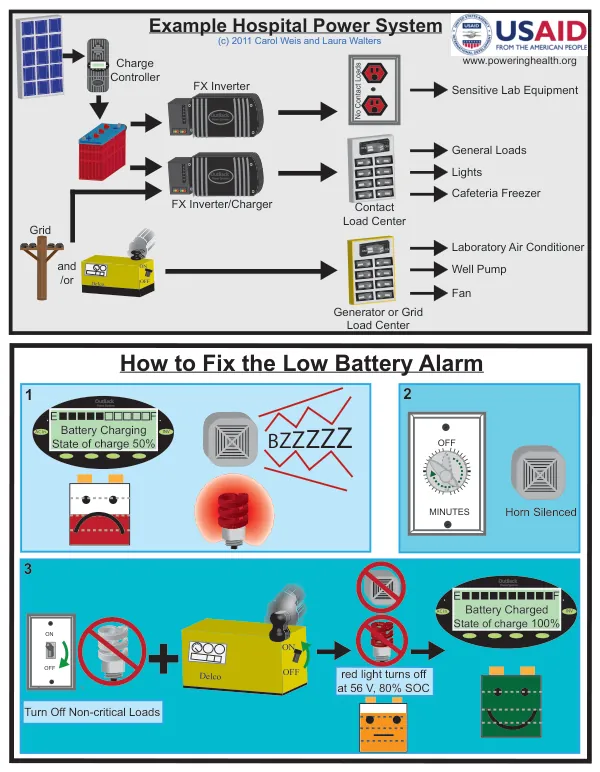
One common configuration is the whole facility generator, which is sized to power the entire facility. This type of generator is designed to provide primary power to the facility, handling all loads during periods of utility power loss. In contrast, emergency loads only generators are sized to power only critical loads, such as laboratories or emergency systems. These generators are typically smaller and more cost-effective than whole facility generators, but they are designed to provide backup power only to essential systems. Another configuration involves the addition of an inverter and batteries to the generator system. In this setup, the generator is sized to power lab loads, as well as battery charging loads. This configuration is often used in facilities where there is a need for both backup power and energy storage. The addition of other emergency loads to the generator system further expands its capabilities. In this configuration, the generator is sized to power lab loads, battery charging loads, and other emergency loads, such as HVAC systems or lighting. This setup provides a higher level of redundancy and reliability for critical systems. Generators can also be classified as either primary power or standby power. Primary power generators are designed to run for extended periods, typically 12 to 18 hours per day, at 75% of full load. In contrast, standby power generators are designed to run only a few hours per day, at 50% to 75% of full load. The primary power rating is often about 80% of the standby power rating, highlighting the differences in design and application between these two types of generators.
Related documents