USAID
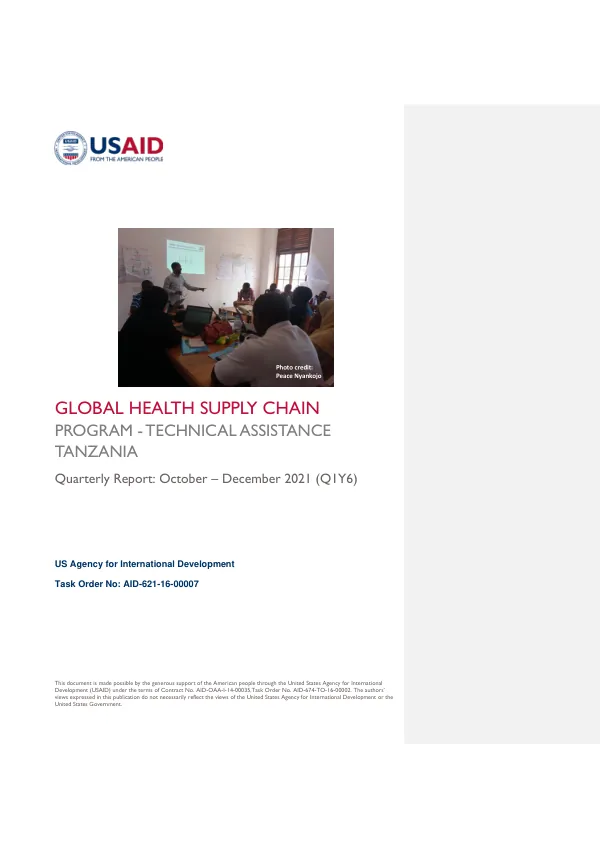
Global Health Supply Chain Program - Technical Assistance
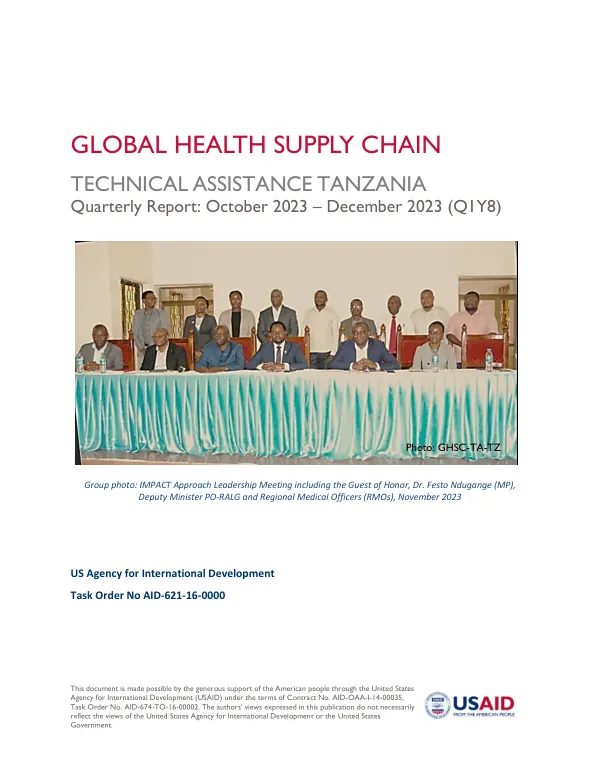
The Global Health Supply Chain Program - Technical Assistance in Tanzania is a quarterly report covering the period from October 2023 to December 2023.
2024 · 65 pages
Sign in to readA free account is required to download.
Abstract
The program aims to improve the delivery of health commodities in service sites, broaden stakeholder understanding and engagement of the supply chain system, and strengthen enabling environments to improve supply chain performance. Key accomplishments in Q1FY24 (Q1Y8) include the operationalization of strategic plans, strengthening of supply chain management information systems, and the establishment of a culture of collaboration and information sharing. The program also focused on improving delivery of health commodities, with a 27% increase in the percentage of facilities submitting timely and complete Electronic Logistics Management Information System (ELMIS) reports. The program's work streams achieved significant milestones, including the strengthening of supply chain management information systems, the improvement of delivery of health commodities, and the broadening of stakeholder understanding and engagement of the supply chain system. The program also established a culture of collaboration and information sharing, which is essential for improving supply chain performance. The program's objectives and interventions are designed to address the challenges faced by the health supply chain in Tanzania. The program's work streams are focused on providing strategic planning and implementation assistance, improving delivery of health commodities, broadening stakeholder understanding and engagement of the supply chain system, and strengthening enabling environments to improve supply chain performance. The program's implementation risks, challenges, and mitigation measures are also addressed in the report. The program's performance management plan (PMP) outlines the key performance indicators (KPIs) and targets for the program, which are used to monitor progress and identify areas for improvement. The program's training and travel activities during the quarter are also reported, including the capacity building for government staff on how to monitor health supply chain eLearning workshops and the review and updates of eLearning modules sessions in Morogoro. The program's achievements are reflected in the data presented in the report, which shows significant improvements in the delivery of health commodities, the strengthening of supply chain management information systems, and the broadening of stakeholder understanding and engagement of the supply chain system. Overall, the Global Health Supply Chain Program - Technical Assistance in Tanzania has made significant progress in improving the delivery of health commodities, broadening stakeholder understanding and engagement of the supply chain system, and strengthening enabling environments to improve supply chain performance. The program's achievements are a testament to the hard work and dedication of the program team and the government of Tanzania.