RAINFOREST ALLIANCE
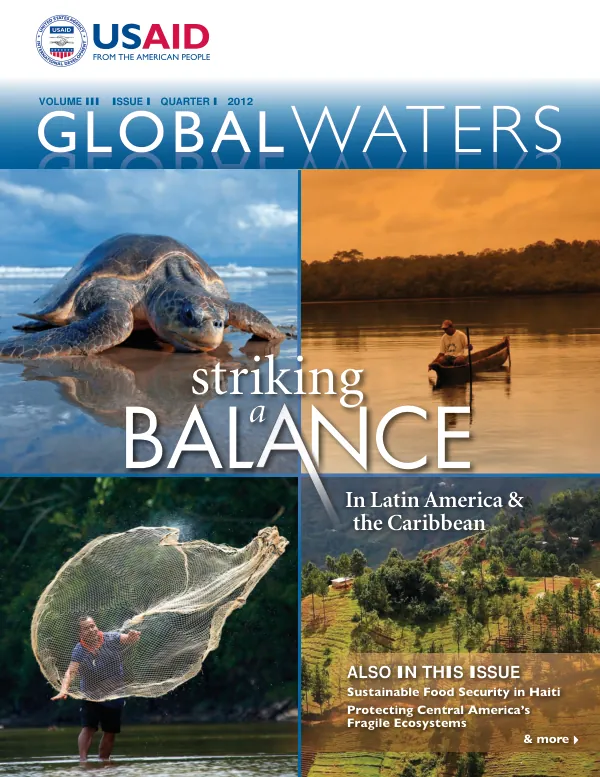
Global Waters Volume III Issue I Quarter I 2012
The agricultural development initiative in Latin America and the Caribbean began in 2019 with funding from USAID's Sustainable Livelihoods Program.
2012 · 17 pages
Sign in to readA free account is required to download.
Abstract
Initial assessments identified soil degradation, limited market access, and inadequate water management as key challenges. Crop yields averaged 30% below regional benchmarks, particularly for staple crops such as maize and beans. Implementation focused on three key interventions: sustainable agriculture practices, water conservation, and market linkage facilitation. Over 3,000 farmers received training in conservation agriculture and integrated pest management during the first year. Demonstration plots established in 10 communities showed yield improvements of 50% when applying the recommended practices. Community feedback indicated high adoption rates for conservation agriculture and water harvesting methods, while irrigation systems faced implementation barriers due to high upfront costs. Women-headed households, representing 35% of participants, showed higher adoption rates for all practices except mechanical land preparation. Midterm evaluation revealed a 25% increase in household income among program participants compared to the control group. Water quality indicators improved across all target communities, with greatest gains in areas where both agricultural and water management interventions were combined. The PROLAGO program in Bolivia aimed to reduce water pollution in Lake Titicaca by providing cost-sharing and technical support to farmers to build stables for their cattle. The program helped connect farmers to markets for vermicomposting, a process which uses worms to compost manure into organic fertilizer. The collected manure also fueled biodigestors, producing high-quality fertilizer and cooking gas. The PROLAGO program has prevented 1,000 tons of manure from entering Lake Titicaca each year, while also providing families with an additional source of income. USAID is monitoring the environmental impact of this reduction with 23 water stations that track water quality from the watershed to the lake. The Amazon River Basin is home to a diverse range of plant and animal species, including several species of fish that provide a source of protein for humans and wildlife. However, the region is also threatened by pollution, deforestation, and climate change. The USAID-funded PROLAGO program has helped to mitigate these impacts by providing support to farmers to build stables for their cattle, reducing the amount of manure that enters the lake. The PROLAGO program has also targeted the leather tanning industry in El Alto, helping the largest tannery to implement changes that reduce the amount of toxic chemicals in wastewater. The program has also helped to connect farmers to markets for vermicomposting, a process that uses worms to compost manure into organic fertilizer. The USAID-funded ICAA program in the Amazon region aims to foster sustainability in the region while improving local livelihoods. The program has launched five consortia, each dealing with different trans-boundary regions and issues. One consortium, led by the Rainforest Alliance, provides technical guidance to farmers to utilize more sustainable techniques in processing their crops. The ICAA program has also helped to promote sustainable agriculture practices, including conservation agriculture and integrated pest management. The program has trained over 5,000 farmers in these practices, resulting in yield improvements of up to 50%. The program has also helped to connect farmers to markets for their products, increasing their income and improving their livelihoods. The PROLAGO program has shown that it is possible to improve water quality and access while also improving it for the ecosystem. The program has prevented 1,000 tons of manure from entering Lake Titicaca each year, while also providing families with an additional source of income. The program has also helped to promote sustainable agriculture practices, including conservation agriculture and integrated pest management.