USAID DEC
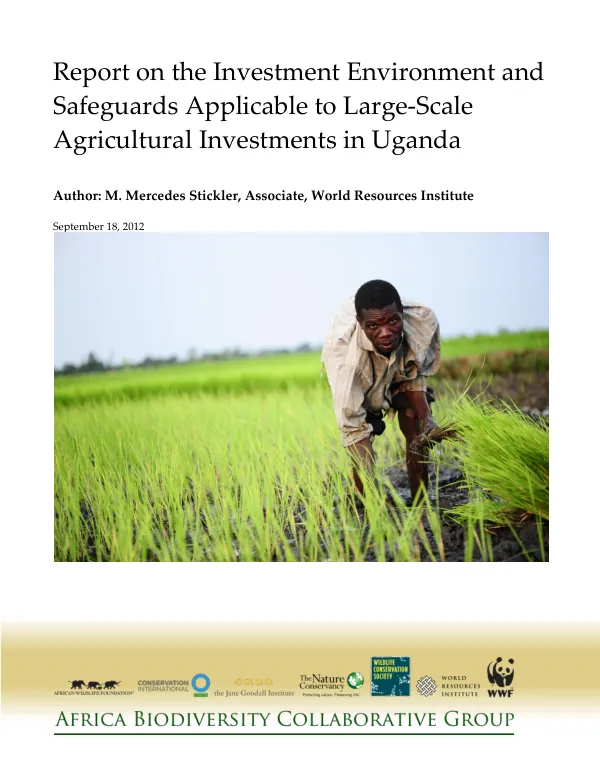
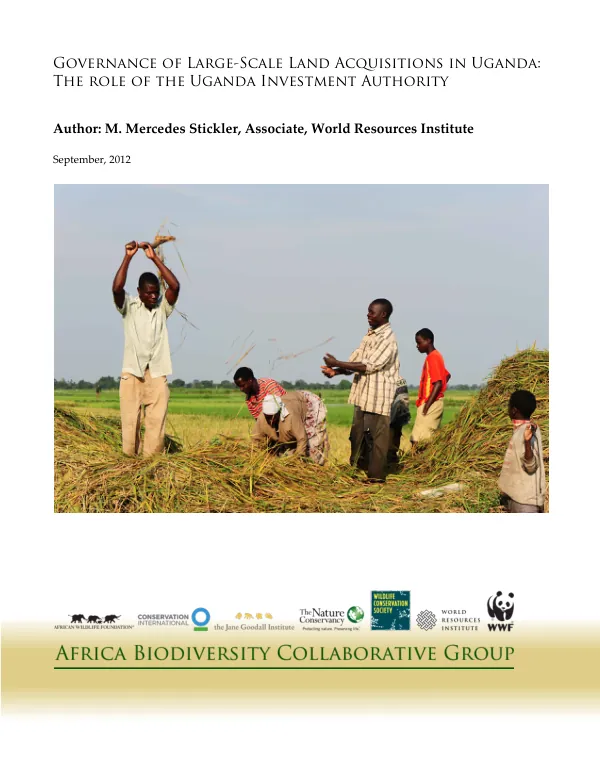
Governance of Large-Scale Land Acquisitions in Uganda: The role of the Uganda Investment Authority
Sign inAFRICAN BIODIVERSITY COLLABORATIVE GROUP
Governance of Large-Scale Land Acquisitions in Uganda: The role of the Uganda Investment Authority
Land acquisition context in Uganda is characterized by a surge in investor interest in large-scale agricultural production following the spike in commodity prices in 2007-2008.
2012 · 43 pages
Sign in to readA free account is required to download.
Abstract
Media reports revealed that investors had expressed interest in 56 million ha of land for agriculture and forestry production in less than one year, with sub-Saharan Africa accounting for 2/3 of this expressed demand. The global median project size of 40,000 ha implies that these investments could have major implications for rural land rights and existing land users, especially smallholders. Investor interest in farmland is expected to continue to increase as a result of several major global trends. The FAO predicts that food production will have to increase by at least 70% by 2050 to meet the daily calorie needs of more than 9 billion people. This increase in food demand is driving demand for arable land, while demand for biofuels is growing in response to policy mandates in Europe, the United States, and elsewhere. The unpredictability of global food markets has led some major net food-importing nations to pursue direct farming investments abroad to guarantee their food supplies. Considerable international attention has focused on investments in Ethiopia, Madagascar, and Sudan, but other African countries are also allocating large plots of land to investors. In Kenya, land in the Tana Delta is being allocated for sugar cane plantations, displacing hundreds of families and destroying one of Africa's most important bird habitats. In Cameroon, DR Congo, and Congo (Brazzaville), natural forest is being allocated to foreign companies to develop large palm oil plantations. Uganda has a history of allocating land for large-scale agricultural production, with media reports indicating that a deal is underway to lease 840,000 ha in Uganda to Egypt for wheat and maize production to be shipped back. The government has also allowed large-scale farming operations in a number of protected areas, including Butamira Forest Reserve and several Forest Reserves on Bugala Island. This paper aims to help decision-makers better understand the process through which investors acquire agricultural land outside the protected estate in Uganda. The paper will focus primarily on the role of the Uganda Investment Authority and its enabling legislation—the Investment Code Act of 1991. Other relevant government institutions and legislation will also be discussed to the extent that they interface with the duties of the Uganda Investment Authority. The Uganda Investment Authority plays a key role in facilitating investor access to land, and its enabling legislation—the Investment Code Act of 1991—provides the framework for large-scale land acquisitions. The Act requires investors to obtain a license from the Uganda Investment Authority before acquiring land for investment purposes. The Authority is responsible for processing applications, conducting environmental impact assessments, and ensuring that investors comply with the terms and conditions of their licenses. However, challenges related to policy and practice have been identified, including the lack of transparency in land acquisition processes and the failure to provide adequate compensation to affected communities. The paper recommends that the government clarify the rights of foreign investors to acquire farmland, codify the procedures for investors to access farmland, and focus government efforts on providing public goods to facilitate investment.