USAID DEC
Grantee Progress Report Template
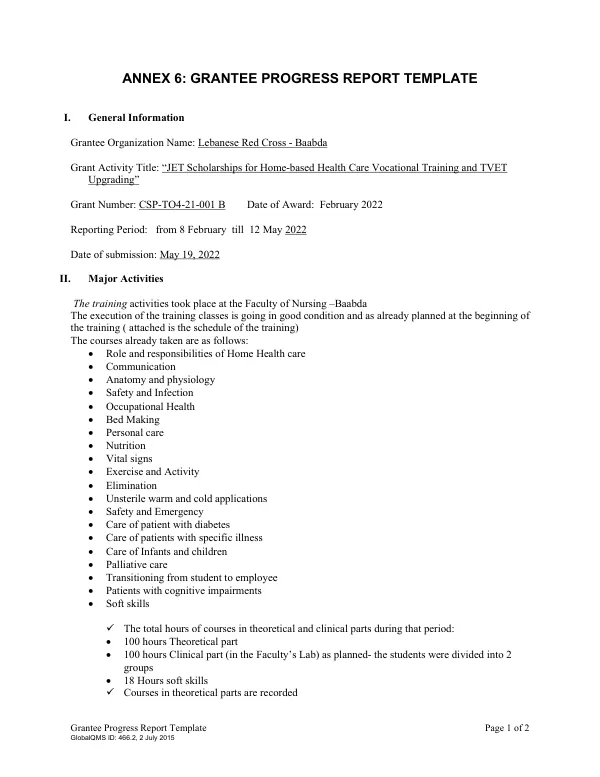
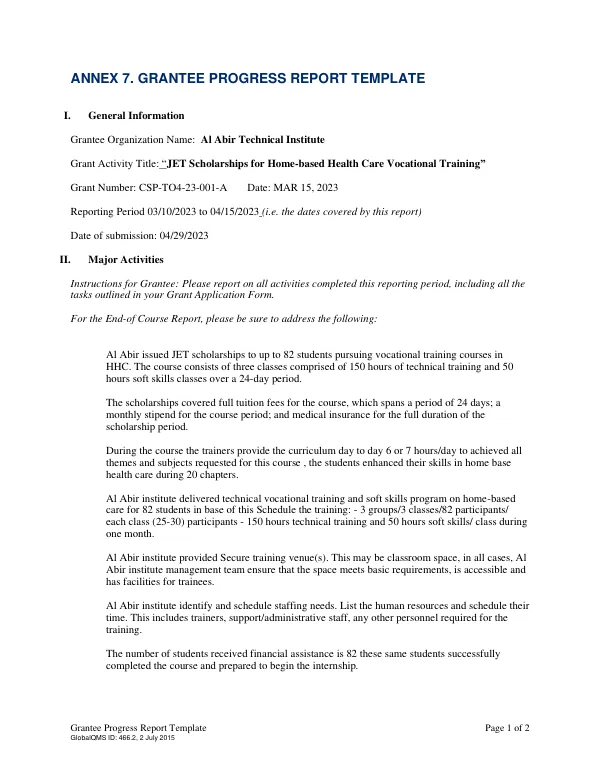
Al Abir Technical Institute implemented the "JET Scholarships for Home-based Health Care Vocational Training" program, which provided full tuition fees, a monthly stipend, and medical insurance to up to 82 students pursuing vocational training courses in home-based health care.
2 pages
Sign in to readA free account is required to download.
Abstract
The course consisted of 150 hours of technical training and 50 hours of soft skills classes over a 24-day period. The training program was delivered in three classes, each with 25-30 participants, and covered 20 chapters of home-based health care. Trainers provided day-to-day curriculum for 6 or 7 hours a day to achieve all themes and subjects requested for the course. Al Abir institute ensured that the training venue met basic requirements, was accessible, and had facilities for trainees. The institute also identified and scheduled staffing needs, including trainers, support/administrative staff, and other personnel required for the training. The program faced challenges due to the compressed timeline and Ramadan time, which affected the students' level of engagement. However, Al Abir institute and its team were flexible and adjusted the daily program to accommodate the students' needs. The institute ensured that each time, full staff followed up with the students to decrease problems and achieve the objectives of the activities designed. The program's main achievement was the successful completion of the course by 82 students, who are now prepared to begin their internships. The institute has planned activities for the next reporting period, including preparing and identifying internships schedules and employers for each student. Fifteen students will be enrolled in a medical unit for internship to enable their skills and open investment opportunities for job provision. The program's implementation focused on providing technical vocational training and soft skills programs to students in home-based care. Al Abir institute delivered the training program, which included 150 hours of technical training and 50 hours of soft skills classes. The institute also provided a secure training venue, identified and scheduled staffing needs, and ensured that the space met basic requirements and was accessible. The program's success is a testament to the institute's capacity to provide high-quality training programs despite the compressed timeline and challenges faced during the course.
Related documents