CHEMONICS
IRAQ REGIONAL PROGRAM II SEMI-ANNUAL REPORT OCTOBER 2021 TO MARCH 2022
Iraq's parliamentary elections, held on October 10, 2021, saw a 43% turnout, with more than 9.6 million Iraqis casting their votes.
2022 · 18 pages
Sign in to readA free account is required to download.
Abstract
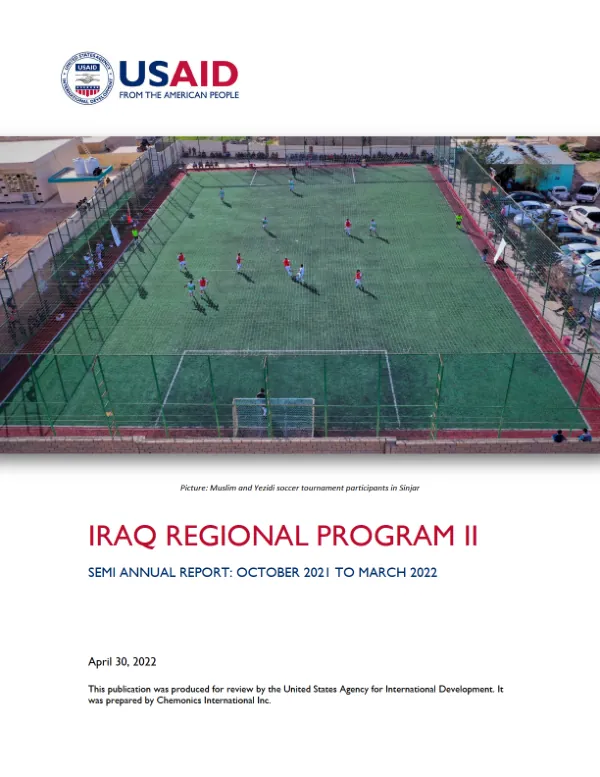
Populist Shia cleric Muqtada al-Sadr emerged as a clear front-runner, winning 73 of the 329 available seats. The Fatah Alliance, the pro-Iran political wing of the Popular Mobilization Forces, was dealt a crushing defeat, with its seat numbers dropping from 48 to 17. Reform-minded candidates, including those from Imtidad and independents, collectively won 70 seats. The elections also saw strong performance from alternative candidates, who were able to capitalize on the growing discontent with the traditional Shia and Sunni parties. However, the elections were marred by allegations of widespread fraud, with Fatah immediately rejecting the preliminary results and staging sit-in demonstrations outside the International Zone in Baghdad. Tensions culminated in a November 7th assassination attempt against Prime Minister Mustafa al-Kadhimi, which was interpreted by most observers as a signal from pro-Iran groups that they are willing to take extreme measures. Despite appeals against the results, Iraq's Federal Supreme Court ratified the election results on December 27th, paving the way for the newly elected parliament to hold its first session. With a strengthened mandate, Sadr is in a strong position to influence government formation, and his parliamentary strength and political coalition with key Sunni and Kurdish allies position him to lead a national majority government. However, rival Shia factions have challenged Sadr's majority, arguing that they, in fact, constitute the largest parliamentary bloc. A second parliamentary session to elect the president occurred on February 8, and the president should then nominate a prime minister from the largest parliamentary bloc. The prime minister, in turn, has 30 days to form a government. However, the dispute over largest bloc status and deepening rifts within both the Kurdish and Shia blocs threaten to undermine the consensus-based approach to government formation, as well as the selection of a president. Additional challenges, including a recent decision by the Federal Supreme Court striking down the ability of the Kurdish Regional Government to sell oil and gas autonomously, are expected to increase tensions between Erbil and Baghdad. IRP II, in response to these challenges, designed a series of activities aligned with the program's strategic framework and district-specific strategies. Activities also promoted gender equity and social inclusion and incorporated robust environmental mitigation and management aspects. A selection of activities implemented during this reporting period includes a national campaign to increase awareness of Iraq's water crisis and promote effective water conservation. The campaign, launched in January 2022, consists of a series of educational videos and aims to create a sense of shared responsibility and civic action among Iraqis. IRP II also supported a soccer tournament organized by IRP II in Sinjar, which brought together Yezidi and Muslim community educators to offer a positive alternative to perceptions of divisiveness between the two communities. The tournament was part of a greater effort to counter disinformation and divisive rhetoric. IRP II's activities also included promoting gender equity and social inclusion, as well as incorporating robust environmental mitigation and management aspects in line with the IRP II's Environmental Management and Mitigation Plan and Climate Action Strategy. The Government of Iraq's inability to increase public spending despite the growth in oil revenues until a government is formed has exacerbated the challenges facing the country. Iraqis are also feeling the pressure of increased global inflation levels and an ongoing drought, leading to increased prices of staple items and more regular public protests across the country. These challenges are expected to increase with the summer heat, putting further pressure on Iraq's stability.