FEWS NET
GUATEMALA Food Security Outlook April through September 2011
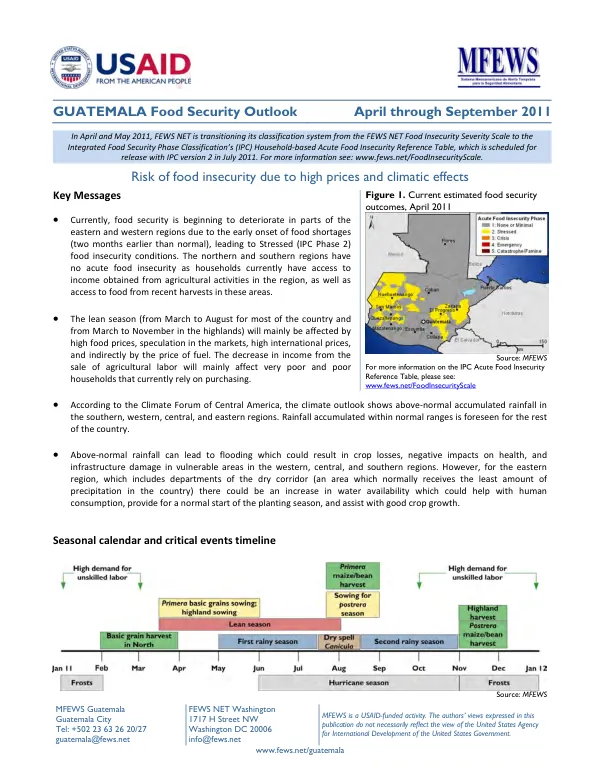
The Mesoamerican Food Security Early Warning System (MFEWS) in Guatemala has identified a deteriorating food security situation in the eastern and western regions due to the early onset of the lean season, which typically begins in May or June.
2011 · 6 pages
Sign in to readA free account is required to download.
Abstract
The current food security situation is classified as Stressed (IPC Phase 2) in these regions, with over 96,000 very poor and poor families affected. The main causes of this situation are poor fertilization, damage from climate variations, and the effects of pests and diseases on last year's maize and bean crops, resulting in a decline in harvests and household reserves. The lean season, which will last approximately five months in the eastern region and seven months in the highlands, will be mainly affected by high food prices, speculation in the markets, high international prices, and indirectly by the price of fuel. The cost of the basic food basket has increased by 2 percent from December to the present date, with the cost of tortillas, bread, sugar, and oil showing the greatest increase. Maize prices have risen by more than 30 percent in some regions of the country due to crop losses nationwide and the low input of maize from Mexico. The Climate Forum of Central America has forecast above-normal accumulated rainfall in the southern, western, central, and eastern regions, which could lead to flooding and crop losses in vulnerable areas. However, the eastern region, which includes the dry corridor, may experience an increase in water availability, which could help with human consumption, provide for a normal start of the planting season, and assist with good crop growth. The most likely food security scenario for April through September 2011 assumes a reduction of up to 20 percent in income earned during the unskilled labor season in the cultivation of sugar cane and coffee due to the early end of cultivation. This will reduce food purchasing power for at least a month, especially in the case of very poor and poor households in the western, southern, and eastern regions of the country. The annual lean season for the eastern and western regions started in March, when it should usually start in May/June, and will conclude in August/September. The national scenario for the next six months does not show deterioration in the acute food insecurity situation in the north and south of the country. The poorest households have the reserves expected for a normal year and for being in the area where the country's agricultural activity takes place in crops such as sugar cane, rubber, pineapple, and African palm. There are greater job opportunities for households which depend on purchases, and an increase of more than 15 percent is not foreseen in the price of basic grains in regards to the average over the last five years, which would greatly affect purchasing power.