USAID DEC
Digital Community Centers Stellar Ixq-Saq’e: Ideating and Prototyping Connectivity Opportunities for Women in Alta Verapaz, Guatemala
Sign inDAI
Digital Community Centers Stellar Ixq-Saq’e: Ideating and Prototyping Connectivity Opportunities for Women in Alta Verapaz, Guatemala
The Stellar Ixq-Saq'e Digital Community Centers project was initiated in February 2021 by New Sun Road, P.B.C.
2021 · 34 pages
Sign in to readA free account is required to download.
Abstract
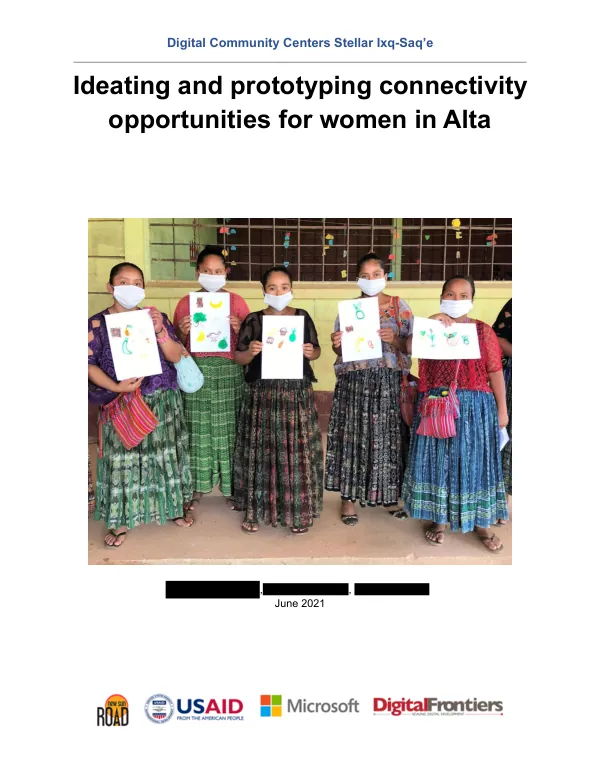
(NSR) with funding from DAI-Digital Frontiers, supported by USAID under the USAID-Microsoft initiative. The project aimed to increase digital opportunities for indigenous women in rural communities in Alta Verapaz, Guatemala. NSR is a Delaware-registered public benefit corporation based in California that develops data-driven IoT technology solutions for solar energy systems and connectivity. The Stellar Ixq-Saq'e Digital Community Centers are safe and inclusive spaces that provide access to solar energy, computers, and Internet connectivity to rural communities without electrification. The centers derive their name from a combination of Stellar (New Sun Road's solar energy monitoring and control platform) and the Q'eqchi' language words for woman (Ixq) and sun (Saq'e). A design thinking process was designed for the co-creation of the business models for the SIS Centers, involving the participation of one hundred and thirty-six women from the communities of Corozal, Sacoyou, Nimlajacoc, Rocja Puribal, San Antonio I, San Antonio IV, Sequilá, Sesalche, El Mirador Nuevo San Fernando, and Setzac. The main problems that women currently face in these communities include limitations in access to electricity, low income, little or no data coverage, long travel distances, and poorly maintained roads to connect towns and communities with digital services. Women also expressed concerns about feeling at risk when seeking connectivity from their phone in lonely and remote places. Analysis and validation of the SIS Centers program were developed taking into account the data collected and the considerations of the report "Perspectives from Local Women on Connectivity Realities and Opportunities in Alta Verapaz, Guatemala". The SIS Centers will offer a digital literacy program taught at the centers, with local NSR trainers delivering the program for one year at no cost to the women in the community. Most of the women consider that the biggest barrier for not using the internet is not having the knowledge to use it, and 121 of the 122 women are interested in learning how to use the internet to access health services or information. The SIS centers will be available in Q'eqchi' and Spanish, with trainers guiding the women of the community during the digital literacy course in the Q'eqchi' language, considering visual and audio tools for groups with low literacy levels in Spanish and Q'eqchi'. The SIS Centers will have safe opening hours and spaces for women and children, with filters for inappropriate content and protocols to reduce the possibility of spreading COVID-19. There will also be training on digital security, and opportunities will be opened for local partners to teach complementary topics such as health, respect, gender equity, security, citizen participation, among others. Women who complete the digital literacy program will be certified as trainers of SIS Centers, enabling them to share their knowledge with other women in their communities. The SIS Centers will be implemented in the communities of Corozal, Sacoyou, Nimlajacoc, Rocja Puribal, San Antonio I, San Antonio IV, Sequilá, Sesalche, El Mirador Nuevo San Fernando, and Setzac, with the support of various local partners, including Mercy Corps, Plan International, the World Food Program, UN Women, and the Municipal Women's Office of the Municipality of Panzós. The project aims to increase digital opportunities for indigenous women in rural communities in Alta Verapaz, Guatemala, and to empower them with the skills and knowledge necessary to access digital services and improve their lives.