USAID
Nexos Locales Project: San Sebastián Huehuetenango Municipal Fact Sheet
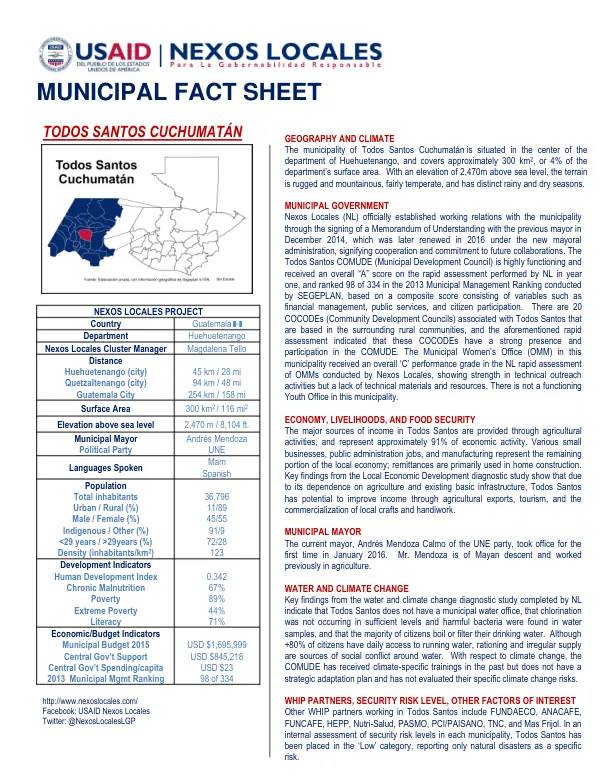
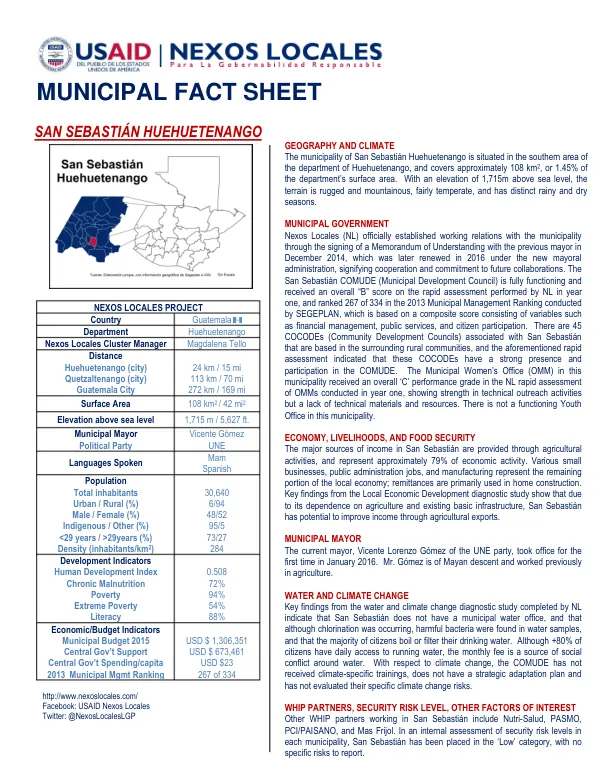
The municipality of San Sebastián Huehuetenango is situated in the southern area of the department of Huehuetenango, covering approximately 108 km2, or 1.45% of the department's surface area.
2016 · 1 pages
Sign in to readA free account is required to download.
Abstract
The terrain is rugged and mountainous, fairly temperate, and has distinct rainy and dry seasons. The elevation above sea level is 1,715m. The municipality has a population of 30,640 inhabitants, with 6% living in urban areas and 94% in rural areas. The population is predominantly indigenous, with 95% identifying as indigenous and 5% as other. The population is also relatively young, with 73% of inhabitants under the age of 29. The municipality has a high population density, with 284 inhabitants per square kilometer. The municipality has a Human Development Index (HDI) of 0.508, indicating a relatively low level of human development. Chronic malnutrition affects 72% of the population, and poverty affects 54% of the population. Extreme poverty affects 88% of the population, and literacy rates are relatively low, with 94% of the population able to read and write. The municipal budget for 2015 was USD $1,306,351, with USD $673,461 in central government support. Central government spending per capita was USD $23. The municipality ranked 267 out of 334 in the 2013 Municipal Management Ranking, conducted by SEGEPLAN. The economy of San Sebastián is primarily driven by agricultural activities, which account for approximately 79% of economic activity. Small businesses, public administration jobs, and manufacturing also contribute to the local economy. Remittances are primarily used in home construction. The municipality has a Memorandum of Understanding with Nexos Locales (NL), a local development organization, which has been renewed in 2016. The San Sebastián COMUDE (Municipal Development Council) is fully functioning and received an overall "B" score on the rapid assessment performed by NL in year one. The Municipal Women's Office (OMM) received an overall "C" performance grade in the NL rapid assessment of OMMs conducted in year one. The municipality has a strong presence of Community Development Councils (COCODEs), with 45 COCODEs associated with San Sebastián. However, the Youth Office is not functioning. The current mayor, Vicente Lorenzo Gómez of the UNE party, took office for the first time in January 2016. Key findings from the water and climate change diagnostic study indicate that San Sebastián does not have a municipal water office, and that although chlorination was occurring, harmful bacteria were found in water samples. The majority of citizens boil or filter their drinking water. With respect to climate change, the COMUDE has not received climate-specific trainings, does not have a strategic adaptation plan, and has not evaluated their specific climate change risks. Other WHIP partners working in San Sebastián include Nutri-Salud, PASMO, PCI/PAISANO, and Mas Frijol. San Sebastián has been placed in the "Low" category in an internal assessment of security risk levels, with no specific risks to report.
Related documents