CENTER FOR INTERNATIONAL FORESTRY AND RESEARCH
Guide to Engaging Indigenous Peoples and Local Communities
Engaging Indigenous Peoples and Local Communities is a vital component of the Central Africa Regional Program for the Environment (CARPE).
2020 · 31 pages
Sign in to readA free account is required to download.
Abstract
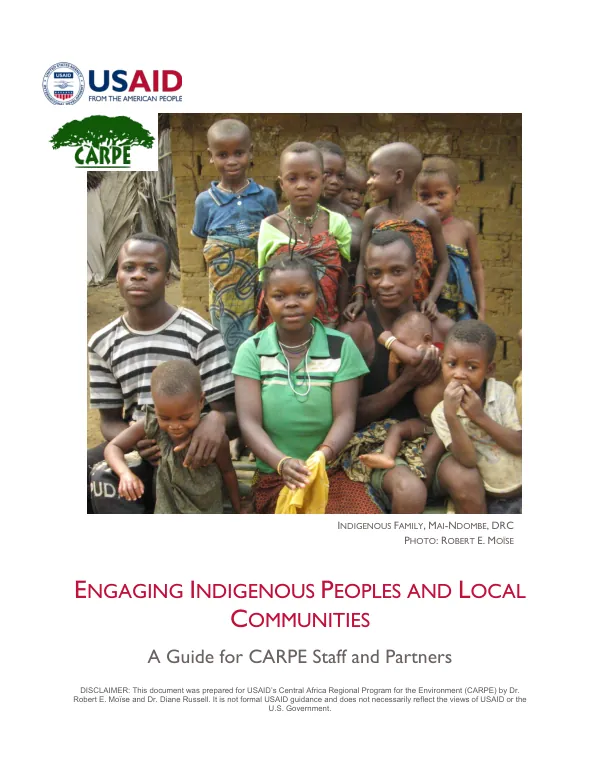
Indigenous Peoples are essential partners in the future of the region and in global conservation efforts. However, they are among the most marginalized populations in Central Africa, placing them in situations of extreme vulnerability. The history and culture of Indigenous and local communities in the region are complex and multifaceted. Indigenous Peoples have lived in the Congo Basin for thousands of years, with some communities maintaining their traditional ways of life despite the influence of colonialism and modernization. The region's rich biodiversity and natural resources have been a source of both benefit and challenge for Indigenous Peoples, who have developed unique relationships with the land and its resources. Human Rights-Based Approaches (HRBAs) are essential for engaging Indigenous Peoples and local communities. HRBAs prioritize the rights and dignity of individuals and communities, recognizing that they have the right to participate in decision-making processes that affect their lives and livelihoods. The Do No Harm principle is also critical, as it emphasizes the importance of avoiding harm to Indigenous Peoples and local communities through CARPE's programming. Free, Prior and Informed Consent (FPIC) is a key principle for engaging Indigenous Peoples and local communities. FPIC requires that communities be fully informed and consulted about any activities that may affect their lands, resources, or way of life. This principle is enshrined in the United Nations Declaration on the Rights of Indigenous Peoples (UNDRIP) and is a cornerstone of CARPE's engagement with Indigenous Peoples. Capacity building is essential for effective engagement with Indigenous Peoples and local communities. CARPE has invested in building the capacity of Indigenous Peoples and local communities to participate in decision-making processes and to manage their natural resources effectively. This includes providing training and technical assistance to community leaders and members, as well as supporting the development of community-based management structures. Monitoring, Evaluation and Learning (MEL) is critical for assessing the effectiveness of CARPE's engagement with Indigenous Peoples and local communities. MEL involves tracking progress towards program goals and objectives, as well as identifying areas for improvement and learning. This includes monitoring the impact of CARPE's programming on Indigenous Peoples and local communities, as well as evaluating the effectiveness of capacity-building initiatives. The CARPE Guide to Engaging Indigenous Peoples and Local Communities is a resource for USAID staff, partners, and the wider development community. The Guide provides avenues for deep engagement with Indigenous Peoples and local communities, recommending ways to learn from and partner with them. Enhancing partnerships with Indigenous Peoples is a necessary step towards long-term sustainability, responsible environmental stewardship, and self-reliance.