ACDI/VOCA
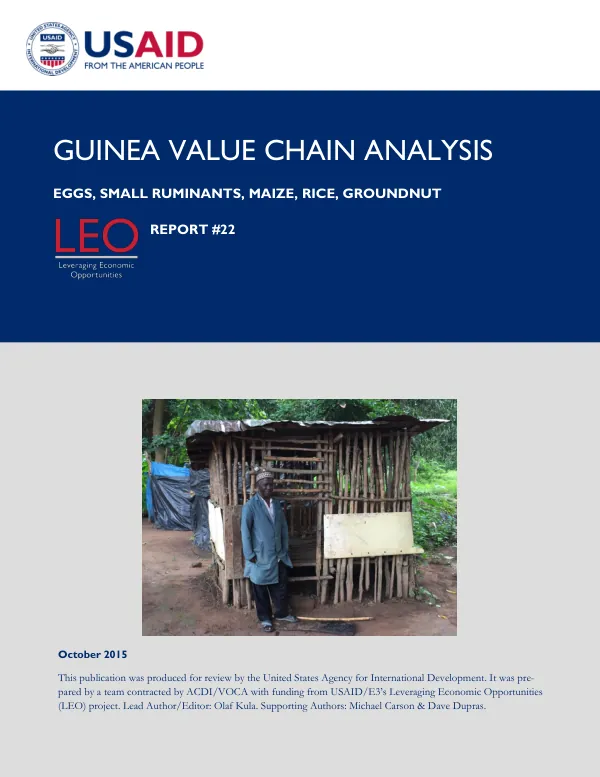
Guinea Value Chain Analysis: Eggs, Small Ruminants, Maize, Rice, Groundnut
The agricultural sector in Guinea is a significant contributor to the country's economy, with a large portion of the population engaged in farming and livestock production.
2015 · 107 pages
Sign in to readA free account is required to download.
Abstract
The Guinea Value Chain Analysis, conducted in 2015, aimed to identify opportunities for improving the efficiency and competitiveness of the agricultural sector. The analysis focused on five key commodities: eggs, small ruminants, maize, rice, and groundnuts. The study area included several districts in Guinea, with a focus on the Conakry region. The analysis involved a comprehensive review of existing data, including commodity prices, production levels, and trade flows. The researchers also conducted surveys and interviews with farmers, traders, and other stakeholders to gather information on the value chains for each commodity. The analysis identified several challenges facing the agricultural sector in Guinea, including limited access to markets, inadequate infrastructure, and a lack of technical expertise among farmers. However, the study also highlighted opportunities for improving the sector's competitiveness, including the development of new markets and the introduction of new technologies. The value chain analysis for each commodity revealed several key findings. In the poultry egg sector, the study found that Guinea imports a significant portion of its egg supply, with the majority coming from neighboring countries. The small ruminant sector was found to be dominated by local production, with a large number of small-scale farmers engaged in the production of goats and sheep. The maize sector was found to be highly dependent on imports, with the majority of maize consumed in Guinea coming from abroad. In the rice sector, the study found that Guinea is a significant producer of rice, with the majority of production taking place in the Conakry region. However, the sector faces several challenges, including limited access to markets and a lack of technical expertise among farmers. The groundnut sector was found to be highly dependent on imports, with the majority of groundnuts consumed in Guinea coming from abroad. The analysis also identified several opportunities for improving the competitiveness of the agricultural sector in Guinea. These included the development of new markets, the introduction of new technologies, and the improvement of infrastructure. The study recommended several policy interventions to support the development of the agricultural sector, including the provision of technical assistance to farmers, the improvement of market access, and the development of new value chains. The Guinea Value Chain Analysis provides a comprehensive overview of the agricultural sector in Guinea, highlighting both the challenges and opportunities facing the sector. The study's findings and recommendations provide a valuable resource for policymakers, development practitioners, and other stakeholders seeking to improve the competitiveness of the agricultural sector in Guinea.