USAID DEC
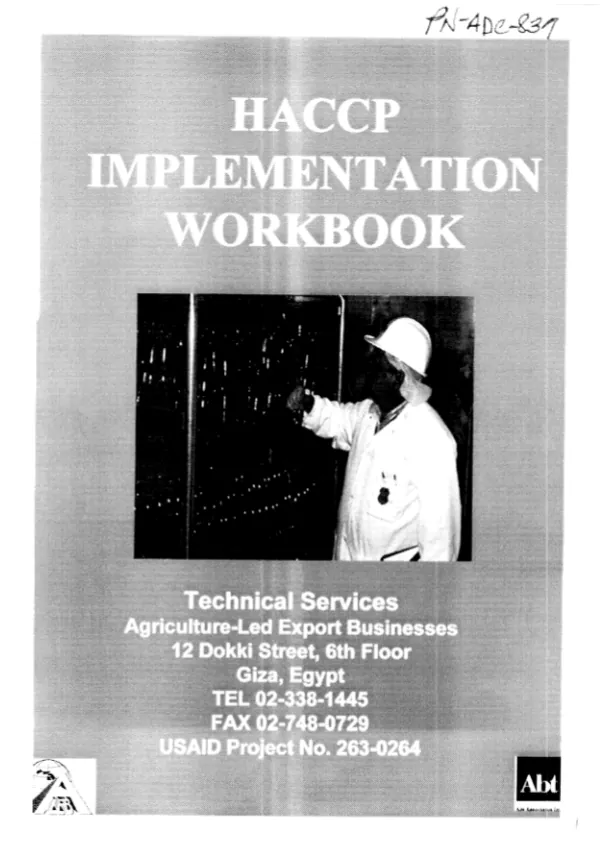
HACCP Plan for Food Product
The HACCP plan for a food product involves several key components, including the identification of the product, its intended use, and the potential hazards associated with its production and consumption.
33 pages
Sign in to readA free account is required to download.
Abstract
The product in question is a food item that consists of ingredients such as cabbage, carrot, mayonnaise, beef, brine, nitrate/nitrite, polyphosphate, ascorbate, and sugar, among others. The product is intended for human consumption and is sold in various forms, including ready-to-eat coleslaw, pasteurized canned meat, shredded lettuce, and breaded chicken nuggets. The product is distributed and stored under refrigeration, and its shelf life varies depending on the specific product. The HACCP team has identified several potential hazards associated with the production and consumption of this product, including biological, chemical, and physical hazards. These hazards include contamination with pathogens such as Salmonella and E. coli, chemical contamination with substances such as nitrate/nitrite and polyphosphate, and physical hazards such as foreign objects and allergens. To mitigate these hazards, the HACCP team has implemented several control measures, including the use of proper sanitation and hygiene practices, the implementation of Good Manufacturing Practices (GMPs), and the use of Hazard Analysis and Critical Control Points (HACCP) principles. The team has also developed a flow diagram of the production process, which identifies the critical control points and the measures in place to control them. The HACCP team has also developed a plant schematic, which shows the flow of ingredients and packaging materials through the plant, as well as the movement of personnel. This schematic has been verified on-site and has been approved by the HACCP team leader and the process owner. In addition to these control measures, the HACCP team has also identified several critical control points in the production process, including the receipt and storage of raw materials, the processing and packaging of the product, and the distribution and storage of the finished product. The team has implemented measures to control these critical control points, including the use of proper sanitation and hygiene practices, the implementation of GMPs, and the use of HACCP principles. The HACCP team has also conducted a hazard analysis, which identified several potential hazards associated with the production and consumption of the product. These hazards include contamination with pathogens, chemical contamination, and physical hazards. The team has implemented measures to mitigate these hazards, including the use of proper sanitation and hygiene practices, the implementation of GMPs, and the use of HACCP principles. Overall, the HACCP plan for this food product is designed to ensure the safety and quality of the product, from raw materials to consumption. The plan identifies several potential hazards associated with the production and consumption of the product and implements measures to mitigate these hazards. The plan also includes a flow diagram of the production process, a plant schematic, and a hazard analysis, which provide a comprehensive overview of the production process and the measures in place to control it.