USAID DEC
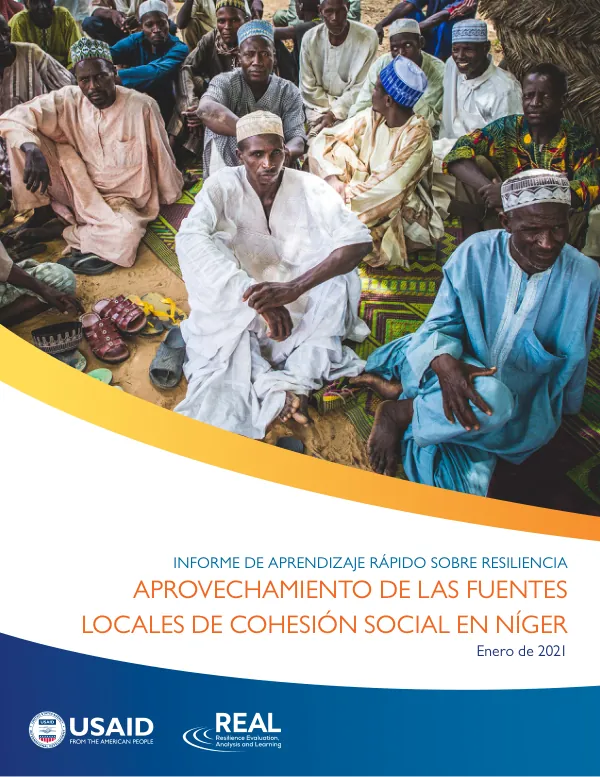
Harnessing Local Sources of Social Cohesion in Niger: Lessons for Building Resilience in Protracted Crises and Conflict-affected Settings
Sign inFOOD FOR THE HUNGRY, INTERNATIONAL
Harnessing Local Sources of Social Cohesion in Niger: Lessons for Building Resilience in Protracted Crises and Conflict-affected Settings
Social cohesion is a critical component for building resilience and improving long-term well-being outcomes in areas prone to ongoing conflicts, natural disasters, and other shocks and stresses.
2021 · 16 pages
Sign in to readA free account is required to download.
Abstract
Understanding what helps strengthen social cohesion is essential for humanitarian, development, and peacebuilding programming to effectively build resilience in these settings. This brief examines the factors contributing to local-level variation in social cohesion in the Tillabéri region of Niger, using baseline survey data from USAID's Preventing violent Extremism Actions through increased social Cohesion Efforts (PEACE) program. The survey measures six dimensions of social cohesion: trust, tolerance, inclusion, cooperation, interactions between groups, and collective action. Additionally, the survey analyzes contextual factors such as governance, the participation of women and youth in conflict management and peacebuilding, and patterns of peace and security within the community. Key findings from Niger provide examples of both strong and weak dimensions of social cohesion and demonstrate the variations in these relationships across villages. Higher levels of collective action and collaboration with other groups do not necessarily increase intergroup trust, but positive interactions do. The relative strength of different components of social cohesion varies considerably across villages. Some dimensions of social cohesion differ by gender, but not by age. There is no clear relationship between trust in leaders and social cohesion. Higher levels of access to public services are associated with increases in social inclusion. Conflict management mechanisms can help facilitate inclusion, but they may not contribute to other dimensions of social cohesion. Development and humanitarian programs can increase social cohesion in support of strengthening long-term peace and resilience outcomes. Processes and technical interventions can be designed to promote social cohesion. Carefully designing and leveraging an inclusive, participatory process to identify, design, and implement joint projects can model and reinforce social cohesion. Creating flexibility to tailor specific activities to the realities of individual villages can also be beneficial. Supporting positive interactions across groups to build trust and tolerance, promoting the inclusion of women, and layering intergroup contact and other activities onto governance-strengthening activities can also contribute to social cohesion. Social capital and social cohesion are closely related, but this brief focuses specifically on social cohesion. When intergroup social cohesion is strong, pastoralist and agropastoralist households can more effectively navigate access to resources even in the face of economic and environmental shocks, therefore strengthening resilience in communities. Social cohesion has been hypothesized to reduce violence, and understanding its relationship with resilience and peace is essential for humanitarian, development, and peacebuilding programming. The Tillabéri region of Niger is a context where social cohesion is critical for building resilience. The region is prone to ongoing conflicts, natural disasters, and other shocks and stresses. Social cohesion can help households and communities navigate these challenges and build resilience. Development and humanitarian programs can increase social cohesion by promoting inclusive processes, supporting positive interactions, and layering intergroup contact and other activities onto governance-strengthening activities. In conclusion, social cohesion is a critical component for building resilience and improving long-term well-being outcomes in areas prone to ongoing conflicts, natural disasters, and other shocks and stresses. Understanding what helps strengthen social cohesion is essential for humanitarian, development, and peacebuilding programming to effectively build resilience in these settings. Development and humanitarian programs can increase social cohesion by promoting inclusive processes, supporting positive interactions, and layering intergroup contact and other activities onto governance-strengthening activities.