ACDI/VOCA
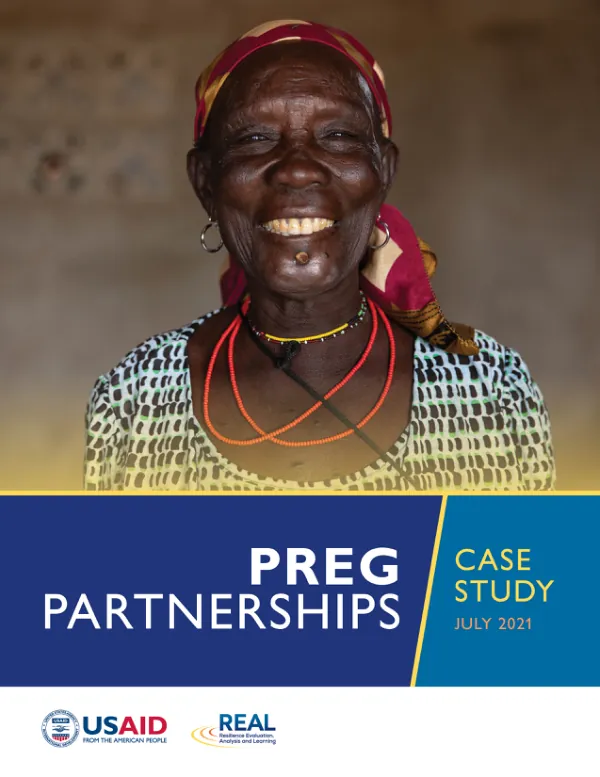
Partnership for Resilience and Economic Growth (PREG) Partnerships Case Study
The Partnership for Resilience and Economic Growth (PREG) is a collaborative initiative aimed at promoting resilience and economic growth in arid and semi-arid lands (ASAL) in Kenya.
2021 · 54 pages
Sign in to readA free account is required to download.
Abstract
The initiative is led by a consortium of organizations, including Save the Children, Food for the Hungry, Mercy Corps, and TANGO International, with funding from the USAID Center for Resilience. PREG focuses on strengthening partnerships and collaboration among various stakeholders, including government agencies, non-governmental organizations (NGOs), and community groups. The initiative seeks to address the complex challenges faced by communities in ASAL regions, including poverty, food insecurity, and limited access to basic services. A case study on PREG was conducted in 2021 to examine the effectiveness of partnerships in promoting resilience and economic growth. The study aimed to identify key factors that contribute to effective partnerships, including preconditions for partnership, common conceptual understanding, technical capacity, and operational and institutional mechanisms. The study found that effective partnerships in PREG are characterized by a shared understanding of the challenges and opportunities faced by communities in ASAL regions. Partnerships that are built on a foundation of trust, mutual respect, and clear communication are more likely to be successful. The study also highlighted the importance of technical capacity, including the ability to analyze data and develop effective solutions to complex problems. The study identified several key lessons learned from PREG, including the need for sequencing, layering, and integrating (SLI) of services to address the complex needs of communities in ASAL regions. SLI involves the convergence of services from multiple partners to address specific needs, such as food security, water, and sanitation. The study also emphasized the importance of empowering communities to take ownership of their development and to make informed decisions about their own futures. The study concluded that PREG has made significant progress in promoting resilience and economic growth in ASAL regions, but there is still much work to be done. The initiative has helped to build partnerships and collaboration among stakeholders, and has provided critical support to communities in need. However, the study also highlighted the need for continued investment in PREG and other initiatives aimed at promoting resilience and economic growth in ASAL regions. The study's findings have important implications for the next phase of PREG and other initiatives aimed at promoting resilience and economic growth in ASAL regions. The study's emphasis on the importance of partnerships, technical capacity, and community empowerment provides a framework for future initiatives and highlights the need for continued investment in these areas. In terms of geographic focus, the study was conducted in Kenya, with a focus on ASAL regions. The study's findings have implications for other countries and regions facing similar challenges, and highlight the need for context-specific approaches to promoting resilience and economic growth. The study's methodology involved a combination of qualitative and quantitative data collection and analysis methods, including key informant interviews, focus group discussions, and review of existing literature. The study's findings are based on data collected from a range of stakeholders, including government agencies, NGOs, community groups, and individuals. Overall, the study provides valuable insights into the effectiveness of partnerships in promoting resilience and economic growth in ASAL regions. The study's findings highlight the importance of partnerships, technical capacity, and community empowerment, and provide a framework for future initiatives aimed at promoting resilience and economic growth in these regions.
Related documents