FOOD FOR THE HUNGRY, INTERNATIONAL
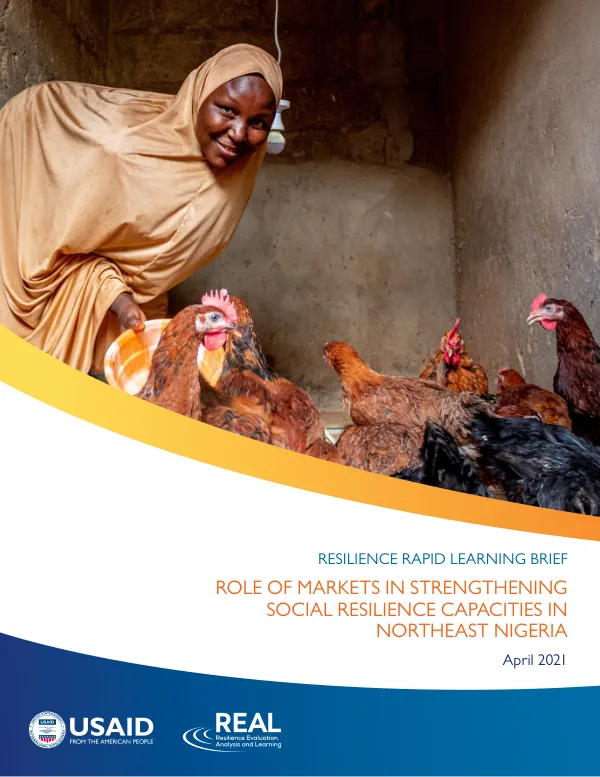
Role of Markets in Strengthening Social Resilience Capacities in Northeast Nigeria
Northeast Nigeria is a region characterized by protracted crises, where the state has limited capacity or lacks the political will to provide for and protect its citizens.
2021 · 19 pages
Sign in to readA free account is required to download.
Abstract
In such contexts, people rely on markets and social connections for protection, information, and economic resources. Resilience capacities such as agency and confidence in the future are equally important. Research has shown that markets and social networks are critical sources of resilience in protracted crises. Markets provide access to goods and services, while social networks offer emotional support, information, and economic resources. Self-efficacy, agency, and confidence in the future are also important predictors of an individual's or household's ability to escape and remain out of poverty in the face of shocks. A case study of two market-based programs in northeast Nigeria found that livelihood interventions paired with economic collectives are effective at strengthening resilience capacities. The programs provided income-generating activities and economic collectives such as village savings and loan associations (VSLAs) to participants. The results showed that participants experienced increased income, financial freedom, and social connections, which contributed to their resilience capacities. The effects of market interventions on resilience capacities occurred through three pathways. First, livelihood support and VSLAs contributed to women's self-esteem, confidence, and agency, and shifted men's perceptions about women's roles. Income from livelihoods increased women's economic contributions to the household, while financial freedom from VSLAs enabled women to become self-reliant in meeting their household and livelihood needs. Second, interventions increased participants' confidence in their capacity to deal with future shocks. Increased skills and practical knowledge from livelihood technical training increased participants' confidence to restart a livelihood even in the event of displacement. Knowledge and practice of a reliable savings and loans mechanism (VSLAs) increased participants' confidence in their ability to access financial resources to deal with future shocks. Third, market-based livelihood interventions and VSLAs helped to strengthen and diversify social connections, catalyze economic activity, and promote psychosocial well-being. Increased income and assets from livelihoods became important sharing resources to maintain and strengthen reciprocal support networks. VSLA participation fostered new and beneficial economic collaboration, while group meetings promoted an exchange of economic and emotional guidance. These findings have important implications for program design and implementation. Practitioners should invest in interventions that encourage participation in markets and further economic activity. Programs should also support resilience through investments in financial inclusion and layer economic interventions with activities that strengthen social networks. By understanding the pathways through which market interventions affect resilience capacities, practitioners can design more effective programs to support vulnerable populations in protracted crises.
Related documents
Documents in this collection
 2019
2019USAID DEC
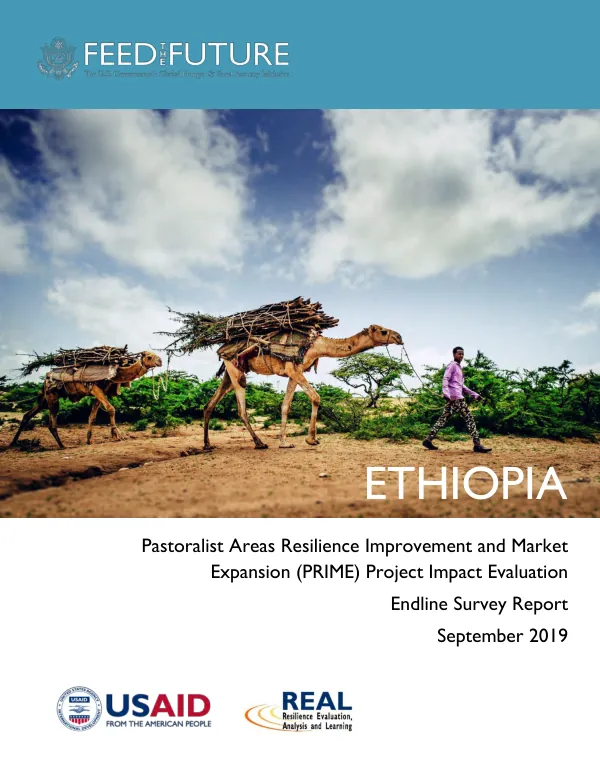
Pastoralist Areas Resilience Improvement and Market Expansion (PRIME) Project Impact Evaluation Endline Survey Report
Open record 2021
2021USAID DEC