ABT ASSOCIATES
Headache Learning Objectives and Teaching Strategies
The primary health care initiatives project focuses on understanding the pathophysiology of common headache types, including migraine, muscle contraction, and organic headaches.
6 pages
Sign in to readA free account is required to download.
Abstract
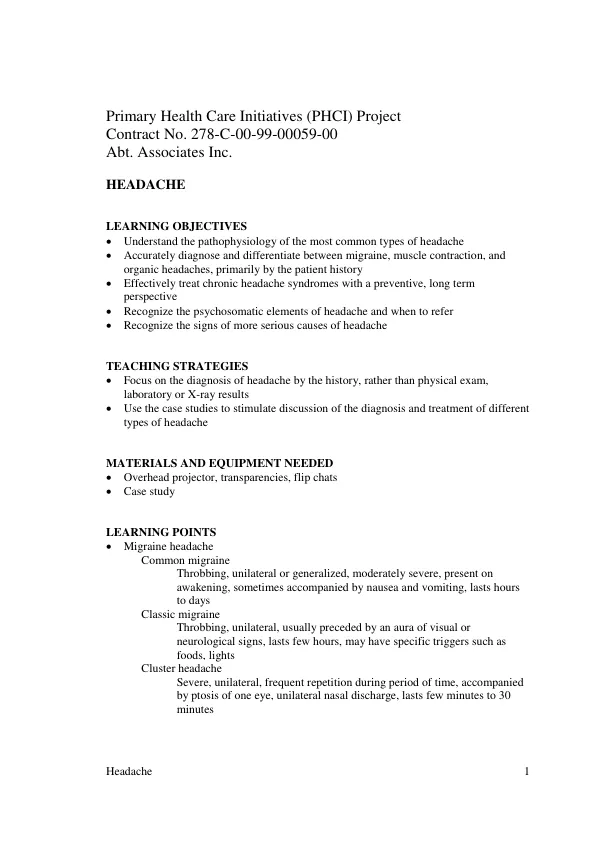
The project aims to provide healthcare professionals with the necessary knowledge and skills to accurately diagnose and differentiate between these headache types, primarily through patient history. Migraine headache is characterized by throbbing, unilateral or generalized pain, often accompanied by nausea and vomiting, and lasting hours to days. Classic migraine is preceded by an aura of visual or neurological signs and may have specific triggers such as foods, lights. Cluster headache is severe, unilateral, and frequent, accompanied by ptosis of one eye and unilateral nasal discharge, lasting few minutes to 30 minutes. The pathophysiology of migraine is thought to be caused by the activation of 5HT2 (serotonin) receptors in the brain, leading to the release of inflammatory substances and vasodilatation of blood vessels. Common triggers of migraine include caffeine, stress, hereditary component, and certain medications. Differential diagnosis of migraine involves excluding conditions such as intracranial hemorrhage, intracranial mass or tumor, and temporal arteritis. Treatment of acute migraine attack involves pain relief with analgesics, anti-inflammatory medications, and narcotic medication, as well as suppression of nausea and vomiting with medications such as promethazine and metoclopramide. Prevention of overtreatment is also crucial, and treatment may involve muscle relaxation and massage, anti-inflammatory medications, and stress management. Muscle contraction headache is caused by tightness of neck and jaw muscles, leading to muscle fatigue and compression of small nerve bundles. Symptoms include occipital-frontal, squeezing pain, often accompanied by neck pain and tightness, and occasionally nausea and vomiting. Differential diagnosis involves excluding conditions such as sinusitis, intracranial mass or tumor, and dental infection or abscess. The psychosomatic elements of headache, particularly muscle contraction headache, are closely linked to depression, stress, and anxiety. Treatment involves muscle relaxation and massage, anti-inflammatory medications, and stress management. The clinical protocol for headache diagnosis and treatment emphasizes the importance of history and focused physical exam, with X-rays, lab, and CT scans only rarely needed. Recurring headaches can be controlled and decreased, but usually not eliminated, and patients must modify their expectations. The first preventive strategy is to eliminate caffeine from the diet, and a headache log or diary can be helpful in pinpointing specific triggers or causes of recurring headaches. Critical elements for referral, or "red flags," include sudden onset of the "worst headache of my life," presence of fever, neck stiffness, or change in level of consciousness, headache that awakens the patient at night, severe hypertension, and persistent neurological signs. The case studies presented in the project provide examples of different headache types and their diagnosis and treatment. The first patient is a 46-year-old woman with a history of frequent headaches, often described as "pounding" and felt throughout the entire head. The second patient is a 52-year-old man with a headache that worsens in the forehead and around the eyes, and is accompanied by a respiratory infection and thick, purulent nasal discharge. The third patient is a 32-year-old woman with frequent headaches, often described as pressure and squeezing of her head, and accompanied by neck and shoulder tightness. The evaluation of competence in headache diagnosis and treatment involves recognition of clinical differences between migraine and muscle contraction headache, understanding of treatment protocol and sequence for migraine, recognition of danger signs of serious causes of headache, and understanding of psychosomatic elements of headaches.