USAID DEC
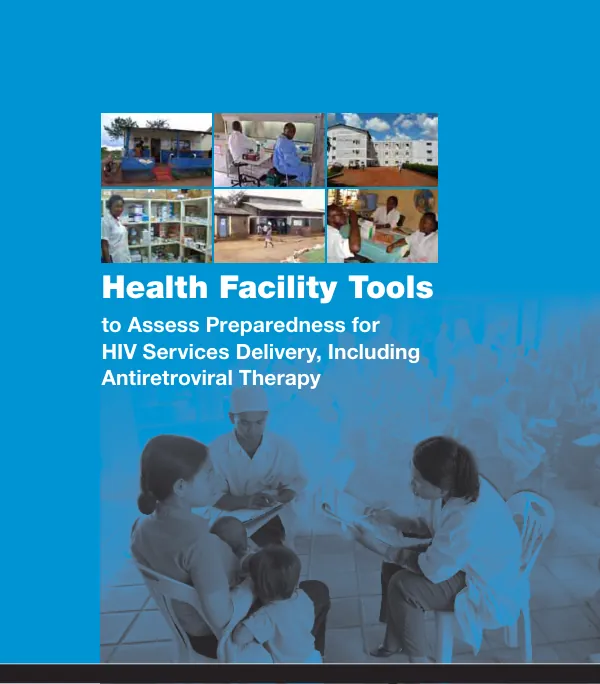
Health Facility Tools to Assess Preparedness for HIV Services Delivery, Including Antiretroviral Therapy
Sign inELIZABETH GLASER PEDIATRIC AIDS FOUNDATION
Health Facility Tools to Assess Preparedness for HIV Services Delivery, Including Antiretroviral Therapy
The manual outlines a rapid appraisal and implementation planning framework for planning service delivery in health facilities that provide HIV-related services.
246 pages
Sign in to readA free account is required to download.
Abstract
The framework involves several steps, including engaging key stakeholders, gathering and analyzing data, and planning for program implementation. The manual is intended for use in FHI-supported sites that deliver HIV-related services around the world. The tools included in the manual are designed to be comprehensive and flexible for adaptation to meet local situations and needs. The tools have been field-tested in health facility sites in several countries, including Cambodia, Ethiopia, Nigeria, Kenya, Rwanda, Senegal, and Zambia. The manual provides instructions for each of the 13 tools for assessment of health facilities prior to the implementation of HIV services, including ART. The manual's objective is to guide site engagement, data gathering, data analysis, and action planning for service delivery within a health facility. The specific objectives are to engage key stakeholders, determine the level of physical infrastructure, determine the level of human resource capacity, review the existence and use of guidelines for the management of HIV/AIDS and related conditions, assess the current data collection and management information systems, and determine the type of services provided to PLHA at the facility and via the referral system. The manual includes guidance and examples to assist in the process from assessment to program implementation and includes templates for reporting and implementation planning. The timeframe of the implementation planning process varies according to the situation in the country, but the ideal timeframe for the appraisal and implementation planning at the health facility itself involves at least two days. The preimplementation process involves stakeholder and site engagement, which includes identifying communities and facilities to visit, considering the needs of many stakeholders, and tailoring the process to fit individual needs. The tools and processes presented in the manual were designed to fit the needs of FHI's work in several different settings and should be analyzed and adapted for local needs during the implementation planning process. The manual provides a comprehensive framework for assessing the preparedness of health facilities for HIV services delivery, including ART. The framework involves engaging key stakeholders, gathering and analyzing data, and planning for program implementation. The manual includes instructions for each of the 13 tools for assessment of health facilities prior to the implementation of HIV services, including ART. The tools included in the manual are designed to assess various aspects of health facility preparedness, including physical infrastructure, human resource capacity, data collection and management information systems, and the type of services provided to PLHA. The manual provides guidance and examples to assist in the process from assessment to program implementation and includes templates for reporting and implementation planning. The manual includes instructions for each of the 13 tools for assessment of health facilities prior to the implementation of HIV services, including ART. The tools are designed to be comprehensive and flexible for adaptation to meet local situations and needs. The manual provides guidance and examples to assist in the process from assessment to program implementation and includes templates for reporting and implementation planning.