USAID DEC
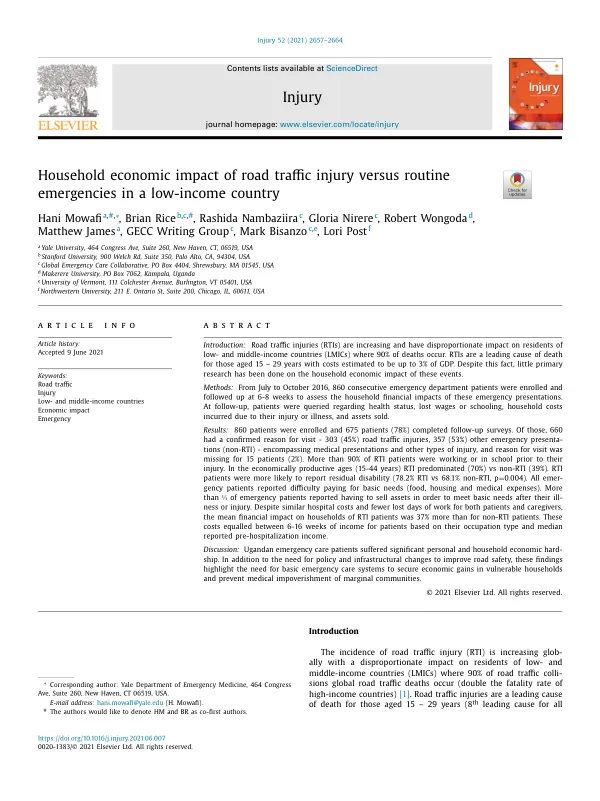
Health workers’ perceptions on where and how to integrate tobacco use cessation services into tuberculosis treatment; a qualitative exploratory study in Uganda
Sign inWORLD HEALTH ORGANIZATION
Health workers’ perceptions on where and how to integrate tobacco use cessation services into tuberculosis treatment; a qualitative exploratory study in Uganda
Health workers' perceptions on where and how to integrate tobacco use cessation services into tuberculosis treatment were explored in a qualitative exploratory study conducted in Uganda.
2021 · 9 pages
Sign in to readA free account is required to download.
Abstract
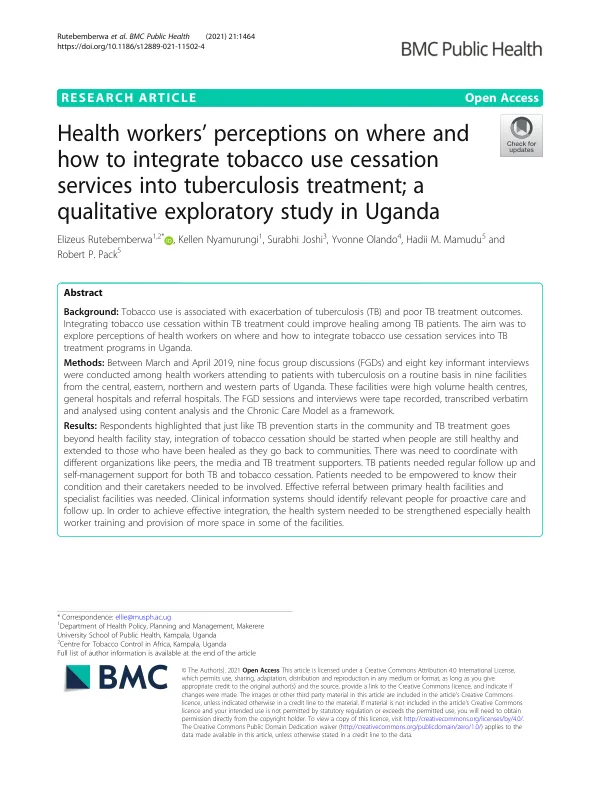
The study aimed to identify the perspectives of health workers on integrating tobacco use cessation services into TB treatment programs in Uganda. The study was conducted between March and April 2019, involving nine focus group discussions and eight key informant interviews among health workers attending to patients with tuberculosis in nine facilities from the central, eastern, northern, and western parts of Uganda. These facilities included high volume health centers, general hospitals, and referral hospitals. Health workers emphasized the need to start tobacco cessation services in the community before TB patients get to the hospital, during the patients' interface with hospital treatment, and after TB patients have been discharged. They suggested that coordination with different organizations, such as peers, the media, and TB treatment supporters, was necessary to achieve effective integration. Health workers also recommended regular follow-up and self-management support for both TB and tobacco cessation, empowering patients to know their condition, and involving their caretakers. Effective referral between primary health facilities and specialist facilities was also seen as essential. Clinical information systems should identify relevant people for proactive care and follow-up. To achieve effective integration, the health system needed to be strengthened, particularly in terms of health worker training and provision of more space in some of the facilities. The study highlighted the importance of integrating tobacco use cessation services into TB treatment programs in Uganda. Health workers' perspectives were sought because they are key stakeholders in the tobacco cessation exercise. Advice from health workers improves utilization of cessation assistance, and they operate in both health facilities and communities where they carry out public health prevention and control activities. The Chronic Care Model was chosen as the underlying model for this integration. The model has six main domains: community, health system, self-management support, delivery system design, decision support, and clinical information systems. It highlights adopting longitudinal, preventative, community-based, and integrated approaches in the management of chronic illnesses. The study's findings suggest that lack of integration between TB treatment work and tobacco cessation work in the communities is a missed opportunity. The results from this study will inform the integration agenda between the TB treatment and tobacco cessation programs. TB treatment is a chronic illness, and tobacco cessation is a long-term public health intervention. The study's recommendations include starting tobacco cessation services in the community, during hospital treatment, and after discharge. Coordination with different organizations, regular follow-up, and self-management support are also essential. Effective referral between primary health facilities and specialist facilities is necessary, and clinical information systems should identify relevant people for proactive care and follow-up. The study's findings have implications for the integration of tobacco use cessation services into TB treatment programs in Uganda. Health workers' perspectives are critical in designing interventions for tobacco cessation. The study's results will inform the integration agenda between the TB treatment and tobacco cessation programs, ultimately improving patient outcomes.
Related documents