USAID DEC
Household economic impact of road traffic injury versus routine emergencies in a low-income country
Sign inUNIVERSITY OF MARYLAND
Household economic impact of road traffic injury versus routine emergencies in a low-income country
Road traffic injuries (RTIs) have a disproportionate impact on residents of low- and middle-income countries (LMICs), where 90% of deaths occur.
2021 · 8 pages
Sign in to readA free account is required to download.
Abstract
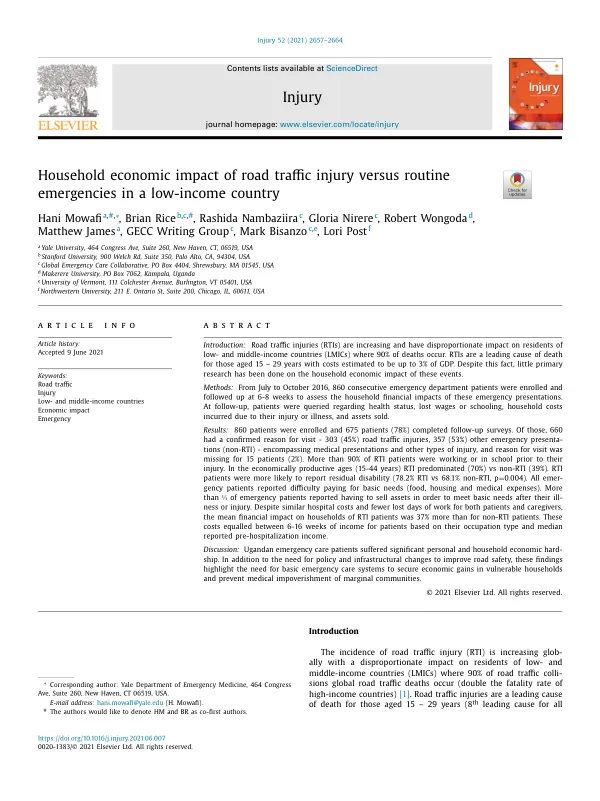
RTIs are a leading cause of death for those aged 15-29 years, with costs estimated to be up to 3% of GDP. Despite this fact, little primary research has been done on the household economic impact of these events. A prospective study was conducted at Masaka Regional Referral Hospital in Masaka, Uganda, from July to October 2016, enrolling 860 consecutive patients presenting to the emergency unit. The study aimed to assess the financial impacts of these emergency presentations on patients and their households. Patients were queried regarding their health status, costs their household incurred because of illness or injury, lost wages or time at school for the patient and/or caregivers, whether they were forced to sell any assets, and whether they had difficulty meeting basic needs. Of the 860 patients enrolled, 675 (78%) completed follow-up surveys. More than 90% of RTI patients were working or in school prior to their injury. In the economically productive ages (15-44 years), RTI predominated (70%) versus non-RTI (39%). RTI patients were more likely to report residual disability (78.2% RTI vs 68.1% non-RTI, p = 0.004). All emergency patients reported difficulty paying for basic needs (food, housing, and medical expenses). More than 1/3 of emergency patients reported having to sell assets in order to meet basic needs after their illness or injury. Despite similar hospital costs and fewer lost days of work for both patients and caregivers, the mean financial impact on households of RTI patients was 37% more than for non-RTI patients. These costs equaled between 6-16 weeks of income for patients based on their occupation type and median reported pre-hospitalization income. The study highlights the need for basic emergency care systems to secure economic gains in vulnerable households and prevent medical impoverishment of marginal communities. The findings of this study have significant implications for policy and infrastructural changes to improve road safety. The study also underscores the importance of considering the household economic impact of RTIs, particularly in low-income countries where the burden of RTIs is disproportionately high. The results of this study can inform the development of targeted interventions to mitigate the economic effects of RTIs on households in LMICs.