ABT ASSOCIATES
Healthcare is Teamwork
Healthcare is a complex and multifaceted field that relies heavily on effective teamwork and collaboration among various departments and professionals.
2013 · 5 pages
Sign in to readA free account is required to download.
Abstract
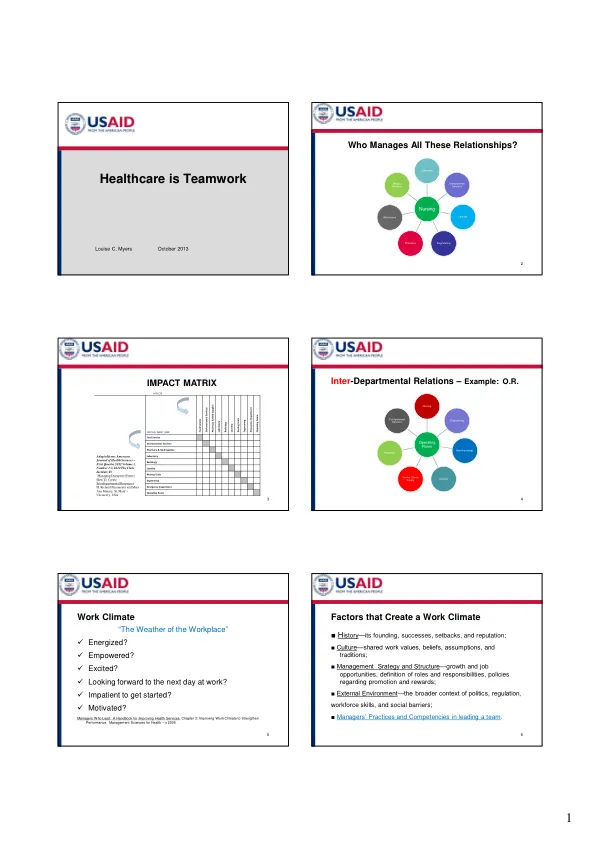
In October 2013, Louise C. Myers published a document titled "Healthcare is Teamwork," which highlights the importance of interdepartmental relations and effective communication in achieving high-quality patient care. The document emphasizes the need for a positive work climate, which is characterized by a sense of energized, empowered, and motivated employees. A manager's practices and competencies play a crucial role in shaping the work climate, and factors such as history, culture, management strategy, and external environment all contribute to the overall work climate. The document also explores the distinction between culture and climate, with culture referring to a pattern of shared values and climate referring to the way it feels to work in a group. A manager can develop a climate that differs from the prevailing culture, and this can be achieved through regular meetings, organized management systems, and activities that move the group forward. Effective communication is critical in healthcare, particularly in situations where personal conflict between department managers can arise. The document highlights the importance of formal mechanisms for working out issues, such as identifying what information is really needed, working on team-building, and re-engineering processes to add communication. High-performing teams are characterized by a focus on results, accountability, commitment to decisions and plans, open communication, and debate of ideas. However, teams can also be hindered by the five dysfunctions of a team, including fear of conflict, lack of commitment, avoidance of accountability, inattention to results, and absence of trust. Intra-departmental relations are also crucial in healthcare, and the document provides an example of how nursing departments can work together effectively. Managing communications is critical, particularly during shift changes and unit transfers, where accurate and complete communication of patient care information is essential for patient safety. The document also addresses the challenges faced by new managers, including a shift in time horizon, new priorities, and new relationships. New managers must learn to organize work, delegate tasks, recruit staff, provide resources and support, and network effectively. Effective employee relations are critical in healthcare, and the document highlights the importance of building a program that promotes good employee relations. Employees want to believe in the mission, have an ethical and moral employer, be productive and involved, and be appreciated and recognized. The document concludes by emphasizing the importance of employee leadership, hospital management, and employee relations functions, including management consultation, employee consultation, management development training, employee recognition, performance management, employee assistance programs, and mediation.

![Tanzania Public Sector Systems Strengthening Plus (PS3+) Year 3 [Fiscal Year 4] Quarter 3 Report](https://covers.devme.ai/gen/149103.webp)