USAID DEC
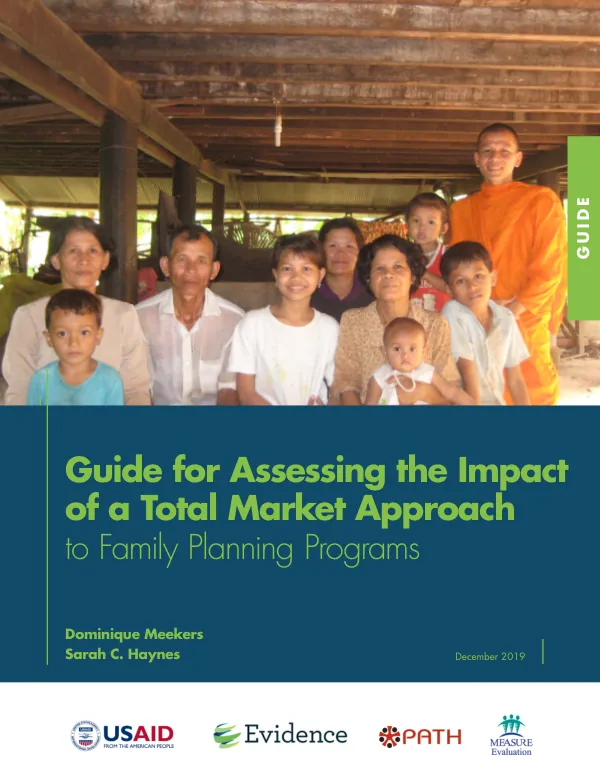
Guide for Assessing the Impact of a Total Market Approach to Family Planning Programs
Sign inABT ASSOCIATES
Guide for Assessing the Impact of a Total Market Approach to Family Planning Programs
The total market approach to family planning programs aims to increase access to and use of modern contraceptives by leveraging the resources and expertise of multiple stakeholders, including governments, private sector companies, and non-governmental organizations.
2019 · 54 pages
Sign in to readA free account is required to download.
Abstract
This approach recognizes that family planning is a complex issue that requires a comprehensive and coordinated response. A systematic review of the literature on total market approach initiatives identified several key characteristics, including the setting, family planning methods, definition of the total market approach, target populations, and planning activities. The review also highlighted the importance of intersectoral coordination and total market approach stewardship in ensuring the success of these initiatives. In evaluating the impact of family planning programs, researchers must consider several methodological approaches, including how to measure impact and what constitutes an appropriate comparison group. The reflexive control method is one approach that involves identifying relevant program characteristics and outcomes, evaluating pre- and post-intervention trends, and comparing observed outcomes with outcomes expected without the total market approach. The guide for assessing the impact of a total market approach to family planning programs provides a step-by-step procedure for evaluating the effectiveness of these initiatives. This procedure involves identifying relevant program characteristics and outcomes, evaluating pre- and post-intervention trends, and comparing observed outcomes with outcomes expected without the total market approach. An illustrative example of a family planning total market approach impact evaluation is provided in the guide. This example involves a program that aims to increase access to modern contraceptives in a specific geographic area. The program objectives and activities are outlined, and data on the initial effects of the total market approach on trends in the use of modern contraceptives, contraceptive method mix, and public-sector resource allocation are presented. The guide also provides recommendations for planning total market approach impact evaluations, including the importance of selecting an appropriate comparison group and using a systematic review of the literature to inform the evaluation design. The guide concludes by highlighting the lessons learned from the illustrative example and providing a framework for future evaluations. The total market approach to family planning programs has been implemented in various settings around the world, with mixed results. A systematic review of the literature on total market approach initiatives identified several key factors that contribute to the success of these initiatives, including strong leadership, effective intersectoral coordination, and a clear understanding of the target population's needs and preferences. In terms of geographic focus, the total market approach to family planning programs has been implemented in a variety of settings, including urban and rural areas, and in different regions of the world. The guide for assessing the impact of a total market approach to family planning programs provides a framework for evaluating the effectiveness of these initiatives in different contexts. The timeframes for implementing total market approach to family planning programs vary depending on the specific initiative and the goals of the program. The guide for assessing the impact of a total market approach to family planning programs provides a framework for evaluating the effectiveness of these initiatives over time, including the initial effects of the total market approach on trends in the use of modern contraceptives, contraceptive method mix, and public-sector resource allocation. In conclusion, the total market approach to family planning programs is a complex and multifaceted initiative that requires a comprehensive and coordinated response. The guide for assessing the impact of a total market approach to family planning programs provides a framework for evaluating the effectiveness of these initiatives, including the importance of selecting an appropriate comparison group, using a systematic review of the literature to inform the evaluation design, and considering the key factors that contribute to the success of these initiatives.