ABT ASSOCIATES
ICPC-2 Coding
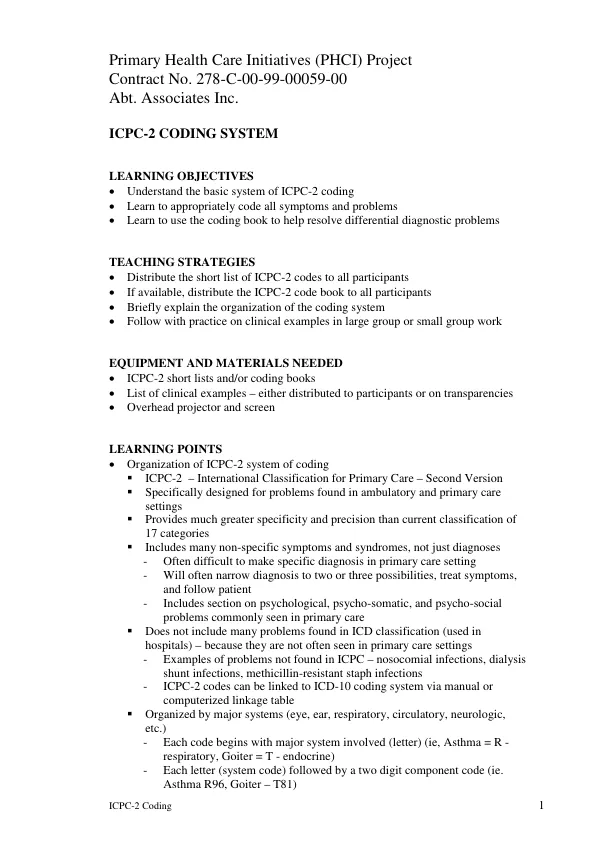
The ICPC-2 coding system is a classification system specifically designed for problems found in ambulatory and primary care settings.
2 pages
Sign in to readA free account is required to download.
Abstract
It provides much greater specificity and precision than the current classification of 17 categories, and includes many non-specific symptoms and syndromes, not just diagnoses. The system is organized by major systems, with each code beginning with a letter representing the major system involved, followed by a two-digit component code. The ICPC-2 system includes codes for symptoms, diagnoses, procedures, examinations, referrals, administrative visits, and other tasks. Codes for visit are determined only for those problems dealt with in that visit, and do not need to be a firm diagnosis, but can be primary symptoms or symptoms presented if diagnosis is uncertain. The system also includes expanded definitions in the book to refine diagnosis and coding. The ICPC-2 system is linked to the ICD-10 coding system via a manual or computerized linkage table. It does not include many problems found in ICD classification, such as nosocomial infections, dialysis shunt infections, and methicillin-resistant staph infections, because they are not often seen in primary care settings. The ICPC-2 system is used in daily practice to code problems and symptoms presented by patients. It is used to determine the proper code for a problem, and to refine diagnosis and coding using expanded definitions in the book. The system is also used to link codes to ICD-10 coding system. The ICPC-2 system is organized by major systems, with each code beginning with a letter representing the major system involved. The major systems include eye, ear, respiratory, circulatory, neurologic, and others. Each letter is followed by a two-digit component code, which provides more specific information about the problem or symptom. The ICPC-2 system is used in a variety of settings, including primary care clinics, health centers, and other ambulatory care settings. It is used by healthcare providers to code problems and symptoms presented by patients, and to refine diagnosis and coding using expanded definitions in the book. The system is also used to link codes to ICD-10 coding system. The ICPC-2 system includes a range of codes for different problems and symptoms. For example, the code for acute otitis media is H71, while the code for otitis externa is H70. The code for sprain or strain of the ankle is L77, while the code for pain in the shoulder is L08. The code for cough, URI or bronchitis is R05, while the code for chronic sinusitis is R75. The code for acute tonsillitis is R76, while the code for sore throat is R21. The code for herpes zoster is S70, while the code for fill out school exam paper is A62. The code for refill of medication for diabetes is T50.