USAID DEC
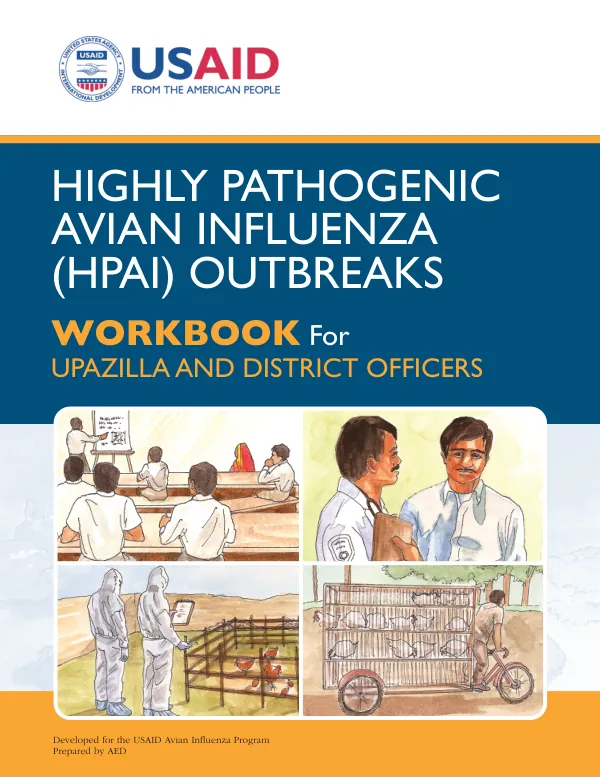
Highly Pathogenic Avian Influenza (HPAI) Outbreaks Workbook for Upazilla and District Officers
Sign inAED
Highly Pathogenic Avian Influenza (HPAI) Outbreaks Workbook for Upazilla and District Officers
The avian influenza outbreak in Bangladesh poses a significant threat to the country's poultry industry and public health.
232 pages
Sign in to readA free account is required to download.
Abstract
The Department of Livestock Services (DLS) has taken steps to strengthen its response to prevent and control avian influenza outbreaks. The DLS has trained livestock officers and veterinary surgeons to conduct local-level trainings on preventing and containing avian influenza. The 6-step job cycle is a key component of the DLS's response to avian influenza. The job cycle is a simple and effective way to spell out the responsibilities of different officers and activities to control avian influenza. The job cycle is based on the Avian Influenza Operation Manual, which was written by the Department of Livestock Services, Ministry of Fisheries and Livestock in Bangladesh, with technical assistance by the Food and Agriculture Organization of the United Nations (FAO). The job cycle consists of six steps: Step 1: Educating people about avian influenza; Step 2: Watching, taking notes, and reporting findings; Step 3: Collecting samples for testing; Step 4: Sending samples to laboratories and receiving results; Step 5: Taking action during an outbreak, including restocking; and Step 6: Taking action after an outbreak, including restocking. The DLS has also developed a checklist to help officers implement the job cycle. The checklist includes tasks such as conducting surveillance, collecting samples, and reporting findings. The DLS has also developed a sample submission form to facilitate the collection and submission of samples for testing. The avian influenza outbreak in Bangladesh has significant economic and social implications. The outbreak can lead to the destruction of poultry flocks, loss of income for families, and strain on the public health system. The DLS has taken steps to strengthen its response to prevent and control avian influenza outbreaks, including training livestock officers and veterinary surgeons to conduct local-level trainings. The DLS has also developed a standard operating procedure for collecting samples, sending samples to laboratories, and restocking. The standard operating procedure includes guidelines for collecting and submitting samples, conducting surveillance, and reporting findings. The DLS has also developed a personal protective equipment (PPE) guide to help officers protect themselves from avian influenza. The avian influenza outbreak in Bangladesh highlights the need for a coordinated response to prevent and control the outbreak. The DLS has taken steps to strengthen its response to avian influenza, including training livestock officers and veterinary surgeons to conduct local-level trainings. The job cycle and checklist are key components of the DLS's response to avian influenza. The DLS has also developed a frequently asked questions (FAQ) section to address common questions about avian influenza. The FAQ section includes information on the causes of avian influenza, symptoms, and treatment options. The DLS has also developed a standard operating procedure for culling, decontamination, and disposal of poultry flocks.