AGENCIA DE LOS ESTADOS UNIDOS PARA EL DESARROLLO INTERNACIONAL
Historias Exitosas
The agricultural initiative in Nabusímake, a resguardo indígena Arhuaco, aims to enhance food security and promote sustainable agricultural practices among the local community.
2011 · 2 pages
Sign in to readA free account is required to download.
Abstract
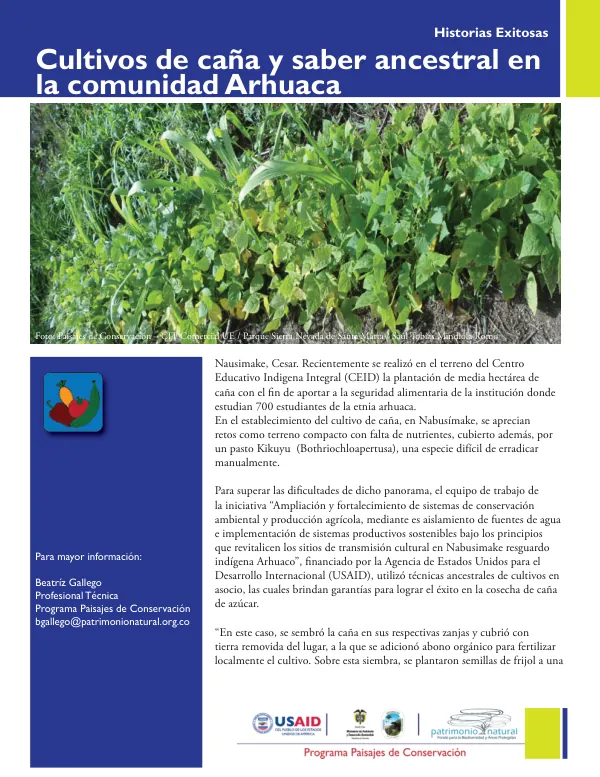
The project, funded by the United States Agency for International Development (USAID), focuses on the cultivation of sugar cane on a half-hectare plot at the Centro Educativo Indigena Integral (CEID). This initiative benefits 700 students from the Arhuaca ethnic group, who will have access to a secure food source. The project team encountered challenges in establishing the sugar cane crop, including compacted soil with limited nutrients and the presence of the invasive Kikuyu grass (Bothriochloa pertusa). To overcome these difficulties, the team employed ancestral techniques of intercropping, which provide a guarantee for successful sugar cane harvesting. The sugar cane was planted in trenches, covered with soil from the area, and fertilized with organic compost. Bean seeds were also planted alongside the sugar cane, which will provide shade and retain moisture, protecting the emerging sugar cane shoots. The bean crop, being a leguminous plant, will fix nitrogen in the soil and mature quickly, allowing for timely harvesting. This will enable the sugar cane shoots to develop and produce shade, making it easier to eradicate the Kikuyu grass. Once the sugar cane is tall enough, the team will remove the grass, establishing a sustainable and environmentally friendly crop management system. The community members played a significant role in this initiative, contributing their ancestral knowledge of crop cultivation and promoting the recovery of traditional practices. The project's success relies on the collaboration between the community and the project team, who are working together to establish a sustainable agricultural system. The first harvest is expected in March, marking a significant milestone in the project's progress.
Related documents