USAID DEC
Puente de Esperanza en el río Buritaca
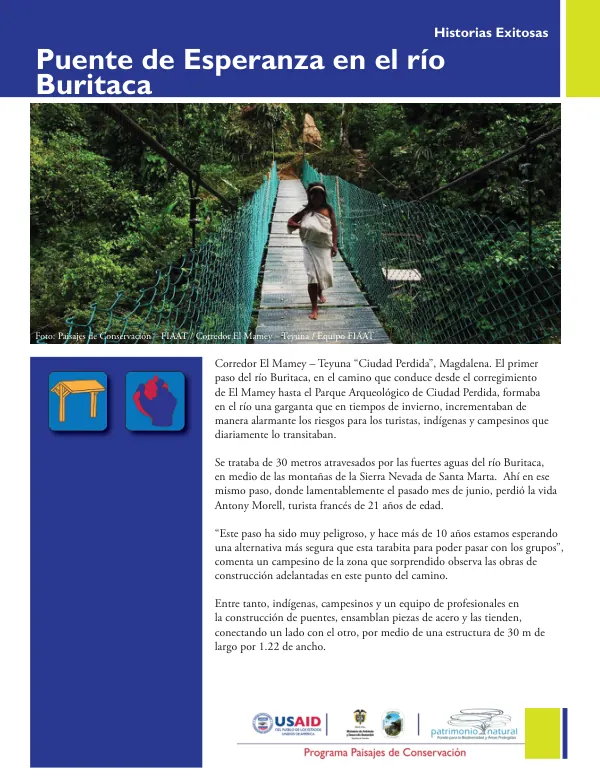
The construction of a new bridge in the Corredor El Mamey – Teyuna "Ciudad Perdida" region of Magdalena, Colombia, has significantly improved safety for tourists, indigenous communities, and local residents.
2011 · 4 pages
Sign in to readA free account is required to download.
Abstract
The bridge, known as the Puente de Esperanza, spans 30 meters across the Buritaca River, replacing a precarious tarabita that posed a significant risk to those who used it. Prior to the construction of the new bridge, the tarabita was a major concern for locals and tourists alike. The structure, which consisted of a metal frame suspended by a cable, was prone to collapse and had already claimed the life of a 21-year-old French tourist in June. The bridge was also a major obstacle for children from the indigenous Wiwas and Kogui communities, who often had to wait for hours for someone to pull the cable to allow them to cross. The new bridge was constructed as part of the Paisajes de Conservación program, funded by the United States Agency for International Development (USAID). The project was implemented by Parques Nacionales Naturales de Colombia and the Fondo Patrimonio Natural, with the support of the Fundación Puentes de la Esperanza. The bridge was designed and built in collaboration with the local community, who played a key role in its construction. The Puente de Esperanza has had a significant impact on the local community, reducing the risks associated with crossing the river and improving access to the Parque Arqueológico de Ciudad Perdida. The bridge benefits approximately 8,200 people, including indigenous communities, local residents, and tourists, and has the potential to contribute to the conservation of the region and the improvement of the quality of life for its inhabitants. The construction of the bridge is also seen as a major step forward for sustainable tourism in the region. With the new bridge in place, tourists can now access the park safely and easily, which is expected to boost the local economy and promote the development of sustainable tourism practices. The bridge is a testament to the power of community-led conservation and the importance of investing in infrastructure that benefits both people and the environment.