USAID DEC
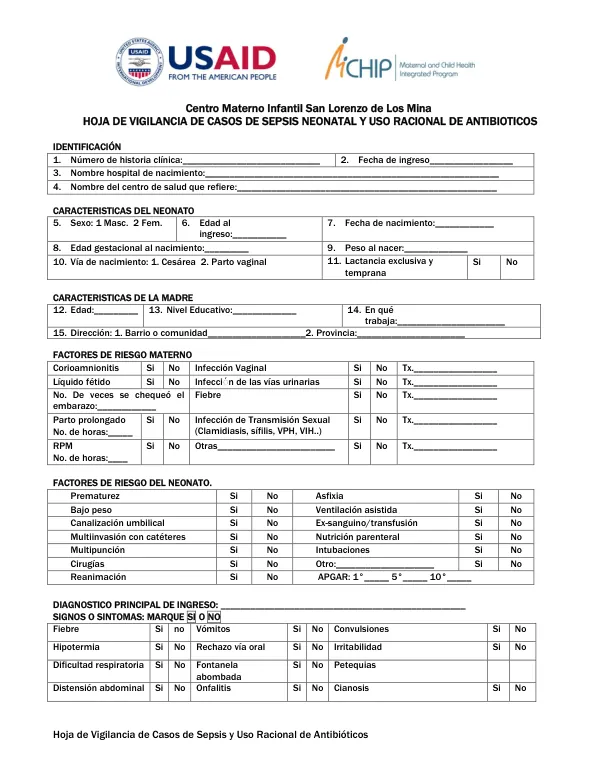
Hoja de Vigilancia de Casos de Sepsis y Uso Racional de Antibióticos
The Neonatal Sepsis and Rational Use of Antibiotics Surveillance Form is used to monitor cases of neonatal sepsis and the use of antibiotics in newborns.
3 pages
Sign in to readA free account is required to download.
Abstract
The form is divided into several sections, including identification, characteristics of the newborn, characteristics of the mother, risk factors for the mother and newborn, diagnosis, treatment, and outcome. The identification section includes the newborn's medical record number, date of admission, name of the hospital of birth, and name of the referring healthcare center. The characteristics of the newborn section includes information on the newborn's sex, age at admission, date of birth, gestational age at birth, birth weight, and mode of delivery. The characteristics of the mother section includes information on the mother's age, educational level, occupation, and address. The risk factors for the mother section includes information on the presence of conditions such as chorioamnionitis, vaginal infection, and fever during pregnancy. The risk factors for the newborn section includes information on the presence of conditions such as prematurity, asphyxia, low birth weight, and need for ventilation. The diagnosis section includes information on the primary diagnosis of admission, signs and symptoms, and laboratory results. The treatment section includes information on the initial treatment plan, including the type and dose of antibiotics, route of administration, and duration of treatment. The form also includes a section for documenting any changes to the treatment plan, including the reason for the change. The outcome section includes information on the newborn's condition at discharge, including whether the newborn was alive or deceased, and the length of hospital stay. The form also includes a section for documenting the healthcare provider who attended to the newborn. The form is used to monitor cases of neonatal sepsis and the use of antibiotics in newborns, and to identify areas for improvement in the management of neonatal sepsis. The data collected on this form can be used to inform policy and practice changes aimed at reducing the incidence of neonatal sepsis and improving outcomes for newborns. The form is completed by healthcare providers in the neonatal unit, and the data is used to monitor trends and patterns in the incidence of neonatal sepsis and the use of antibiotics. The data is also used to evaluate the effectiveness of treatment plans and to identify areas for quality improvement. The form is an important tool for monitoring and improving the care of newborns with sepsis, and for reducing the risk of antibiotic resistance. By collecting data on the incidence of neonatal sepsis and the use of antibiotics, healthcare providers can identify areas for improvement and develop strategies to reduce the risk of sepsis and improve outcomes for newborns. The form is used in the Neonatal Unit of the Centro Materno Infantil San Lorenzo de Los Mina, and the data collected on this form is used to inform policy and practice changes aimed at reducing the incidence of neonatal sepsis and improving outcomes for newborns. The form is an important tool for monitoring and improving the care of newborns with sepsis, and for reducing the risk of antibiotic resistance.