USAID DEC
Horticultural Collection Centers: Mapping and Assessment for Tanzania
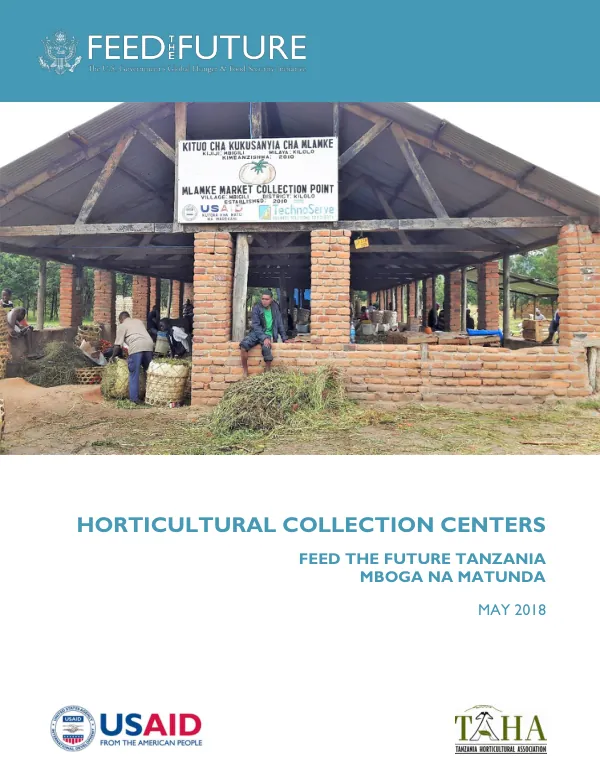
Horticultural Collection Centers in Tanzania are a crucial component of the country's agricultural sector, serving as a central point for farmers to sell their produce to local and regional markets.
2018 · 30 pages
Sign in to readA free account is required to download.
Abstract
These centers bring together key value chain actors, including farmers, traders, and transporters, providing a platform for farmers to access favorable prices, market information, and security for their stocks. The collection centers are located in various regions, including Morogoro, Zanzibar, Iringa, Mbeya, and Songwe. The main objective of this activity was to map and assess the existing collection centers, analyzing their current status to determine whether there is a need for new collection centers, their capacity in terms of volume, and the number of farmers they serve. The assessment of the collection centers revealed that they are managed by various stakeholders, including the Tanzania Horticultural Association (TAHA), the Local Government Authority (LGA), and the District Agriculture Irrigation and Cooperative Officer (DAICO). The centers are equipped with basic infrastructure, including grading and sorting areas, retail stores, and toilets, although some centers lack essential facilities such as cold storage and electricity. The collection centers serve a significant number of farmers, with some centers reporting over 1,000 farmers selling their produce through the centers. The centers also generate revenue for the local communities, with some centers earning up to TZS 10 million (approximately USD 4,400) per month. A comparison of collection routes versus collection centers revealed that farmers prefer to sell their produce through collection centers due to the favorable prices, market information, and security of their stocks. However, some farmers still prefer to sell their produce through collection routes due to the immediate sales and shorter distances from their farms. The assessment also highlighted the challenges faced by the collection centers, including inadequate infrastructure, limited funding, and inadequate management structures. To address these challenges, the report recommends the establishment of new collection centers in areas with high demand for horticultural produce, the upgrading of existing infrastructure, and the provision of training and capacity-building programs for center managers. The report also identifies the key factors that contribute to the success of collection centers, including the availability of water, electricity, and cold storage facilities, as well as the presence of a strong management structure and adequate funding. The report concludes that the collection centers play a critical role in the horticultural sector in Tanzania and recommends continued support for their development and expansion. The assessment of the collection centers also revealed that the most traded crops in the active collection centers include tomatoes, onions, and cucumbers. The report recommends that the collection centers should focus on promoting the production and marketing of these crops, as well as other high-value horticultural crops. The report also highlights the importance of market access and infrastructure development in supporting the growth of the horticultural sector in Tanzania. The report recommends that the government and other stakeholders should prioritize the development of market infrastructure, including roads, storage facilities, and market information systems, to support the growth of the sector. In terms of sustainability, the report recommends that the collection centers should focus on generating revenue through the sale of produce, as well as through the provision of services such as grading, sorting, and storage. The report also recommends that the centers should explore alternative sources of funding, including grants and loans, to support their operations. Overall, the report provides a comprehensive assessment of the horticultural collection centers in Tanzania, highlighting their importance in the country's agricultural sector and identifying areas for improvement. The report provides recommendations for the development and expansion of the collection centers, as well as for the growth of the horticultural sector in Tanzania.