USAID DEC
Households Below Poverty Line
Households below the poverty line vary significantly across different regions.
2009 · 1 pages
Sign in to readA free account is required to download.
Abstract
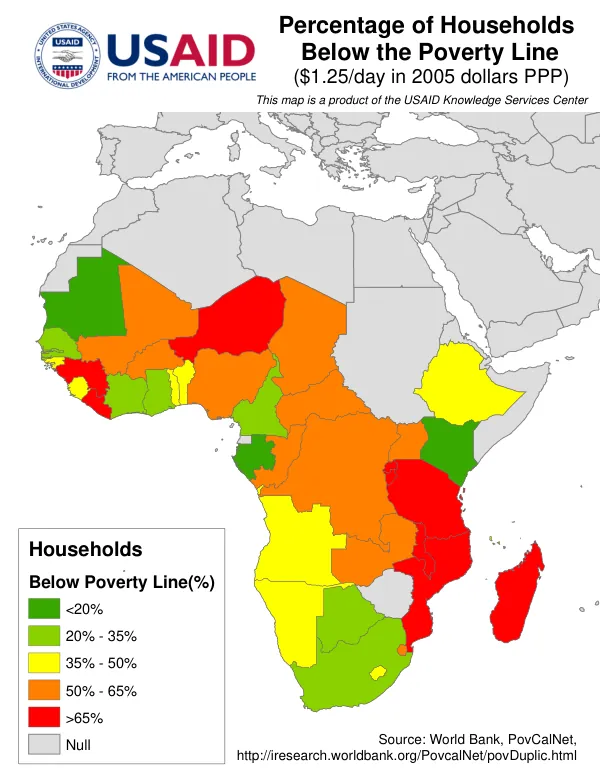
In areas with less than 20% of households below the poverty line, economic conditions appear relatively stable. However, in regions with 20-35% of households below the poverty line, poverty rates are more pronounced, indicating a need for targeted interventions. In areas with 35-50% of households below the poverty line, poverty rates are substantial, suggesting a high level of economic vulnerability. These regions may require more comprehensive poverty reduction strategies to address the needs of the population. Regions with 50-65% of households below the poverty line face significant poverty challenges, which may necessitate large-scale interventions to improve economic conditions. In areas with more than 65% of households below the poverty line, poverty rates are extremely high, indicating a severe economic crisis. These regions may require emergency assistance and long-term development programs to address the root causes of poverty. The data also highlights the importance of understanding the distribution of poverty rates across different regions to inform effective poverty reduction strategies. The World Bank's PovCalNet database provides a valuable resource for analyzing poverty rates and trends. By leveraging this data, policymakers and development practitioners can identify areas of high poverty concentration and design targeted interventions to address the needs of vulnerable populations. This information can also inform the allocation of resources and the development of poverty reduction strategies at the national and local levels.
Related documents