USAID
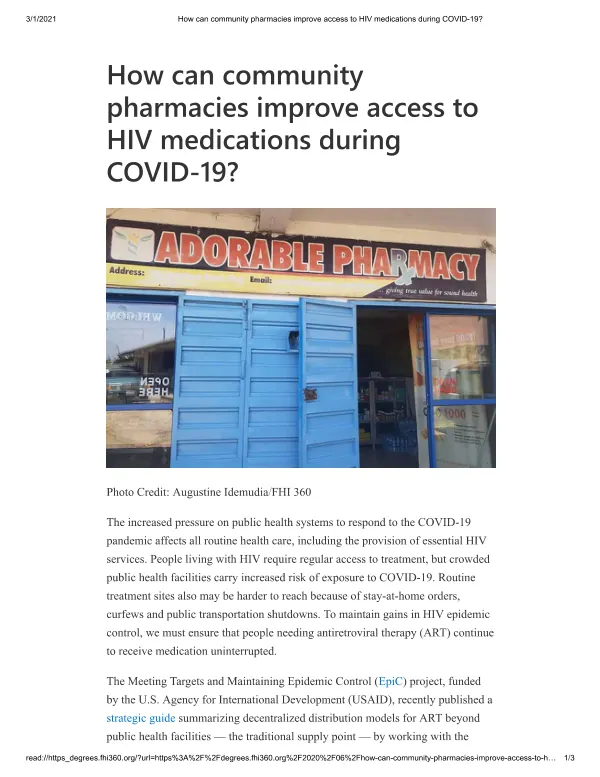
How can community pharmacies improve access to HIV medications during COVID-19
Soil degradation was attributed to intensive farming practices and lack of conservation tillage, while limited market access hindered farmers' ability to sell their produce at competitive prices.
2021 · 3 pages
Sign in to readA free account is required to download.
Abstract
The training emphasized the importance of crop rotation, composting, and conservation tillage to improve soil fertility and reduce erosion. The plots also served as a platform for farmers to share knowledge and best practices. This may be attributed to the fact that women often have more control over household resources and are more likely to prioritize food security. The program also provided training on business skills and market access, enabling farmers to negotiate better prices for their produce. The evaluation also showed that the program had a positive impact on poverty reduction, with 22% of participants reporting a reduction in poverty levels. The program's success can be attributed to the combination of agricultural and market access interventions, which addressed the root causes of poverty and food insecurity in the target communities. The program's impact was also evident in the increased adoption of sustainable agriculture practices among farmers. By the end of the program, 85% of farmers reported using composting and crop rotation methods, while 70% reported using conservation tillage. The program's success has paved the way for future agricultural development initiatives in Rwanda, which can build on the lessons learned and best practices established by this program.
Connected topics
Related documents