MOMENTUM ROUTINE IMMUNIZATION TRANSFORMATION AND EQUITY PROJECT
HOW DATA SYSTEMS CAN HELP REACH ZERO-DOSE AND UNDER-IMMUNIZED CHILDREN
Routine Immunization Transformation and Equity is a critical initiative aimed at reaching zero-dose and under-immunized children.
2023 · 8 pages
Sign in to readA free account is required to download.
Abstract
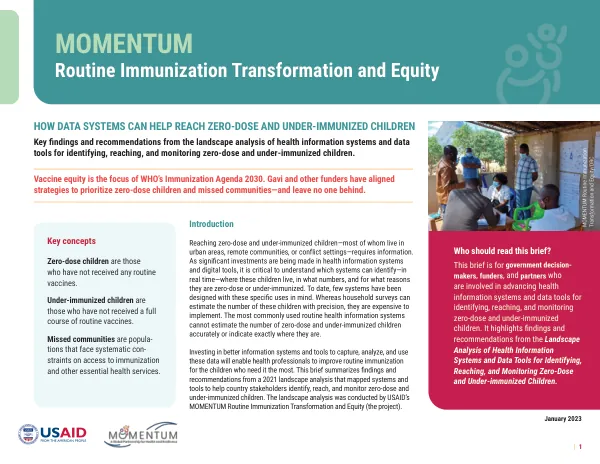
The project, led by USAID's MOMENTUM Routine Immunization Transformation and Equity, focuses on leveraging health information systems and data tools to identify, reach, and monitor these vulnerable populations. The landscape analysis conducted by the project examined over 160 documents from peer-reviewed and grey literature, including project reports, evaluations, case studies, literature reviews, policy papers, and reports. The analysis identified 11 primary information systems and data tools that can help strengthen immunization equity, with some already being used to achieve this goal. One of the key findings is that household surveys can estimate the number of zero-dose and under-immunized children with precision, but they are expensive to implement. In contrast, routine health information systems are not designed to accurately estimate the number of these children or indicate where they are. Investing in better information systems and tools to capture, analyze, and use these data will enable health professionals to improve routine immunization for the children who need it the most. The analysis identified several information systems and data tools that can help reach zero-dose and under-immunized children. These include home-based records, client communication systems, community health worker systems, electronic immunization registries, monitoring charts, and data dashboards. These systems can help reduce common causes of missed immunizations, such as forgetting appointments or having concerns about immunization. The analysis also highlighted the importance of using digital systems, such as electronic immunization registries and community-based information systems, to link with voice and SMS strategies. This can eliminate the data management burden of capturing phone numbers in paper-based facility registers and improve the effectiveness of reminder and recall messages. In addition, the analysis identified several challenges and opportunities related to implementing and scaling up these information systems and data tools. These include the need for strong community health worker coverage, access to tablets or mobile phones, and technical capacity to use them. The analysis also highlighted the importance of investing in training, supervision, and change management to adopt and scale up electronic immunization registries. The landscape analysis provides actionable recommendations for using these information systems and data tools to identify, reach, and monitor zero-dose and under-immunized children. These recommendations include investing in better information systems and tools, using digital systems to link with voice and SMS strategies, and scaling up electronic immunization registries. The analysis also highlights the importance of considering how to invest in strengthening health information systems to support immunization equity. This includes investing in training, supervision, and change management, as well as developing and implementing policies and guidelines to support the use of these information systems and data tools. Overall, the landscape analysis provides a comprehensive overview of the information systems and data tools that can help reach zero-dose and under-immunized children. The analysis highlights the importance of investing in better information systems and tools, using digital systems to link with voice and SMS strategies, and scaling up electronic immunization registries to improve routine immunization for the children who need it the most.
Related documents