POPULATION SERVICES INTERNATIONAL/DKT INTERNATIONAL
How to Use Human-Centered Design for Sanitation Products
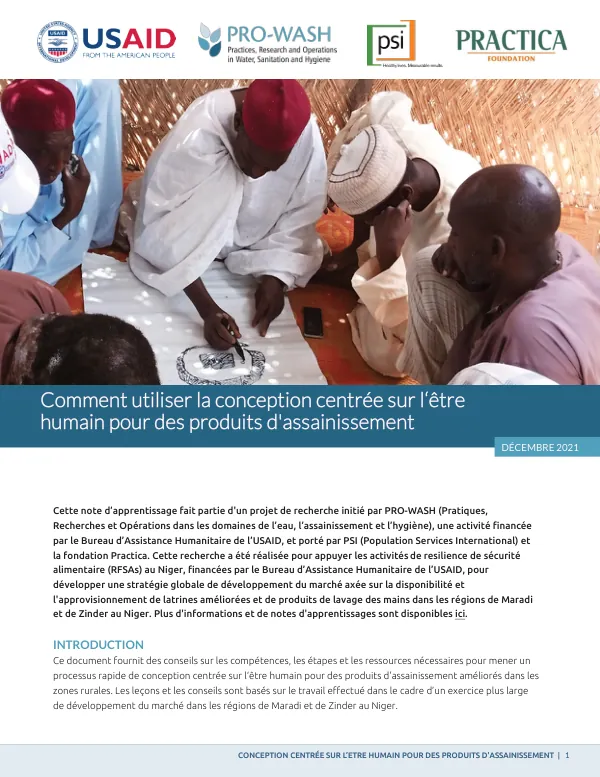
Human-centered design is a process for understanding people's needs, preferences, and behaviors to enable working with them to implement sustainable solutions they value.
2021 · 9 pages
Sign in to readA free account is required to download.
Abstract
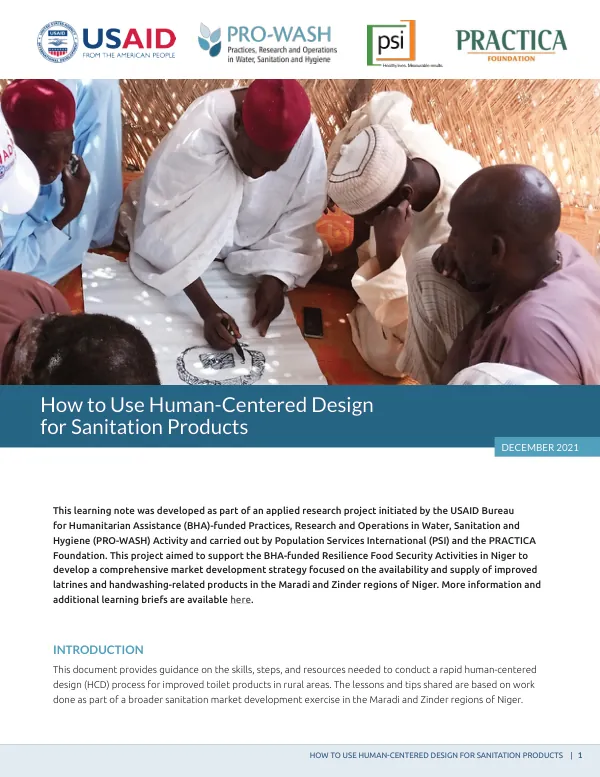
This approach is particularly important when developing sanitation products, as people will be asked to spend their own money on toilets. A multidisciplinary team with different skills and experience is needed to conduct a successful human-centered design process for sanitation products. The team should include a WASH engineer, who is an essential member, and a qualitative researcher with experience in human-centered design. The engineer will design products that are structurally sound and meet environmental requirements, while the researcher will provide guidance on the selection of participants, the content of group discussions, and ensure that the results can be fully analyzed and interpreted. Community-level activities should be coordinated and led by people who know the communities for which the products are designed. The human-centered design process for sanitation products involves several steps and activities, including inspiration, co-creation, exhibition, and implementation and verification. During the inspiration phase, community members engage in a conversation about their challenges, aspirations, and preferences, identifying products with high market potential and formulating key characteristics to be retained for attractive products. The co-creation phase involves various community members working together to define the features of potential toilet prototypes, using their imagination and experience to come up with improved products. In the exhibition phase, product prototypes are displayed in a market or other public place to gather user feedback. It is essential to note the characteristics of the respondents, such as gender and socioeconomic status, to inform the results. Questions asked during this phase include the price of the product, willingness to purchase, and ideal time to buy. The choice of prototypes to be developed for the exhibition phase is based on several factors, including market analysis and data collected during the immersion and co-creation phases. In Niger, the human-centered design process for sanitation products was carried out in six localities, involving a total of 15 communities. The process took approximately four months to complete, but did not include the time required to import products. Importing a product, even in small quantities by air, can take one to two months. Before an HCD activity begins, it is essential to confirm that all the likely inputs are available on the local market. The human-centered design process for sanitation products aims to develop products that meet the needs and preferences of potential customers. By involving community members in the design process, it is possible to create products that are attractive, affordable, and meet the needs of the target market. The process also helps to identify the best products for the target market and provides insights into the types of products most likely to be needed or desired. In Niger, the main improvements suggested by the participants during the co-creation phase were the inclusion of an interface that can be easily cleaned, an interface with an obstruction to block out odors and insects, a shower with the latrine integrated into a cement floor, a superstructure for the privacy of the users, and the preference for flush toilets in towns and dry toilets in villages. The exhibition phase involved displaying product prototypes in a market or other public place to gather user feedback, which helped to identify the characteristics of the respondents and inform the results.