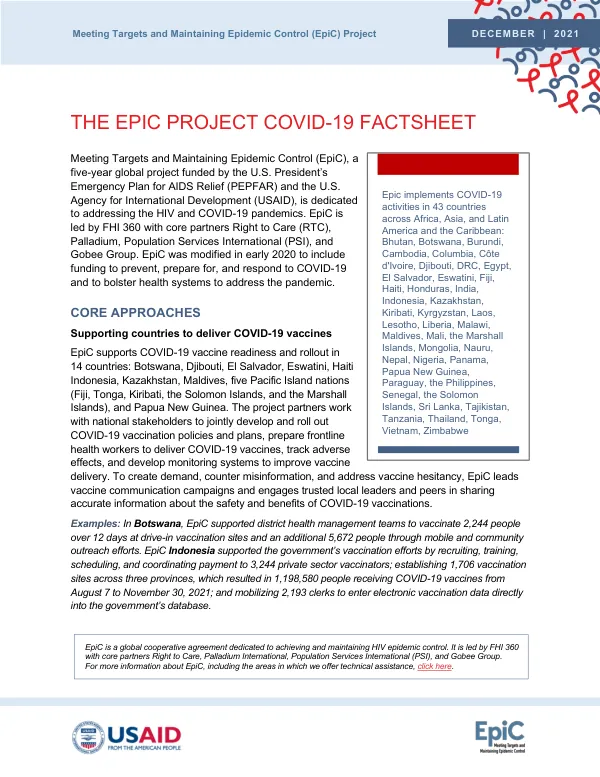
FHI 360
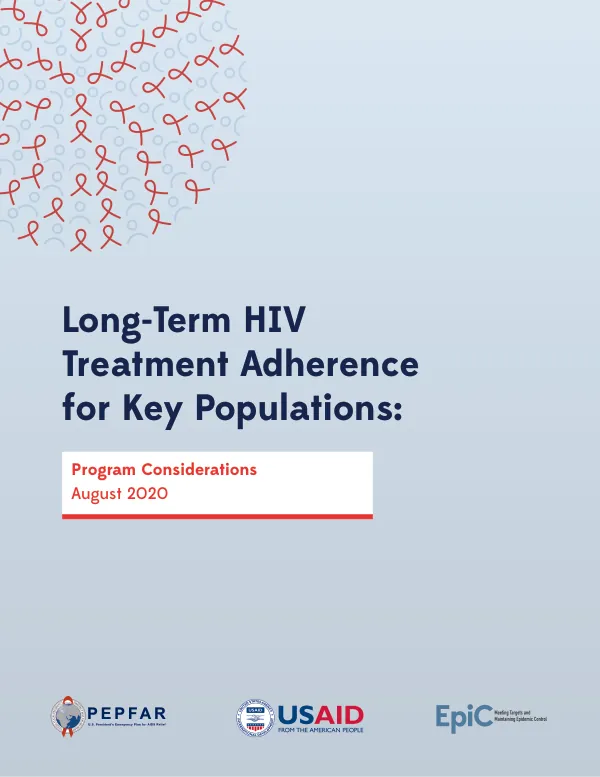
Long-Term HIV Treatment Adherence for Key Populations: Program Considerations
The global HIV epidemic has undergone significant transformations in recent years, with antiretroviral treatment (ART) playing a crucial role in changing the nature of the disease from a fatal illness to a manageable chronic condition.
2020 · 142 pages
Sign in to readA free account is required to download.
Abstract
As of 2018, nearly two-thirds of all people living with HIV (PLHIV) were on ART, and the number continues to grow. However, the epidemic is also shifting, with over half of all new HIV infections occurring among key populations (KPs), including sex workers (SWs), people who inject drugs (PWID), gay men and other men who have sex with men (MSM), transgender (TG) people, and prisoners, and their partners. These populations are at a much higher risk of HIV infection, with available data suggesting that the risk of HIV acquisition among gay men and other MSM was 22 times higher in 2018 than it was among all adult men, and similarly high risks were observed for PWID, SWs, and trans people. The Meeting Targets and Maintaining Epidemic Control (EPiC) project, a global cooperative agreement led by FHI 360, aims to support the scale-up of differentiated service delivery (DSD) models for long-term HIV treatment adherence among KPs. The project focuses on key interventions, including rapid and same-day initiation of antiretroviral therapy (ART), multimonth dispensation (MMD), decentralized distribution in the private sector, and viral load scale-up. These interventions are designed to improve treatment outcomes, reduce loss to follow-up (LTFU), and increase access to care for KPs. Differentiated service delivery models are critical to addressing the unique needs of KPs, who often face significant barriers to accessing HIV care, including stigma, discrimination, and limited access to healthcare services. The EPiC project supports a range of DSD models, including client-managed community adherence and support groups, facility and out-of-facility models, and health care worker-managed groups. These models aim to provide tailored support and care to KPs, including peer navigation and treatment support, to improve treatment adherence and retention. The project also emphasizes the importance of viral load monitoring and scale-up, with a focus on undetectable = untransmittable (U=U) messaging to promote viral suppression and reduce HIV transmission. Demand creation for and links to viral load testing are also critical components of the project, aimed at increasing access to viral load monitoring and improving treatment outcomes for KPs. The project's tools and resources, including standard operating procedures, treatment literacy, adherence planning, and problem-solving tools, are designed to support the implementation of DSD models and improve treatment outcomes for KPs.