USAID DEC
ICT Economic Impact Assessment for Afghanistan
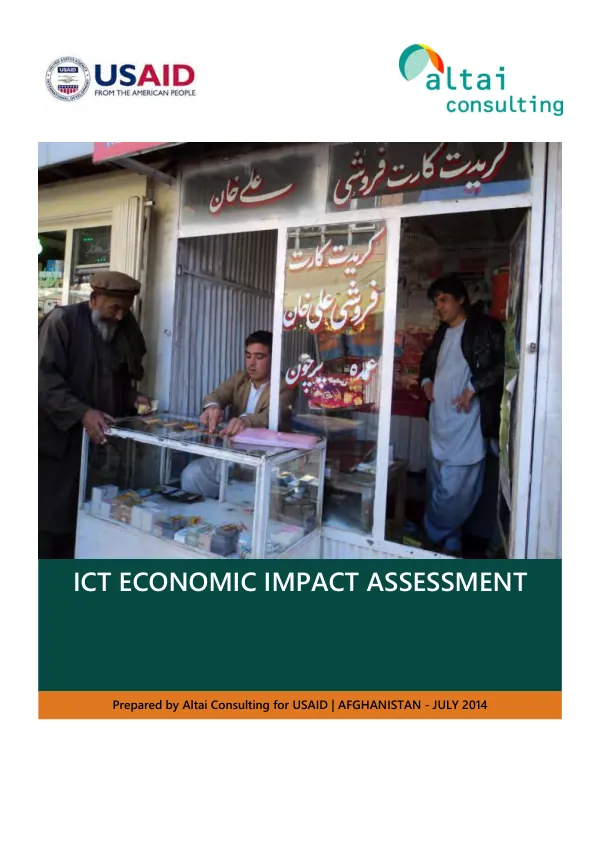
The ICT economic impact assessment in Afghanistan was conducted by Altai Consulting for USAID in July 2014.
2014 · 90 pages
Sign in to readA free account is required to download.
Abstract
The telecommunications sub-sector in Afghanistan has experienced significant growth, with revenue increasing from $150 million in 2010 to $350 million in 2017. The sector has also seen a rise in mobile subscriptions, with over 20 million subscribers as of 2013. Mobile network operators (MNOs) have generated significant revenue, with MNOs' revenue and cost structure showing a steady increase over the years. The industry digitization index, which measures the level of digitalization in the telecommunications sector, stood at 12 in 2012. Telephone penetration per 100 inhabitants aged 15-64 was 35% in 2012, indicating a moderate level of penetration. Mobile money penetration among SIM owners was 10% in 2012, indicating a growing trend in mobile financial services. The ICT sector has contributed significantly to Afghanistan's GDP, with a contribution of $1.3 billion in 2013. The sector has also created jobs, with skilled job creation accounting for 70% of total job creation. The sector's contribution to GDP is expected to continue growing, with a projected contribution of $2.5 billion by 2017. The assessment used a three-fold approach to evaluate the impact of ICT on non-ICT sectors. The approach involved analyzing the use of ICT per sector, location, and among ministries and line ministries. The results showed that the use of ICT is highest in the finance and banking sector, followed by the education sector. The assessment also identified obstacles to a larger impact of ICT on non-ICT sectors, including limited access to ICT infrastructure, lack of digital literacy, and limited adoption of ICT solutions. The assessment concluded that the ICT sector has the potential to contribute significantly to Afghanistan's economic growth and development. However, to realize this potential, the sector needs to address the identified obstacles and challenges. The assessment recommended that the government and private sector work together to improve access to ICT infrastructure, enhance digital literacy, and promote the adoption of ICT solutions in non-ICT sectors. The assessment also highlighted the importance of mobile financial services in promoting financial inclusion in Afghanistan. Mobile money penetration has been growing steadily, with over 10% of SIM owners using mobile money services in 2012. The assessment recommended that the government and private sector work together to promote mobile financial services and enhance financial inclusion in Afghanistan. Overall, the ICT economic impact assessment in Afghanistan provides valuable insights into the sector's growth, contribution to GDP, and potential to promote economic growth and development. The assessment highlights the need for the government and private sector to work together to address the identified obstacles and challenges and promote the adoption of ICT solutions in non-ICT sectors.
Related documents