USAID DEC
Identifying Food Safety Risks in Horticulture Value Chains in Ethiopia, Rwanda, Senegal, and Nepal
Sign inFEED THE FUTURE
Identifying Food Safety Risks in Horticulture Value Chains in Ethiopia, Rwanda, Senegal, and Nepal
The agricultural value chains in Ethiopia, Rwanda, Senegal, and Nepal were assessed for food safety risks in horticulture crops.
2021 · 6 pages
Sign in to readA free account is required to download.
Abstract
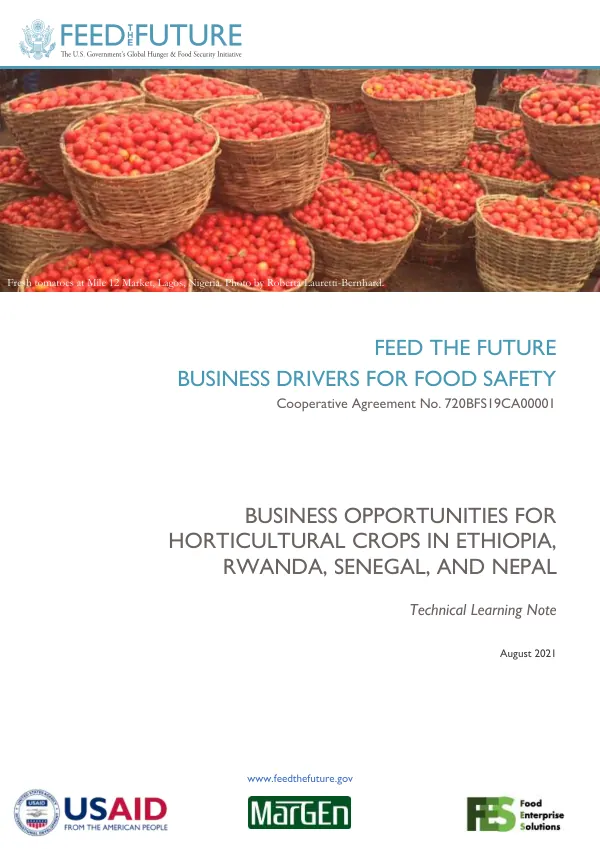
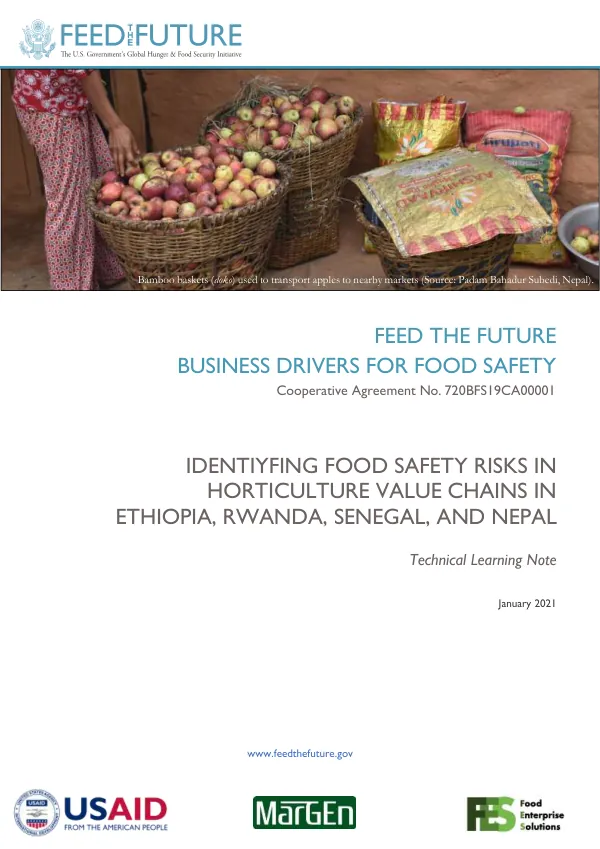
The assessments were conducted using the Commodity Systems Assessment Methodology (CSAM), which involves literature reviews, interviews, and observations. Key informant interviews with experts, farmers, traders, and extension workers revealed a wide range of food safety issues and associated SME business opportunities. Four horticultural crops were the focus of these CSAM studies: tomato value chains in all four countries, mango value chains in Ethiopia and Senegal, green banana value chains in Rwanda, and apple value chains in Nepal. These crops included fruits eaten as staple foods, fresh fruits, and processed products. Sources of contaminants identified in the assessments include physical items such as wood, metal, or plastic debris; chemical substances due to incorrect sanitation solutions or pesticide residues; biological matter such as foodborne pathogens including bacteria or viruses; and toxins produced by biological contaminants. In Ethiopia, mangoes are knocked from the trees with sticks and drop to the ground below, causing damage and bruising. The large wooden or bamboo crates used for post-harvest handling of mangoes and tomatoes can cause damage and leave splinters in the fruits. In Senegal, mangoes harvested for local markets are piled on the ground in the orchard, after being knocked from the trees or when whole branches are cut and dropped to the ground. The fruits are cut, bruised, and highly susceptible to pathogens when the fruits gain in heat during delays in packing and shipping. In Rwanda, green bananas are handled as heavy full bunches, which often get dropped or stacked directly on the soil, can be crushed in over-packed vehicles, and even stepped on during transport. Mechanical damage to the green bananas, when recently measured at the retail level in Rwanda, was up to 100%. The tomato plants in the field are not staked or trellised, so the plants fall over, and the fruits often come in contact with the soil. A pesticide named "Mancozeb" is sprayed on the tomato fruits after the harvest by some growers and traders because it is believed to stimulate uniform ripening, but this practice is an inappropriate unregistered usage and a food safety health issue for vendors and consumers. In Nepal, apples are harvested in a haphazard manner, including shaking the tree and then picking up fruits from the ground, leading to high levels of damage and losses along with food safety issues. Animals graze in the fields and orchards, and water sources are exposed to birds and animal pests. Water is used to clean apples and tomato fruits after the harvest, but the water is not clean or sanitized before use. The very large bamboo baskets (known as dokos in Nepal) cause abrasions and additional damage to the tomato and apple fruits during transport via the traditional means of one headload or when stacked in a vehicle. Overall, there was evidence in all the domestic value chains of produce being contaminated by contact with soil and associated human and animal feces, unsafe use of pesticides, use of unsanitary water for cleaning, washing, or cooling, and the lack of temperature and relative humidity management, which allows any pathogens on the produce to grow at accelerated rates. The traditional processing practice of open-air drying exposed the produce to dirt, insects, and animal pests. Value chains for export markets were more likely to provide sanitary working conditions, documented food safety protocols, and use of proper cooling methods, cold storage, and/or refrigeration.