USAID DEC
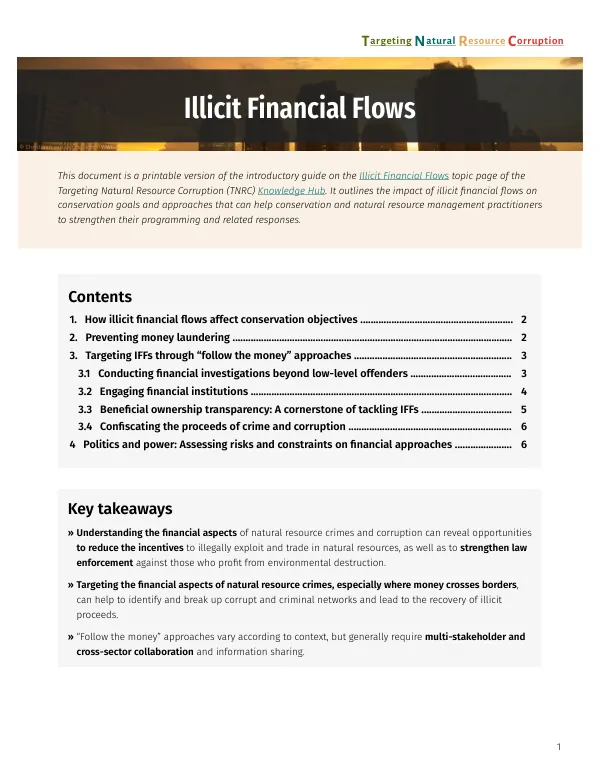
Illicit Financial Flows: Targeting Natural Resource Crimes
Illicit financial flows (IFFs) from environmental crime and corruption can be substantial, with estimates suggesting timber trafficking generates USD 10-150 billion annually, while illegal wildlife trade and IUU fishing generate USD 7-23.5 billion and USD 10-23.5 billion, respectively.
2024 · 7 pages
Sign in to readA free account is required to download.
Abstract
In one country, deforestation generated over USD 350 million over 20 years, with some of the profits siphoned off by the country's president. The impact of IFFs on conservation objectives can be direct, as IFFs into a resource-rich country can be used to pay poachers and traffickers, purchase equipment and supplies, and give bribes and kickbacks to officials. IFFs out of a resource-rich country can include the proceeds of environmental crimes and corruption, while IFFs into and between financial centers and consumer countries can hide profits from illegally traded natural resources. Preventing the proceeds of natural resource crime and corruption from being laundered abroad is key to reducing financial incentives for engaging in this behavior. Practitioners need to be aware of various money laundering techniques, including trade-based money laundering (TBML), which involves manipulating regular trade to transfer illicit money. TBML is a common method of laundering money linked to natural resource crimes, as it is difficult to verify the legality and value of shipments. A "follow the money" approach can help target IFFs by understanding and disrupting the networks behind crimes and identifying corrupt facilitators. This approach involves applying a financial perspective to the entire illicit natural resource supply chain and related corruption. Following the money can reveal the networks behind crimes and identify other criminals and corrupt facilitators. Financial investigations can be initiated in parallel to investigations into natural resource crimes to disrupt the enterprise and disrupt organized crime groups. These investigations can generate evidence to support prosecutions for financial crimes such as fraud, tax evasion, and money laundering. Cross-border IFFs can be a challenge, but it also opens up international options to prosecute environmental criminals and their facilitators. In the "Fishy" scandal, a European fishing company paid senior officials in an African country millions of dollars in bribes for fishing rights, leading to financial crime trials and the investigation of the largest bank in the country for its role in processing bribes. This case highlights the importance of following the money to disrupt the networks behind environmental crimes and corruption. The Financial Action Task Force (FATF) sets standards on anti-money laundering, and its reports detail methods of money laundering related to environmental crimes and tools for disrupting IFFs. Practitioners can explore the full possibilities of "follow the money" approaches in targeting corruption and its proceeds, and in assessing risks and constraints for financial approaches.