USAID DEC
Impact of Clay Pot Cooler Trainings in Mali
The Mopti region of Mali has been the focus of a clay pot cooler training initiative since 2016, with MIT D-Lab working to develop and implement the technology.
2022 · 1 pages
Sign in to readA free account is required to download.
Abstract
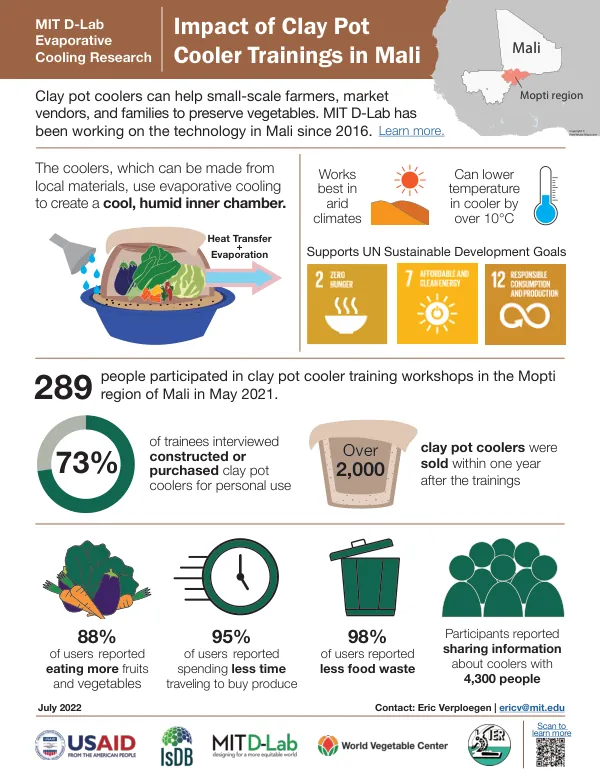
In May 2021, 289 people participated in workshops to learn about the clay pot coolers, which can be made from local materials and use evaporative cooling to create a cool, humid inner chamber. This technology has the potential to benefit small-scale farmers, market vendors, and families by preserving vegetables. The results of the training initiative have been significant, with 88% of users reporting an increase in consumption of fruits and vegetables, 95% reporting a reduction in time spent traveling to buy produce, and 98% reporting less food waste. The clay pot coolers are particularly effective in arid climates, where they can lower the temperature in the cooler by over 10°C. A notable outcome of the initiative is that 73% of trainees constructed or purchased clay pot coolers for personal use, and 73% of these coolers were sold within one year after the trainings. The impact of the clay pot cooler trainings extends beyond the individuals who participated in the workshops. Over 2,000 participants reported sharing information about the coolers with 4,300 people, indicating a significant level of community engagement and knowledge transfer. The initiative aligns with the United Nations' Sustainable Development Goals, which aim to promote sustainable agriculture and reduce food waste. The clay pot cooler technology relies on the principles of heat transfer and evaporation to cool the inner chamber. By leveraging local materials and community knowledge, the initiative has demonstrated the potential for sustainable and effective solutions to food preservation challenges in arid regions. The success of the initiative in Mali highlights the importance of community-based approaches to addressing food security and sustainability issues. The MIT D-Lab's Evaporative Cooling Research has been instrumental in developing and implementing the clay pot cooler technology in Mali. The initiative has shown that with the right training and support, communities can adopt and adapt innovative technologies to improve their food security and quality of life.