USAID DEC
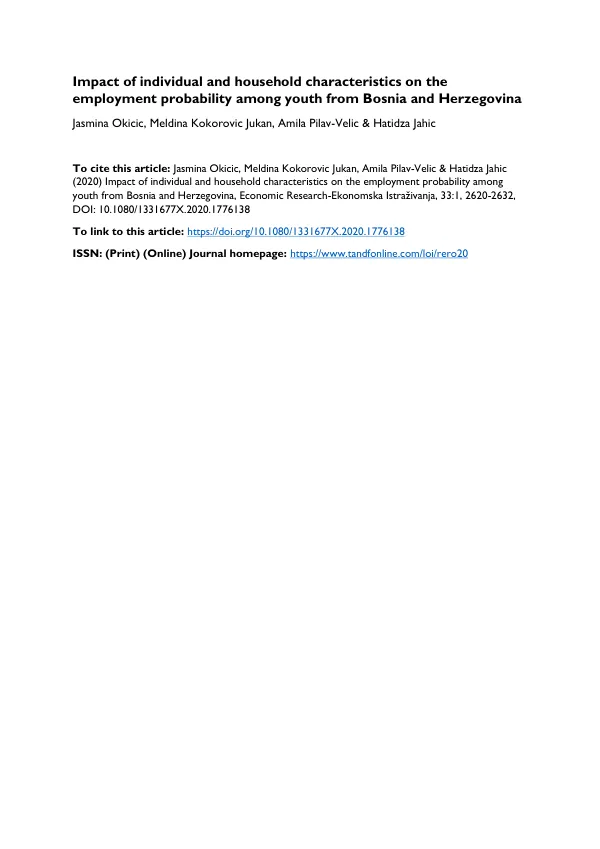
Impact of individual and household characteristics on the employment probability among youth from Bosnia and Herzegovina
Sign inUSAID DEC
Impact of individual and household characteristics on the employment probability among youth from Bosnia and Herzegovina
The employment probability among youth from Bosnia and Herzegovina is influenced by various individual and household characteristics.
2020 · 2 pages
Sign in to readA free account is required to download.
Abstract
Education is a significant factor, with higher levels of education associated with increased employment probability. The analysis reveals that young people with higher education qualifications are more likely to be employed compared to those with lower education levels. Age is another crucial factor, with employment probability decreasing as age increases. The study finds that younger individuals, typically those between 18 and 24 years old, have a higher employment probability compared to their older counterparts. This suggests that age may be a critical determinant of employment prospects among youth in Bosnia and Herzegovina. Gender also plays a significant role in shaping employment probability, with female youth facing greater challenges in securing employment compared to their male counterparts. The analysis indicates that female youth are less likely to be employed, particularly in certain sectors and industries. This highlights the need for targeted policies to address the employment challenges faced by female youth in Bosnia and Herzegovina. Household characteristics, such as family background and socioeconomic status, also have a significant impact on employment probability. The study finds that youth from households with higher socioeconomic status are more likely to be employed compared to those from lower socioeconomic backgrounds. This suggests that household characteristics may be an important factor in shaping employment opportunities among youth in Bosnia and Herzegovina. The analysis is based on the USAID MEASURE-BiH National Youth Survey data set, which provides valuable insights into the employment patterns and characteristics of youth in Bosnia and Herzegovina. The findings of this study have important implications for policymakers seeking to develop effective employment policies to support young people in the country. By understanding the key individual and household characteristics that influence employment probability, policymakers can design targeted interventions to address the employment challenges faced by youth in Bosnia and Herzegovina.
Related documents